







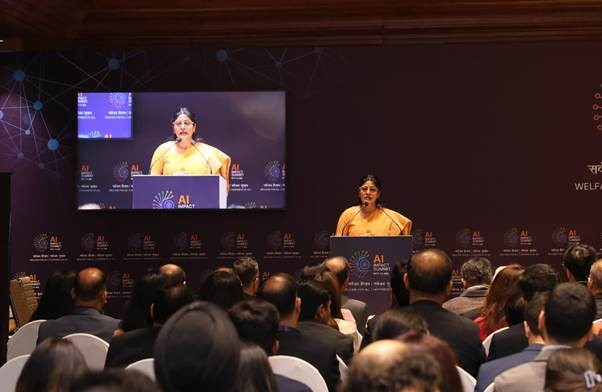
Union Minister of State for Health and Family Welfare, Anupriya Patel, on Tuesday said the success of Artificial Intelligence (AI) in healthcare should be measured by its impact on people’s lives and its ability to bridge health inequities, rather than by technological sophistication alone.
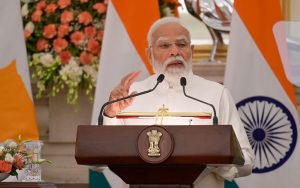
Speaking at a session titled “Innovation to Impact: AI as a Public Health Game-Changer” during the India AI Impact Summit 2026 at Bharat Mandapam, the minister said, quoting Prime Minister Narendra Modi’s vision, that “AI for India is not merely Artificial Intelligence but All-Inclusive Intelligence.”
She noted that India’s vast population, rural-urban divide and the dual burden of communicable and non-communicable diseases require scalable technological solutions, making AI an indispensable enabler in achieving the goal of a developed India by 2047.
AI across disease surveillance, diagnosis and treatment
Patel said AI has already been integrated across the healthcare continuum — from prevention and surveillance to diagnosis and treatment.
She highlighted an AI-enabled Media Disease Surveillance System that monitors disease trends in 13 languages and generates real-time alerts to improve outbreak preparedness. Under the One Health Mission, she added, the Indian Council of Medical Research has deployed genomic surveillance tools capable of predicting potential zoonotic outbreaks before animal-to-human transmission.
The minister also cited the use of AI-enabled handheld X-ray machines and computer-aided detection tools in tuberculosis screening, which contributed to about 16% additional case detection. AI-based prediction tools for adverse TB treatment outcomes have helped bring about a 27% decline in negative treatment results, she said.
‘AI to assist doctors, not replace them’
Emphasising the human element in medicine, Patel said AI is intended to augment clinicians rather than replace them.
“Medicine is not only a science; it is also an art. Healthcare depends on empathy and communication — qualities machines cannot replicate,” she said, adding that automation of routine tasks allows doctors to focus on complex clinical decision-making.
She also said the government has established Centres of Excellence for AI at AIIMS Delhi, PGIMER Chandigarh and AIIMS Rishikesh, and that the National Board of Examinations in Medical Sciences has launched an online training programme to make doctors AI-literate.
Need for trust, regulation and digital infrastructure
NITI Aayog Member (Health) V.K. Paul said AI offers a strategic opportunity to strengthen primary healthcare, enable early diagnosis and support data-driven policymaking, but requires strong regulatory safeguards and continuous validation to maintain public trust.
Roy Jakobs, CEO of Royal Philips, said healthcare will see the greatest impact from AI but stressed that technology must align with clinical workflows and be backed by quality data and interoperability.
He added that initiatives such as Ayushman Bharat are laying the foundation for interoperable health data systems necessary for meaningful AI deployment.
From pilot projects to system-level adoption
Speakers at the summit agreed that AI must move beyond pilot projects and be integrated at system level through interoperable digital infrastructure, ethical safeguards and public-private collaboration.
They said AI can significantly strengthen disease surveillance, diagnostics and clinical decision-making, but ultimately remains a tool to support — not replace — healthcare professionals while improving access and equity in public health delivery.