Brad Smith, Vice Chair and President of Microsoft, on Thursday said that artificial intelligence (AI) will play a decisive role in shaping the global economic balance, particularly between the Global North and the Global South.
Speaking at the India AI Impact Summit 2026, Smith said the broader global context must be considered when assessing AI’s potential impact. “The best way to think about AI is to look at it in the context of the world we live in. We live in a tumultuous and fragmented world, but perhaps the deepest divide has been the economic divide between the Global North and the Global South,” he said.
He noted that this economic gap is largely driven by a technological divide. “The economic divide is, more than anything else, the result of a technology divide,” Smith said, adding that unequal access to basic infrastructure – including electricity – remains a fundamental challenge for millions of people worldwide.
According to Smith, AI could either help bridge this divide or risk widening it further. “AI, perhaps more than any other technology in this century, will play a bigger role either in closing this economic divide or exacerbating it,” he said.
Raising the issue of inclusion, he stressed the importance of ensuring that the Global South is not left behind in the AI revolution. “As we think about the role of AI in the Global South, we must ask ourselves how we can do better to ensure broader participation and inclusion,” he said.
Smith underscored that deploying AI at scale in developing regions will require substantial investments in infrastructure, including data centres, computing power, connectivity and reliable electricity.
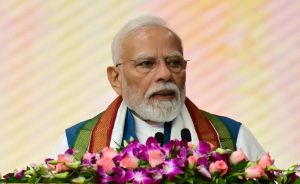
Earlier in the day, Prime Minister Narendra Modi addressed the summit at Bharat Mandapam in New Delhi, expressing confidence in India’s AI-driven future. “While some see fear in AI, others see the future. I can say with utmost pride that India finds its future in Artificial Intelligence,” the Prime Minister said, highlighting the unprecedented pace of technological advancement in the current era.
(ANI)