Union Home Minister Amit Shah on Thursday inaugurated and laid the foundation stones for multiple development projects in Gujarat, while also addressing issues related to border security, infiltration and demographic change.
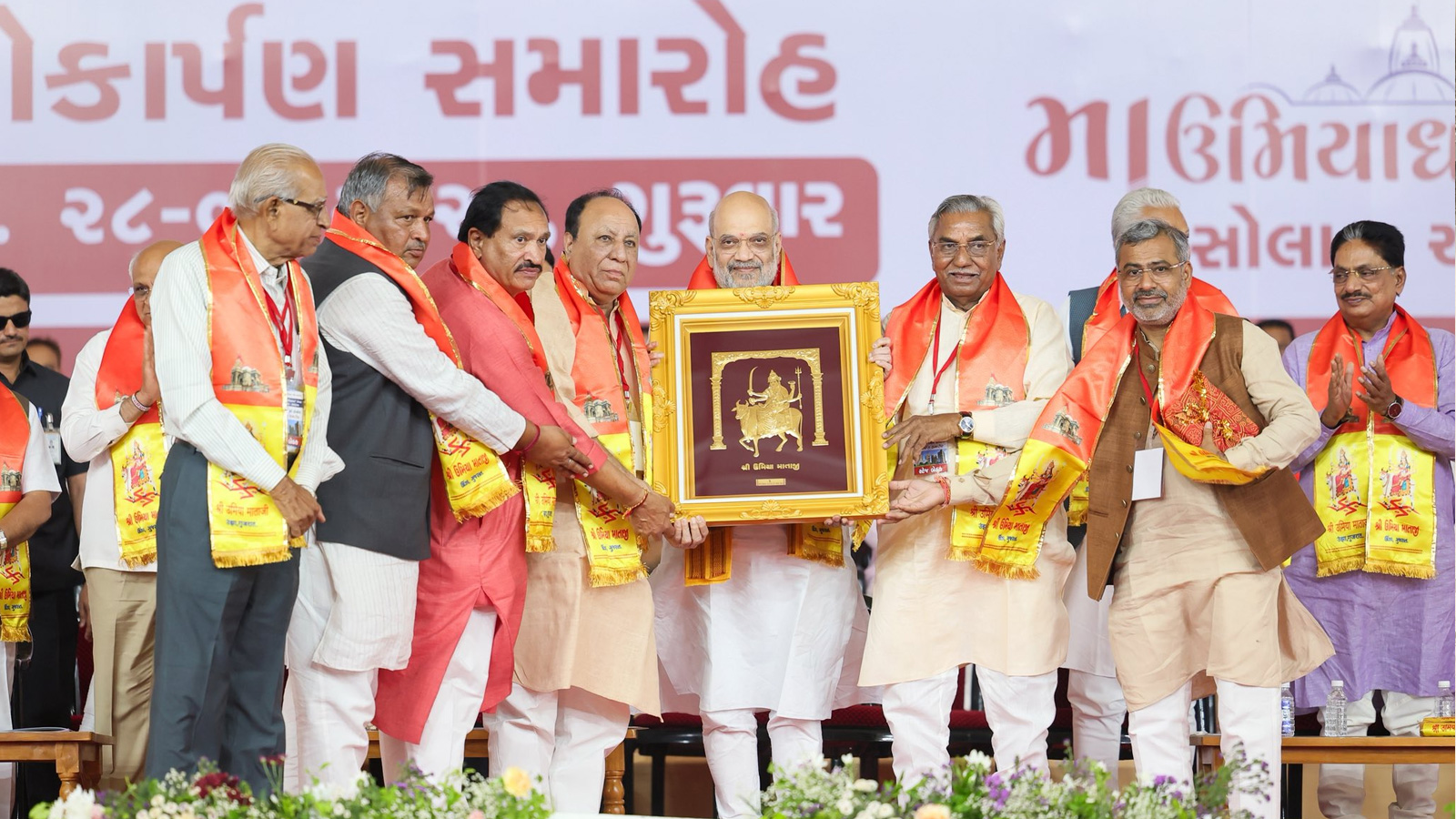
During his visit to Ahmedabad, HM Shah inaugurated the newly constructed hostel building at the Mata Umiya Dham campus. Built at an estimated cost of ₹104 crore, the 13-storey Shri J. S. Patel Hostel will provide accommodation and modern educational facilities for around 1,600 students from across Gujarat.
Gujarat Chief Minister Bhupendra Patel and several dignitaries were also present on the occasion.
Addressing the gathering, HM Shah praised the contribution of the Patidar community to Gujarat’s development, describing it as a community known for hard work, patriotism, integrity and dedication.
He said the Patidar community had made significant contributions in sectors such as agriculture, education, textiles, ceramics, diamonds, pharmaceuticals and real estate, adding that its inclusive outlook and leadership qualities had earned recognition across the country.
The Home Minister said the hostel project would provide students with modern, reliable and well-equipped infrastructure under the blessings of Maa Umiya and further strengthen educational opportunities in the state.
Earlier in the day, HM Shah inaugurated and laid the foundation stones for development projects worth ₹340 crore in the Kalol and Gandhinagar (North) Assembly constituencies in Gandhinagar district. The projects included civic infrastructure and educational facilities, including a new primary school.
He said that over the past 10 days, projects worth nearly ₹1,200 crore had been inaugurated or launched in two Assembly constituencies of Gandhinagar district.
HM Shah credited Prime Minister Narendra Modi for transforming Gujarat’s development model into a national model and said the Centre’s focus remained on creating self-reliant villages equipped with schools, healthcare, sanitation, libraries, gardens and sports infrastructure.
He also paid tribute to freedom fighter Vinayak Damodar Savarkar on his birth anniversary, describing him as a patriot who dedicated his life to India’s independence struggle.
The Home Minister said that that Veer Savarkar dedicated his entire life to India’s freedom and what the British merely termed a “rebellion,” Savarkar Ji named “The First War of Independence of 1857”.
During his speeches, HM Shah also focused extensively on border security and infiltration issues, particularly in West Bengal.
He said the Centre had adopted a zero-tolerance approach towards infiltration and illegal immigration and announced that a high-level committee on demographic change had been constituted under the Ministry of Home Affairs.
HM Shah said the committee will study “unnatural demographic changes” in the country, identify their causes and recommend corrective measures, including possible legal provisions. The committee is expected to submit its report within one year.
The Home Minister claimed that infiltration along the borders had declined and asserted that stricter border fencing and anti-infiltration infrastructure remained a priority for the government.
He also said the government was committed to identifying and deporting illegal infiltrators and urged those staying in the country illegally to return voluntarily.
Referring to the Special Intensive Revision (SIR) process initiated by the Election Commission, HM Shah said opposition parties had criticised the move, but claimed that the Supreme Court had upheld its constitutional validity.
He added that only legitimate citizens should have the right to decide the future of the country.
HM Shah further said that, from the perspective of internal security, terrorism and Naxalism have been brought under control under the leadership of Prime Minister Narendra Modi in less than ten years. He added that the Centre worked towards eliminating Naxalism, which had remained a major challenge for the country for five decades.
The Home Minister said the government remained committed to strengthening national security while simultaneously accelerating infrastructure development and governance reforms across the country.