Researchers have uncovered molecular evidence of massive wildfires that swept through ancient Gondwana forests nearly 250 million years ago, offering fresh insights into Earth’s past climate, vegetation patterns and coal-forming environments.
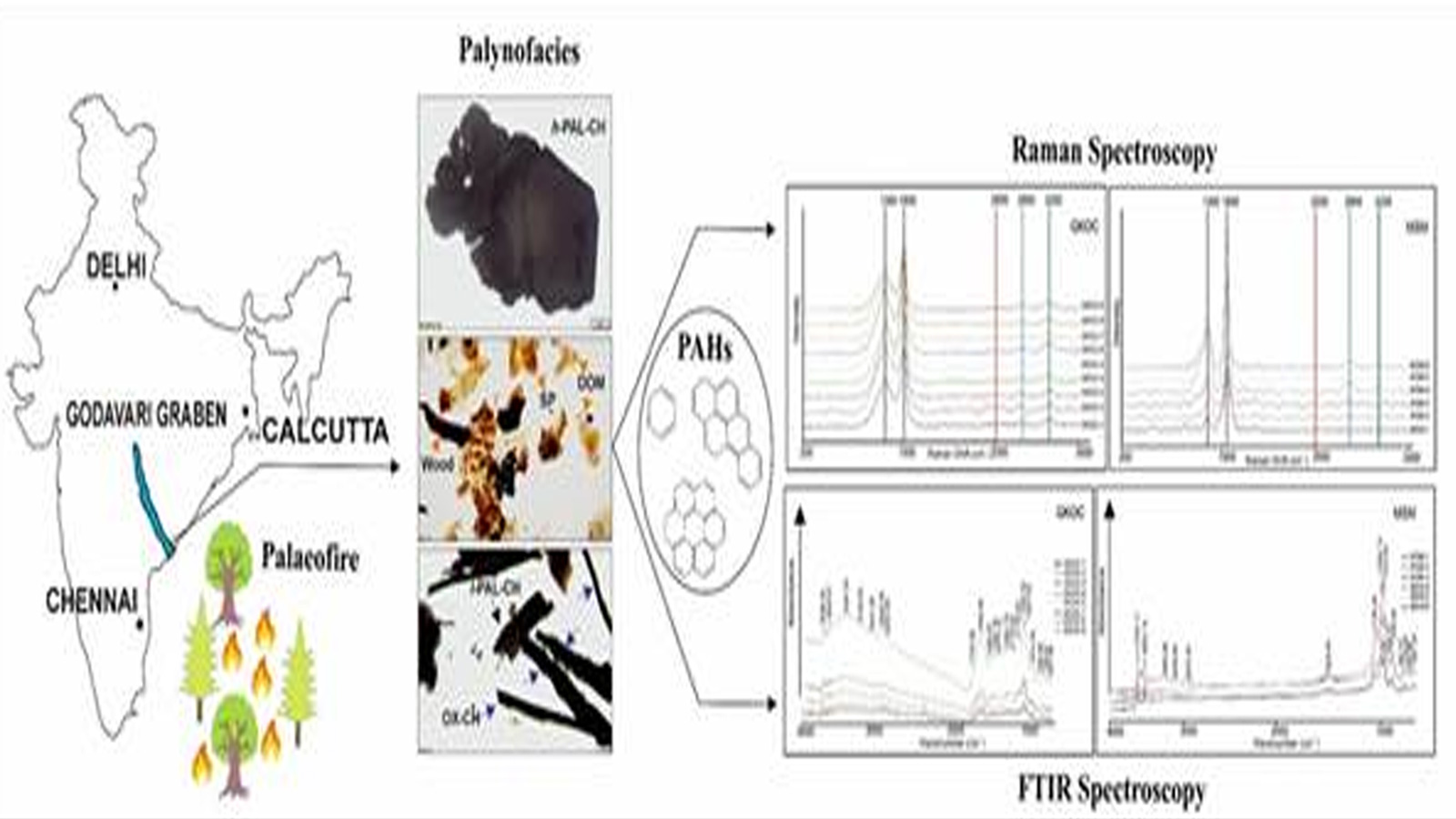
The study, conducted by scientists at the Birbal Sahni Institute of Palaeosciences, used advanced molecular techniques to analyse coal-bearing sediments from the Godavari Valley Coalfield and reconstruct palaeofire events dating back to the Permian period.
The findings reveal that large-scale wildfires once played a significant role in shaping the prehistoric environment of the Gondwana supercontinent, which included present-day India.
Earlier studies on Permian sediments in India had provided evidence of ancient fires through macrocharcoal remains. However, researchers faced challenges in accurately distinguishing between different forms of microscopic charcoal particles using conventional microscopic methods alone.
To address this gap, the BSIP research team adopted a novel multi-proxy approach that combined palynofacies analysis — the study of microscopic organic matter preserved in sedimentary rocks — with advanced molecular techniques such as Raman spectroscopy and Fourier Transform Infrared (FTIR) spectroscopy.
The research team, comprising Neha Aggarwal, Shivalee Srivastava and Runcie Paul Mathews, successfully identified and differentiated between high-intensity and low-intensity wildfire-derived microcharcoal particles based on their morphology, preservation state and optical characteristics.
The molecular analysis also detected signatures associated with combustion, including Poly Aromatic Hydrocarbons (PAHs) and thermal alteration markers, helping scientists better understand the nature and intensity of ancient wildfire events.
According to researchers, the study bridges a critical gap between visual identification of fire residues and their geochemical characterisation, enabling more precise reconstructions of ancient wildfire regimes.
The findings, published in the Geological Journal, are expected to improve scientific understanding of Earth’s long-term climate history and the palaeoenvironment of Gondwana basins.
Scientists said the research could also contribute to more accurate climate models and improve predictions about how ecosystems respond to extreme wildfire events, which are becoming increasingly relevant in the context of modern climate change.