







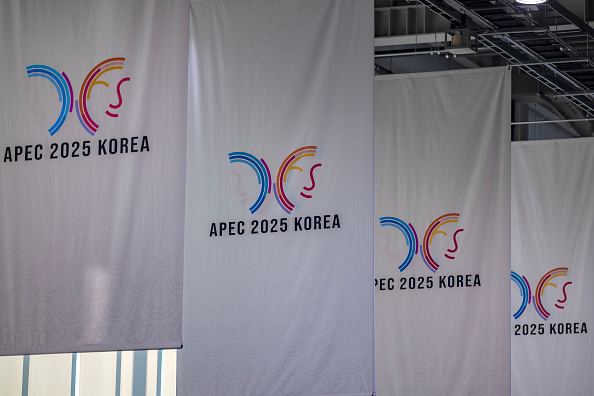
Most Asia-Pacific countries want and are heading in the direction of free and open trade, a senior official at the Asia-Pacific Economic Cooperation (APEC) secretariat said, as U.S. President Donald Trump’s tariffs overshadowed the forum’s annual summit.
Carlos Kuriyama, Director of the Policy Support Unit, also told Reuters on Friday that he was confident the summit would reach a joint declaration, noting that all member countries, including the U.S., were working hard on it.
“I think many APEC members continue advocating for free trade. We heard some presidents and prime ministers, some economic leaders, do that earlier on (at the forum),” Kuriyama said.
The interview was conducted on the sidelines of the annual meeting in Gyeongju, South Korea, after the leaders of its 21 member economies attended the first session of the two-day summit ending on Saturday.
“You can see that most APEC members are really going in that direction of free and open trade,” Kuriyama said, citing a trade pact between China and the ASEAN bloc of Southeast Asian nations upgraded earlier this week.
The U.S. was represented by Treasury Secretary Scott Bessent at the APEC summit. Trump, whose policies have often run counter to free trade and multilateralism, left the Asian country on Thursday after striking trade deals with South Korea and China.
As Washington embraces barriers and bilateral deal-making, Beijing is trying to position itself as a predictable champion of free and open trade, a role the U.S. has held for decades.
“They are contributing,” Kuriyama said of Trump’s trade deals, as they reduce trade barriers and policy uncertainty for APEC. He cited that the bloc, which accounts for 61% of world GDP, is expected to record economic growth of 3.1% this year and 2.9% next year.
When asked about the prospects of having a joint declaration, Kuriyama said there was momentum to achieve this with all delegations “working around the clock”.
The U.S. is also engaging with all members “very actively” to find a way to adopt a joint statement and launch initiatives, Kuriyama said, echoing an earlier U.S. comment that its participation has been “very strong and robust”.
Nonetheless, Kuriyama acknowledged “it is very hard to get a consensus nowadays” under the current global trade order of weakening multilateralism, and that is why like-minded countries are coming together in smaller groups to push their initiatives.
Still, that is more the reason for APEC – a non-binding, member-driven forum – to remain an important arena for countries to talk and find a solution, he said. “Here, they can do it in a more relaxed way, right?”
(Reuters)