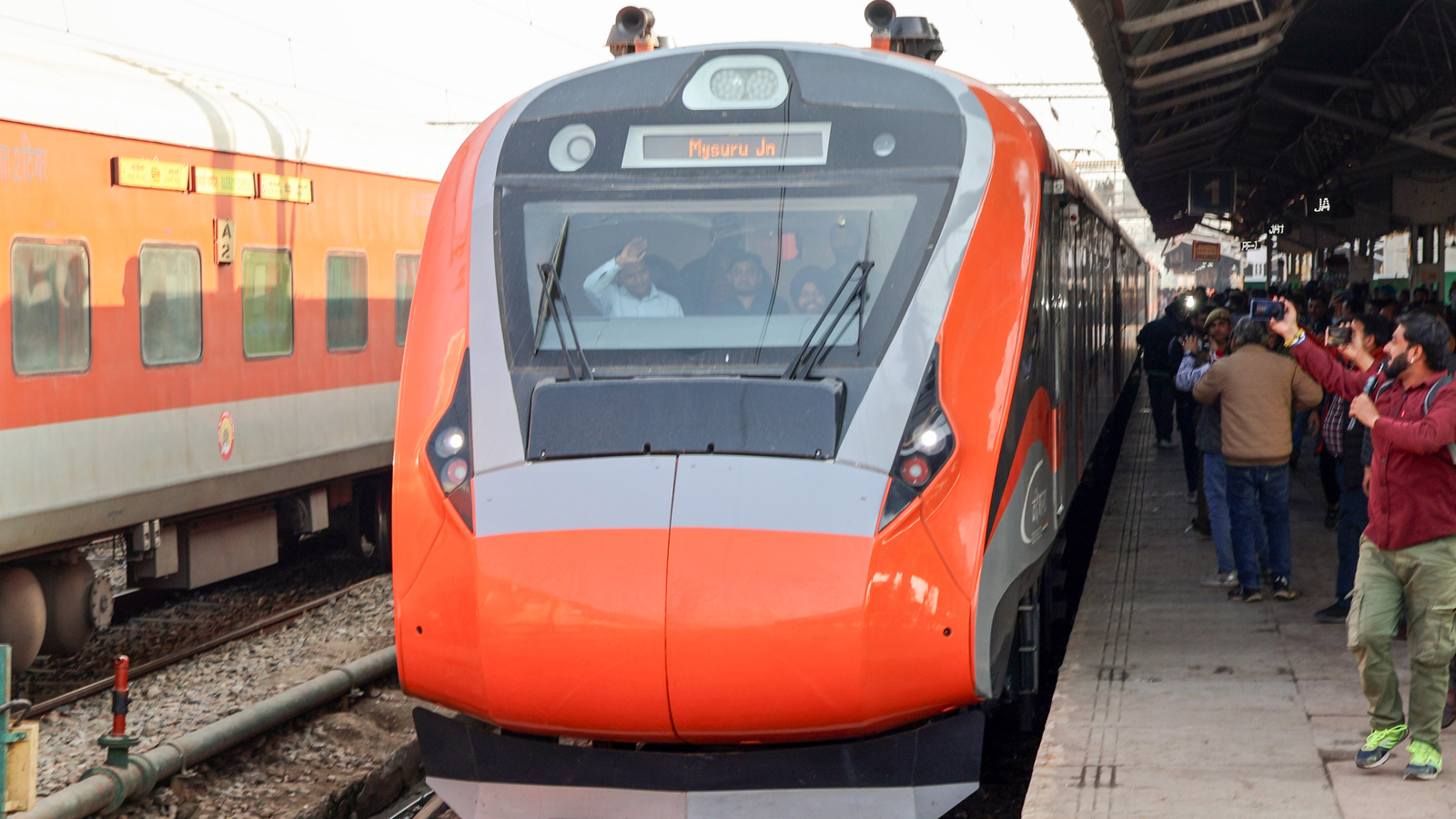
Union Railway Minister Ashwini Vaishnaw will flag off the extended Srinagar-Jammu Vande Bharat Express from Jammu Tawi Railway Station on April 30, marking a major milestone in rail connectivity across Jammu and Kashmir.
The semi-high-speed train, which earlier operated between Srinagar and Shri Mata Vaishno Devi Katra, will now run up to Jammu Tawi, the region’s largest rail hub. Regular services on the extended route will begin from May 2, offering passengers a seamless, single-journey connection across the corridor.
In response to surging demand, Indian Railways has expanded the train from 8 to 20 coaches – more than doubling its capacity. Since its launch in June 2025 by Prime Minister Narendra Modi, the Vande Bharat service on this route has consistently operated at full capacity, with long waitlists, especially during peak pilgrimage and tourist seasons.
The Ministry of Railways said the extension to Jammu Tawi, combined with increased capacity, will significantly ease travel for pilgrims, tourists, traders, and local commuters. Passengers arriving from major cities like Delhi and Mumbai will now be able to board the Vande Bharat directly from Jammu without needing to switch trains at Katra.
Two pairs of trains will operate on the 266-km route six days a week, offering both morning and afternoon travel options from Jammu and Srinagar. The journey will take under five hours, drastically reducing travel time and improving convenience.
The move is expected to particularly benefit pilgrims visiting the Vaishno Devi shrine and those undertaking the Amarnath Yatra, as it enables a seamless rail journey connecting key pilgrim destinations without interchange. Tourists will also gain a comfortable and scenic travel option through the Himalayan region, avoiding road delays and weather disruptions.
For local residents, the extended service eliminates a long-standing inconvenience of changing trains at Katra. Students, patients, government officials, and daily commuters will now have a direct, reliable rail link between Jammu and Srinagar. The service is also designed for all-weather operation, including harsh winters, providing a crucial transport lifeline when highways are blocked due to snowfall.
The improved connectivity is expected to boost trade and economic activity as well. Artisans, traders, and entrepreneurs from the Kashmir Valley dealing in products such as handicrafts, saffron, and textiles will benefit from faster and more reliable travel, reducing logistics costs and expanding market access.
During his visit, Vaishnaw will also inspect two key engineering landmarks on the Udhampur-Srinagar-Baramulla Rail Link (USBRL) corridor—the Anji Khad Bridge and the Chenab Rail Bridge. The Chenab Bridge, rising 359 metres above the riverbed, is the highest railway arch bridge in the world, while the Anji Bridge is India’s first cable-stayed railway bridge.
The extension marks another milestone in the transformation of rail infrastructure in Jammu and Kashmir over the past decade. Key developments include the commissioning of the Udhampur-Katra section in 2014, electrification in the Kashmir Valley, and the ongoing development of stations under the Amrit Bharat Station Scheme.
With the completion of the USBRL project, featuring 36 tunnels and 943 bridges, the region is now more closely integrated with the national rail network, opening new opportunities for connectivity, tourism, and economic growth.