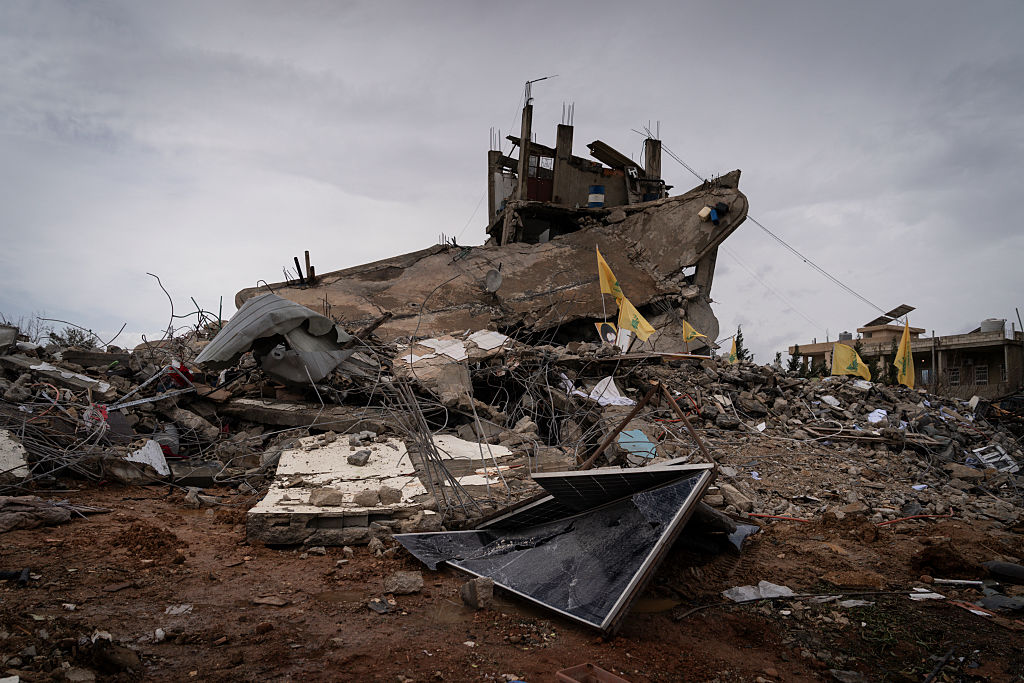
Israel has intensified its military campaign against Hezbollah, carrying out a fresh wave of precision airstrikes on Beirut’s southern suburbs. The strikes followed evacuation warnings to residents, with the Israeli military maintaining it is targeting command centres and infrastructure linked to the group. The humanitarian situation in Lebanon continues to worsen as the conflict intensifies. Lebanese authorities report that more than 760,000 people have been displaced, while emergency services are under strain following strikes on health facilities in the south.
In Beirut, residents remain on edge amid continuous aerial surveillance and the threat of further attacks. At the same time, authorities in Tel Aviv and Jerusalem are assessing impact sites after air raid sirens sounded across central Israel, with debris from intercepted missiles reported near parts of the Old City.
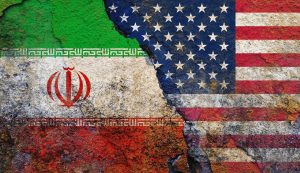
Across the region, tensions are rising further as the United States moves to deepen its military presence. The USS Boxer and two additional amphibious assault ships carrying around 2,500 Marines are being deployed ahead of schedule. President Donald Trump has reiterated opposition to a ceasefire, saying Washington is close to achieving its strategic goals. The White House has also issued a warning over Iran’s Kharg Island oil terminal, while increasing A-10 patrols over the Strait of Hormuz to counter fast-attack craft.
Tehran has responded with defiant rhetoric, with the Iranian Revolutionary Guard claiming it launched two intermediate-range ballistic missiles towards the US-UK base at Diego Garcia in the Indian Ocean, marking a potential expansion of the conflict’s reach. Iranian officials have declared that the “enemy has been defeated,” while also warning that future strikes could target recreational and tourist locations globally. However, Iran has signalled limited flexibility, indicating it may allow some merchant shipping through the Strait of Hormuz to avoid a complete disruption of global energy supplies.Iran’s President Masoud Pezeshkian has said Tehran is not seeking war with its neighbours, instead blaming the United States and Israel for escalating tensions. Iran has also defended its strikes on Gulf states, citing the presence of US military bases in those countries.Iran has also issued an unprecedented warning directed at the Emirate of Ras Al Khaimah in the United Arab Emirates. This marks a shift from earlier warnings, which broadly advised civilians to avoid areas near military installations.Tehran has accused locations in and around Ras Al Khaimah and Dubai, of being launch points for attacks.
In the United Arab Emirates, officials say the situation remains under control despite heightened alert levels. Authorities confirmed that loud sounds heard over Dubai were the result of air defence interceptions, with residents urged to follow official guidance. Flight operations remain limited, with major carriers adjusting schedules due to restricted airspace.
Tensions across West Asia are rising sharply, with more strikes, increased military deployments, and growing humanitarian concerns.Israel has intensified its offensive in Beirut, while the United States is boosting its military presence across the region.
Iran, meanwhile, is sending mixed signals—issuing strong warnings, expanding its military actions, and at the same time calling for diplomacy.
President Masoud Pezeshkian has proposed a new regional security framework involving Islamic countries in West Asia, aimed at maintaining peace and stability without outside involvement.
But the proposal comes even as attacks continue across the Gulf, impacting all GCC countries over the past three weeks, with civilian casualties rising and increasing pressure on regional economies.
Gulf nations remain on high alert, intercepting aerial threats and warning of the risks to critical energy infrastructure. As civilian casualties rise and displacement grows, the region faces increasing uncertainty, with fears that the conflict could widen further in the coming days.