Today, as we celebrate Bihar Divas, we are not only marking the formation of a state; we are honouring a civilisation that has profoundly shaped the intellectual, political, and moral foundations of India—and, indeed, the world. Bihar is not just a geographical entity; it is an idea, a legacy, and a living testament to resilience.
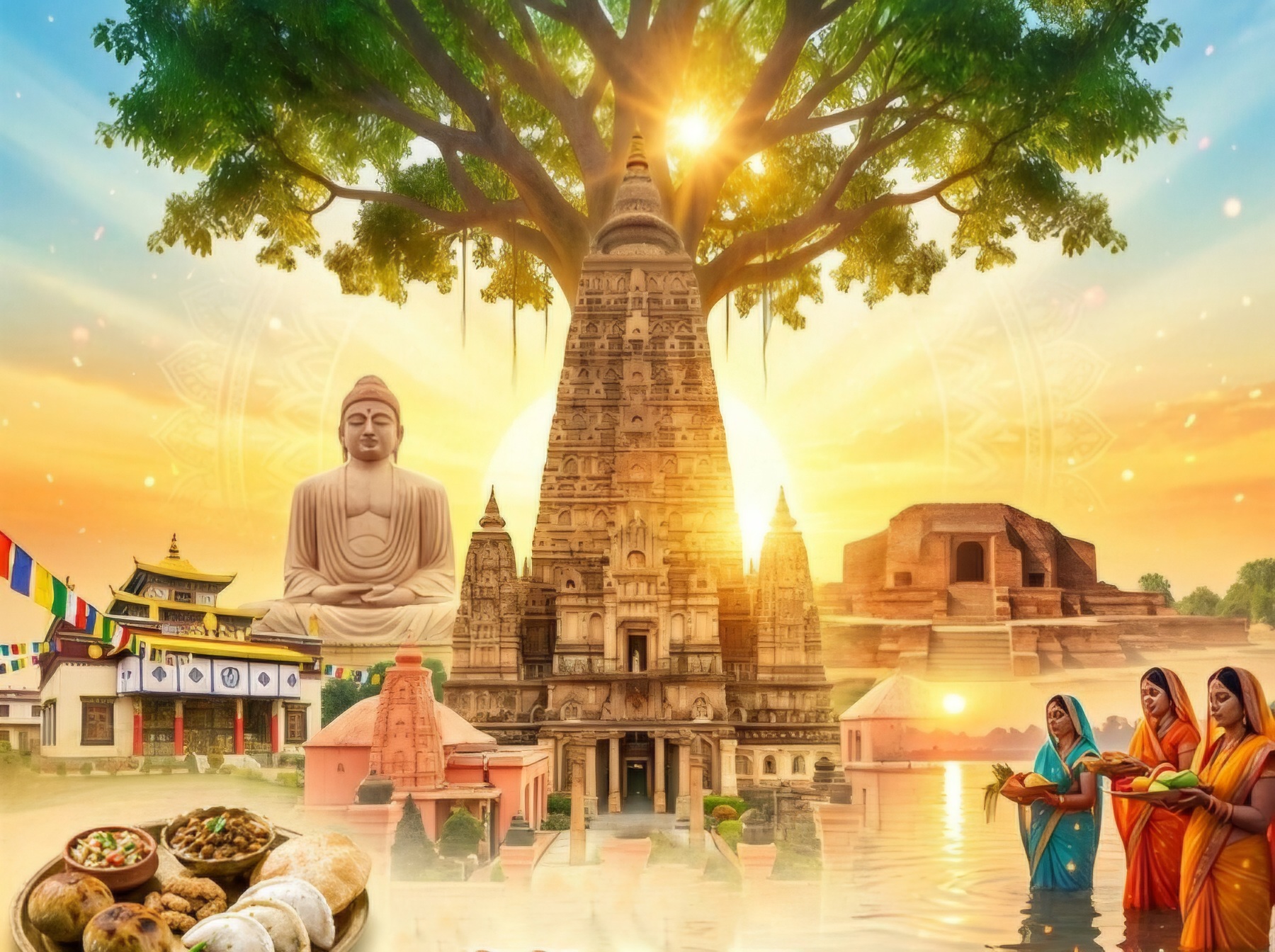
From the sacred soil of Bihar emerged a light of knowledge that illuminated humanity. It was here that Lord Buddha attained enlightenment at Bodh Gaya, offering the world a timeless path of compassion and mindfulness. It was here that Lord Mahavira preached the enduring principles of non-violence and truth. The ancient universities of Nalanda and Vikramshila drew scholars from across continents, establishing Bihar as a global centre of learning long before the modern concept of international education came into existence.
Bihar has also been a crucible of political awakening. It gave India Dr. Rajendra Prasad, the first President of independent India, whose simplicity and statesmanship remain exemplary. The clarion call of “Total Revolution” by Jayaprakash Narayan arose from this very land, redefining democratic resistance and civic responsibility. Bihar has never been silent; it has always expressed itself—at times through wisdom, at others through courageous action.
Economically and socially, Bihar has been an unsung pillar of India’s growth story. Its sons and daughters have journeyed across the country and beyond, contributing to nation-building in many ways—constructing cities, leading institutions, advancing knowledge, and strengthening governance. Across India and abroad, the imprint of Bihar’s workforce, intellect, and determination is unmistakable. The Bihari identity has come to symbolise diligence, adaptability, and perseverance.
And yet, here lies the irony—the subtle satire of our times.
How is it that a land that once educated the world is now often labelled “backward”? How does a state that exports intellect, labour, and leadership continue to import stereotypes? Perhaps Bihar suffers not from a poverty of resources, but from a poverty of perception. It is ironic that those who help build the nation often come from a state still striving to reshape its own narrative.
Let us pause and reflect: Is Bihar poor, or is it perceived to be so?
Is it lagging behind, or is it bearing the weight of historical neglect, policy imbalances, and migration-driven economic drain?
When the brightest minds migrate, the statistics remain behind. When the strongest hands move elsewhere, the fields appear weaker. Bihar’s so-called “poverty” is, in part, a reflection of its generosity—offering its finest human capital to strengthen the rest of the nation.
This is not to overlook the challenges Bihar faces. There are undeniable concerns related to infrastructure, quality education, industrial development, and governance that demand sustained and strategic attention. However, to define Bihar solely by these challenges is to overlook both its immense potential and its extraordinary legacy.
Bihar today stands at a decisive moment. With its youthful population, rich cultural heritage, and rising aspirations, it is poised for transformation. What it requires is not sympathy, but smart investment; not labels, but visionary leadership; not ridicule, but rightful recognition.
On this Bihar Divas, let us reclaim the narrative.
Let us celebrate Bihar not as a victim of circumstance, but as a custodian of history and a catalyst for the future. Let us recognise its contributions, challenge its misconceptions, and commit ourselves to its renewal.
For Bihar is not just a state—it is the enduring spirit of India’s continuity, a bridge between its glorious past and its promising future.
Perhaps the day we begin to view Bihar not through the lens of prejudice but through the prism of possibility, we will realise that Bihar was never poor—it was simply underestimated. Bihar Divas is not just a celebration; it is a call to pride, reflection, and purposeful action.
(Dr. Birbal Jha is a noted author, educationist, and social thinker)