






By Jessica Taneja:
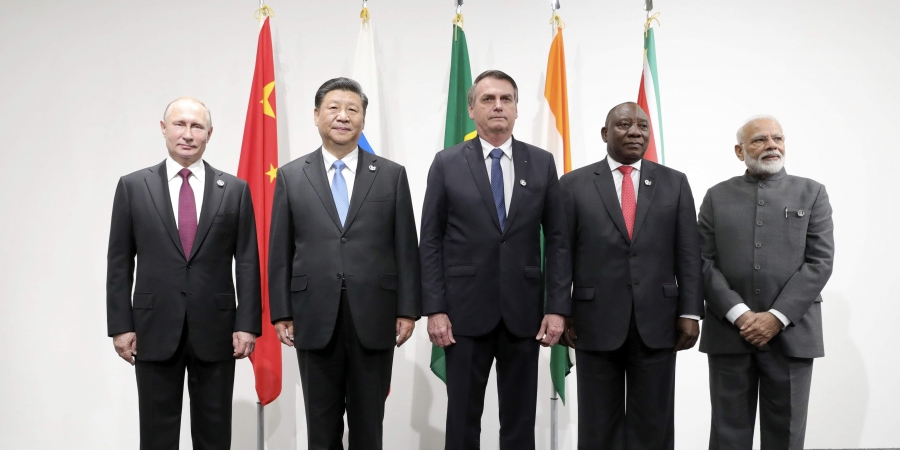
The BRICS alliance, initially forged in 2006 by Brazil, Russia, India, China, and South Africa, has undergone a transformative expansion in 2024. With the inclusion of Egypt, Ethiopia, Saudi Arabia, the United Arab Emirates, and Iran, this coalition is poised to redefine global economic cooperation and geopolitical influence.
This diversification is not just a mere addition of countries; it's a strategic move that ushers in a new chapter for BRICS. The inclusion of three Middle East energy giants – Saudi Arabia, the UAE, and Iran – significantly amplifies the alliance's impact, collectively constituting a formidable 42 percent of the world's oil supply.
Beyond mere economic statistics, BRICS nations, now representing 40% of the world's population, have quietly surpassed the G7 countries in terms of economic clout measured through purchasing power parity. Egypt and Ethiopia, representing the African continent, add a crucial layer to this demographic strength, underlining the alliance's commitment to fostering global economic inclusivity.
Dispelling the notion that BRICS is inherently anti-Western, India's measured approach coupled with nuance has remained consistent and coherent. Dr S Jaishankar, India's external affairs minister, underscores that India seeks not to be anti-Western but to be a proactive force in encouraging, inducing, or pressuring changes within the largely Western-created global architecture.
Amidst varied opinions on security and military matters, BRICS members find a common thread in advocating for de-dollarisation. This shared objective aligns with their broader focus on bolstering infrastructure to facilitate the use of local currencies, signaling a concerted effort to reduce reliance on the U.S. dollar in international transactions.
The strength of the U.S. dollar and the imposition of high interest rates have escalated the costs associated with imports. Furthermore, there is a concerted effort to explore alternative lending sources that do not come with Western-imposed conditions. Notably, Egypt has clearly stated its intent to conduct payments for imports from China, India, and Russia in their respective currencies.
As we navigate the landscape of 2024, the world is witnessing a subtle shift towards a multipolar order, where middle powers increasingly assume central roles. The expansion of BRICS, now encompassing diverse regions and economic powerhouses, positions the alliance as a key player in shaping this evolving geopolitical paradigm.
In essence, the evolution of BRICS with its new members represents not just an expansion but a strategic recalibration of global influence. As these nations come together, each with its unique strengths and perspectives, the alliance quietly asserts its significance in shaping a multipolar world, where collaboration and economic interdependence take center stage.