






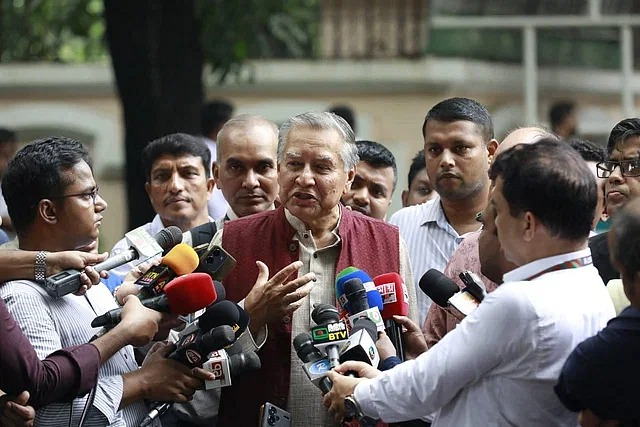
The Editors’ Council in Bangladesh has criticized the recent cancellation of press accreditation cards by the Press Information Department (PID), calling it a “direct threat” to press freedom and an obstacle to fostering a democratic environment. The PID has revoked the accreditation of 167 journalists in three separate phases.
Editors’ Council President Mahfuz Anam issued a statement on Tuesday, saying, “The list of those affected includes many active and professional journalists, as well as prominent editors, which has left the journalist community alarmed.” The Council pointed out that while the Ministry of Information holds the right to review accreditation in cases of misuse, the broad and sweeping cancellation of press credentials, without specific allegations or evidence of wrongdoing, is unjustified,” the statement said.
The Council strongly argued that this action undermines the fundamental principles of a free press and threatens the democratic fabric of the nation. They warned that such actions could pave the way for increased censorship and a more controlled media environment—a scenario that contradicts the core values championed during the July-August uprising, a key moment in the country’s recent political history.
The Editors’ Council urged the Ministry of Information to refrain from such blanket measures and called for stronger actions to ensure independent and democratic journalism in the country.
Earlier last week, the Committee to Protect Journalists (CPJ) expressed concern over the interim government of Bangladesh, led by Nobel laureate Prof. Muhammad Yunus, and its decision to revoke both permanent and temporary press accreditation cards for 50 journalists.
The international organization, which works globally to protect journalists’ rights, stated that the interim authorities should not use press accreditation as a tool to target journalists for their work. Such actions, warned the CPJ, could lead to increased risks of media censorship.