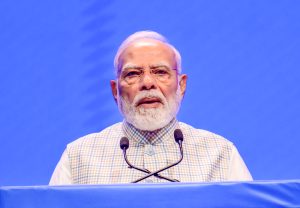
The Union Cabinet, chaired by Prime Minister Narendra Modi, on Wednesday approved a ₹14,500 crore Viability Gap Funding (VGF) Scheme to support the development of 92 Gigawatt-hours (GWh) of grid-scale energy storage capacity across the country between 2026-27 and 2030-31.
The scheme aims to strengthen India’s power infrastructure, facilitate large-scale integration of renewable energy and ensure reliable, affordable and round-the-clock electricity supply.
Under the initiative, the government will support the development of 60 GWh of Hydro Pumped Storage Projects (PSPs), 30 GWh of Battery Energy Storage Systems (BESS) and 2 GWh of capacity through emerging energy storage technologies.
The projects are expected to attract an estimated investment of ₹97,600 crore. The proposed capacity addition will be equivalent to around 170 per cent of India’s existing grid-scale energy storage capacity and contribute towards meeting the country’s estimated requirement of 411 GWh by 2031-32.
The financial assistance under the VGF scheme is intended to improve the financial viability of energy storage projects and accelerate the deployment of large-scale storage infrastructure.
Energy storage capacity will be allocated through a tariff-based competitive bidding process. Public and private sector electricity distribution companies will be eligible for VGF support for battery energy storage and pumped storage projects. Projects based on alternative storage technologies will also be implemented by public and private sector entities.
A key feature of the scheme is its focus on strengthening domestic manufacturing. Battery Energy Storage System projects will be subject to a minimum Domestic Content Requirement (DCR) of 40 per cent to encourage indigenous production and reduce dependence on imported components.
The requirement is expected to create opportunities for Indian manufacturers and complement existing government incentives for battery manufacturing.
The government said the initiative would help address the variability of renewable energy generation by enabling better storage and utilisation of electricity generated from renewable sources.
Grid-scale energy storage systems play an important role in balancing electricity supply and demand, maintaining grid stability and ensuring the availability of power when renewable energy generation fluctuates.
The scheme is also expected to reduce dependence on conventional power generation for meeting round-the-clock electricity requirements while improving the flexibility and resilience of the country’s electricity network.
-PIB