The Union Government has allocated ₹2,500 crore for the fisheries sector under the Pradhan Mantri Matsya Sampada Yojana (PMMSY) in the Budget Estimates for 2026–27, the highest allocation so far under the scheme.
According to information shared in the Lok Sabha by Union Minister for Fisheries, Animal Husbandry and Dairying Rajiv Ranjan Singh, the allocation marks a steady increase in budgetary support for the sector. The budget allocation under the scheme stood at ₹2,465 crore in 2025–26 and ₹2,352 crore in 2024–25.
The government said the scheme aims to strengthen fisheries infrastructure, boost production and improve the livelihood of fishers and fish farmers across the country.
Responding to a question in Parliament, the minister also provided details of financial support extended to Tamil Nadu under the scheme. During the last five financial years from 2020–21 to 2024–25, the Centre approved projects worth ₹1,240.95 crore for the state under PMMSY, with a central share of ₹479.73 crore.
Out of the approved central share, ₹202.05 crore has been released so far to the Tamil Nadu government for implementing fisheries and aquaculture development projects.
During the financial year 2025–26, the Centre initially released ₹50 crore to the state in April 2025 under PMMSY. Later, based on a request from the state government, an additional ₹20 crore was released in February 2026, taking the total central release to ₹70 crore for the year.
The Tamil Nadu government has so far utilised ₹48.32 crore from these funds for implementing approved projects related to fisheries and aquaculture development.
The scheme also provides welfare support to traditional fishers and small-scale fish farmers across the country. Assistance is extended for activities such as purchase of new fishing boats and nets, upgrading fishing vessels, and financial support during the annual fishing ban period to reduce income loss.
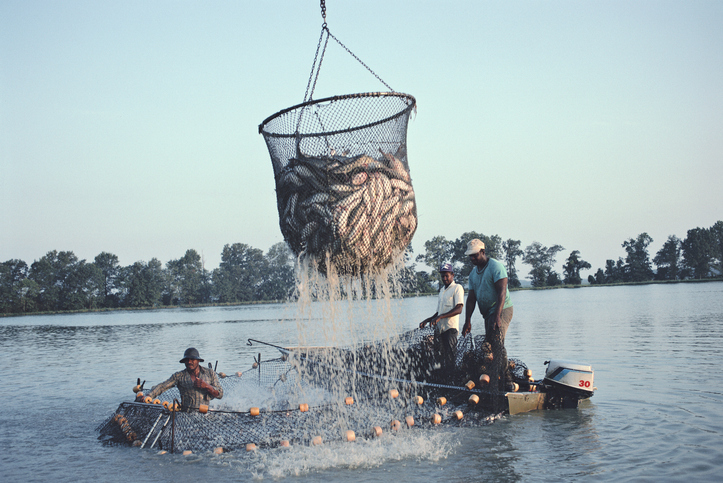
Other initiatives supported under the scheme include sea cage farming, seaweed cultivation, ornamental fish farming and pearl farming, which help provide climate-resilient and alternative livelihoods for coastal communities.
The government is also promoting mariculture activities such as cage culture and seaweed farming, along with training and capacity-building programmes to improve the skills of fishers and encourage adoption of modern fishing technologies.
In addition, the deployment of artificial reefs in coastal areas is being supported to replenish fish stocks and restore coastal ecosystems, helping ensure sustainable fishing practices.