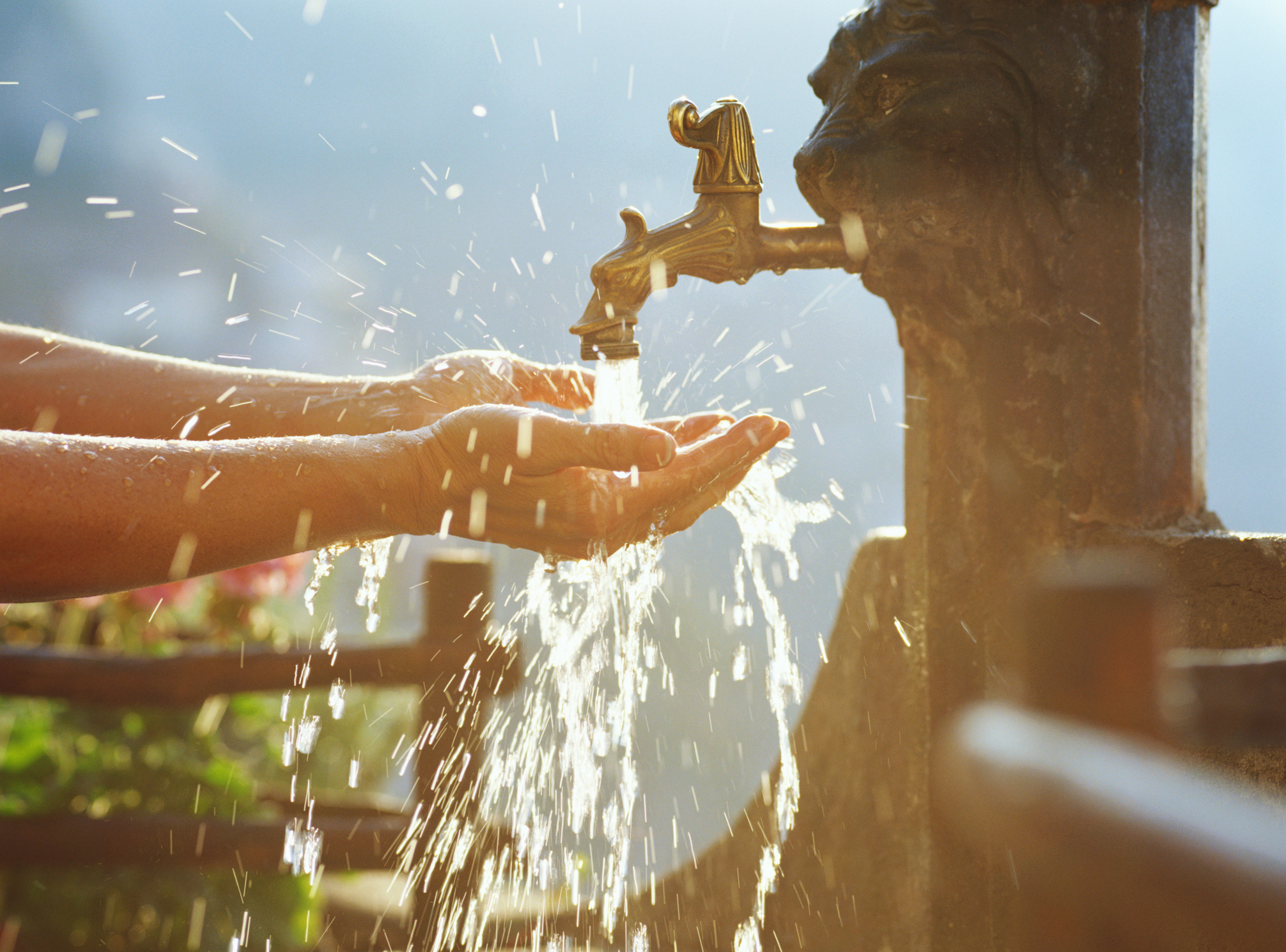
The Centre has said that more than 15.82 crore rural households, accounting for 81.71 per cent of rural homes in the country, now have access to tap water supply under the Jal Jeevan Mission (JJM).
The information was provided by Minister of State for Jal Shakti V. Somanna in a written reply in the Rajya Sabha on Monday.
The Jal Jeevan Mission – Har Ghar Jal, launched in August 2019, aims to provide assured potable water in adequate quantity and prescribed quality to every rural household through functional tap water connections.
At the start of the mission, only 3.23 crore rural households, or 16.7 per cent, had tap water connections. According to data reported by States and Union Territories as of March 3, 2026, more than 12.58 crore additional rural households have been provided tap water connections under the scheme.
Out of around 19.36 crore rural households in the country, 15.82 crore households now have tap water supply in their homes, while works for the remaining 3.54 crore households are at various stages of implementation across States.
The government said the state-, district- and village-wise status of tap water connections under the mission is available in the public domain on the Jal Jeevan Mission dashboard.
Drinking water is a state subject, and the responsibility for planning, approval, implementation and maintenance of drinking water supply schemes lies with State and Union Territory governments. The Centre supplements their efforts by providing financial and technical support.
According to the Functionality Assessment 2024, conducted through an independent third-party agency, 98.1 per cent of surveyed households had tap connections. Among these households, 87 per cent reported receiving water during the previous week, while 84 per cent received water as per schedule.
The assessment also found that 80 per cent of households received the minimum 55 litres per capita per day, while 76 per cent of households were free from bacteriological contamination and 81 per cent of water sources were free from chemical contamination. Overall, 76 per cent of tap water connections were found to be functional, considering parameters such as quantity, quality and regularity of supply.
States have reported challenges in implementation, including limited water sources in stressed areas, geogenic contamination, difficult terrain, scattered habitations, limited technical capacity, rising material costs and delays in statutory clearances.
To support the completion of ongoing works, the government has allocated ₹67,670 crore for the financial year 2026–27.
The government has also introduced several measures to strengthen implementation and monitoring of the mission. These include Special Assistance for Capital Expenditure, appointment of nodal officers for faster clearances, establishment of State and District Programme Management Units, and the Nal Jal Mitra programme to enhance local technical capacity.
Other initiatives include village and district dashboards linked to the eGramSwaraj portal, District Collectors’ Peyjal Samvad, involvement of National WASH Experts, and the development of a decision support system to strengthen source sustainability.