Union Agriculture Minister Shivraj Singh Chouhan and Environment Minister Bhupender Yadav on Tuesday directed states to intensify efforts to prevent stubble burning during the ongoing paddy harvest, calling for immediate field-level action, functional machinery and affordable alternatives for farmers.
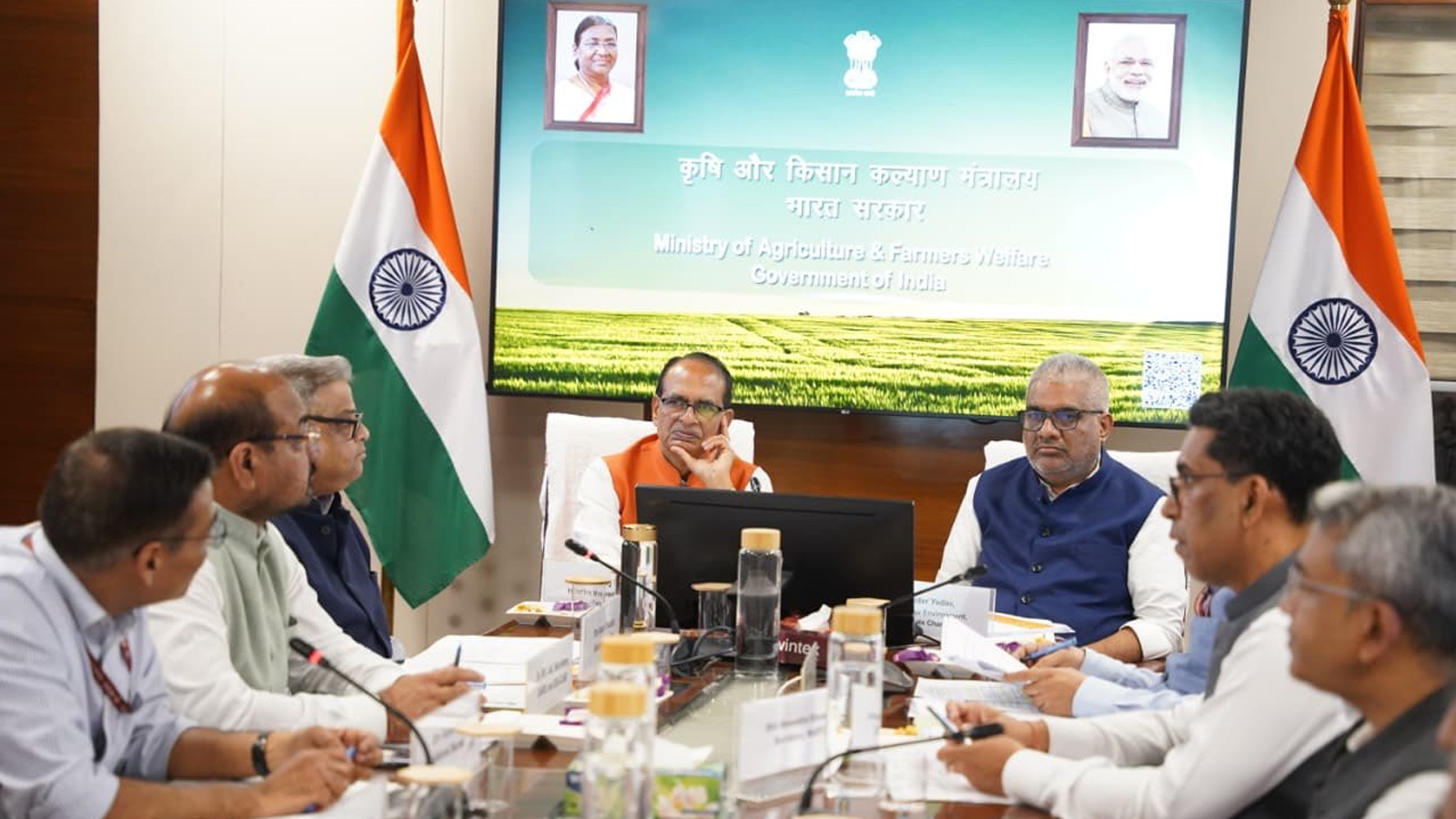
Co-chairing an inter-ministerial review at Krishi Bhawan in New Delhi, the ministers said the short interval between harvesting and rabi sowing required swift coordination. District collectors were asked to convene meetings, strengthen monitoring and implement practical solutions without delay.
Chouhan said merely asking farmers not to burn crop residue was insufficient. Alternatives had to be accessible, affordable and easy to use.
“Stubble is not a problem, but a means of improving farmers’ income and soil health,” he said.
Burning residue causes air pollution, destroys beneficial soil organisms and removes essential nutrients, Chouhan said. Incorporating it into the soil could produce organic manure, while collecting it for bio-CNG, bio-ethanol, electricity generation and animal fodder could provide additional income.
The objective was to build a system in which farmers had no need to burn residue, he said, adding that sustainable agricultural practices could also create opportunities to benefit from carbon credits.
Reviewing incidents between September 15 and October 12, Chouhan said Haryana had recorded a 53.3% reduction in stubble burning compared with the corresponding period last year, while Uttar Pradesh registered a decline of approximately 32%. Punjab also recorded some reduction.
However, incidents had increased in Madhya Pradesh and Rajasthan. He directed the two states to identify affected districts and villages and immediately implement special action plans.
With a substantial portion of harvesting still pending, states reporting improvements should also maintain vigilance, he said.
Chouhan stressed that crop residue management machines must operate in fields rather than remain available only on paper. The Centre had provided states with more than 3.54 lakh machines, including 26,109 during FY 2026–27, he said.
Authorities were directed to repair non-functional older equipment immediately, activate Custom Hiring Centres and make machinery available to small and marginal farmers at affordable, subsidised rates.
The meeting was informed that the Centre had released ₹4,266.47 crore under the Crop Residue Management scheme between 2018-19 and 2025-26. This included ₹2,056.50 crore for Punjab, ₹1,171.71 crore for Haryana, ₹868.67 crore for Uttar Pradesh and ₹59 crore for Madhya Pradesh.
For FY 2026-27, ₹592.57 crore had been allocated, of which ₹430.87 crore had already been released.
Expressing concern over slow utilisation, Chouhan urged Punjab to promptly submit its utilisation certificate for earlier funds so the next instalment could be released without disruption.
He also directed states to collect and safely store stubble for use as animal fodder in areas facing drought-like conditions.
Farmers should be connected directly with thermal power plants using stubble pellets for co-firing, compressed biogas facilities and second-generation bio-ethanol plants, he said. Approved supply projects must be implemented promptly to create markets for crop residue.
Chouhan encouraged the adoption of shorter-duration paddy varieties, including Pusa 2090 and PR126, instead of longer-duration varieties such as Pusa-44. Earlier harvesting would give farmers more time to prepare fields for the next crop, he said.
Yadav called for stronger ground-level monitoring and enforcement, with particular vigilance in Punjab’s Sangrur, Tarn Taran, Amritsar, Patiala and Gurdaspur districts, and Haryana’s Kaithal, Karnal, Kurukshetra, Ambala and Fatehabad.
Authorities should assess harvesting patterns and identify vulnerable areas in advance, he said.
The environment minister sought closer integration of stubble-burning data with the Commission for Air Quality Management and the Central Pollution Control Board. Forecasts of harvesting activity and meteorological conditions would help assess potential effects on air pollution in the National Capital Region.
He also called for continuous evaluation of interventions and corrective measures where needed.
Monitoring should not rely solely on satellite observations, Yadav said. He directed district collectors to strengthen field inspections, ground patrols and flying squads, particularly during the satellite observation gap after 3 pm cited at the meeting.
Chouhan said state governments held primary responsibility for implementation, while the Centre would continue providing technical, administrative and financial assistance. He urged ministries, Krishi Vigyan Kendras and district administrations to treat residue management as a shared national commitment.
Union Minister of State for Agriculture Bhagirath Choudhary, state representatives, Agriculture Secretary Atish Chandra, Environment Secretary Narendra Bhushan and other senior officials also attended the review.