What if worshipping God also meant protecting nature? What if a prayer offered to the rising Sun could awaken in us a deeper sense of responsibility towards the Earth? Chhath Puja invites us to reflect on these profound questions.
At a time when humanity is grappling with climate change, ecological degradation and water scarcity, this ancient Indian festival offers an eternal message: nature is not just a resource to be exploited; it is a gift to be respected, cherished and protected.
Rooted in India’s ancient Vedic traditions, Chhath is much more than a religious observance. It is an expression of gratitude towards the natural forces that sustain life. Through the worship of the Sun, devotees acknowledge the source of energy, warmth and vitality that makes life possible on Earth.
Perhaps its greatest spiritual teaching lies in reminding us that we are not separate from nature; we are an integral part of it.
The Spirituality of the Setting and Rising Sun
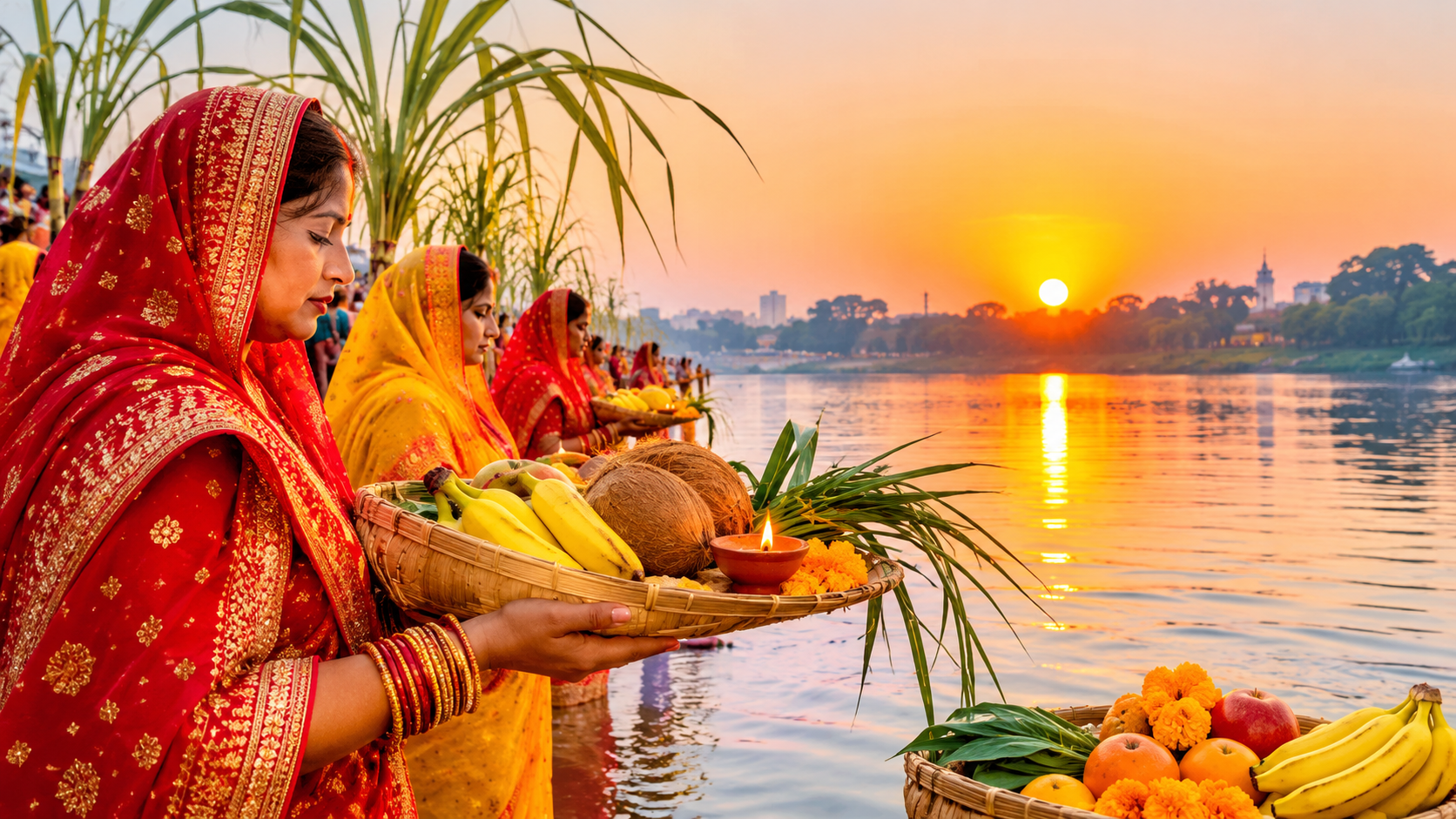
One of the most distinctive features of Chhath is the worship of both the setting and the rising Sun. Devotees offer Arghya at sunset and again at sunrise, expressing gratitude for the continuity of life.
There is a beautiful philosophy underlying this practice. While the world often celebrates success, power and achievement, Chhath teaches us to honour the setting Sun as much as the rising one. It reminds us that gratitude should not be reserved only for moments of prosperity. The setting Sun symbolises acceptance and humility, while the rising Sun represents hope, renewal and new beginnings.
The Sun shines equally upon everyone, without discrimination. Its light belongs to no particular nation, community or faith. In this sense, Chhath conveys a universal message of equality and human solidarity.
Nature Is Sacred, Not a Commodity
Indian civilisation has traditionally regarded rivers as mothers, trees as sacred, the Earth as a nurturing force and the Sun as the giver of life. These traditions reflect an ecological consciousness in which human beings recognise their dependence on the natural world.
Chhath brings this relationship into focus. Water, sunlight and the natural environment are central to its spiritual expression.
However, the sacredness of nature must extend beyond religious symbolism. If we worship rivers, we must also keep them clean. If we offer prayers to the Sun, we must recognise the importance of renewable energy. If we regard the Earth as our mother, we must refrain from exploiting her resources indiscriminately.
True spirituality is reflected not only in rituals but also in our conduct towards the world around us.
Cleanliness Is an Expression of Spiritual Purity
One of the remarkable aspects of Chhath is its emphasis on cleanliness and sanitation. Before the festival, devotees and communities clean riverbanks, ponds, roads and neighbourhoods. The places of worship are prepared with great care, reflecting the belief that external cleanliness complements inner purity.
This practice carries a powerful contemporary message. Can we claim to be spiritually conscious if the rivers we worship remain polluted? Can we speak of purity while allowing plastic waste to accumulate around our water bodies?
The environmental spirit of Chhath must therefore extend beyond its four days of observance. Cleanliness should become a year-round commitment. This philosophy also resonates with the United Nations Sustainable Development Goals concerning clean water, responsible consumption and climate action.
Simplicity Is the Path to Inner Fulfilment
Chhath is distinguished by austerity, discipline and simplicity. Devotees observe fasting, maintain personal purity and undertake demanding rituals with devotion. Traditional offerings include seasonal fruits, sugarcane, coconuts and locally sourced agricultural produce. Bamboo baskets and earthen utensils reflect a preference for indigenous materials.
In a world driven by consumerism, material accumulation and instant gratification, Chhath offers a different understanding of fulfilment.
It teaches us that happiness does not necessarily arise from possessing more. It can emerge from needing less, expressing gratitude, exercising self-restraint and living harmoniously with nature.
The festival also brings people from different social and economic backgrounds together, fostering cooperation, equality and collective belonging. Its support for traditional artisans and local producers further strengthens the dignity of labour and community livelihoods.
From Ritual to Responsible Living
Although historically associated with Bihar, Jharkhand and eastern Uttar Pradesh, Chhath has travelled across geographical boundaries. Today, it is celebrated in metropolitan cities and by Indian diaspora communities in Mauritius, Nepal, the United Kingdom, the United States, Australia and elsewhere.
Its growing international presence offers an opportunity to share its universal values with humanity.
The future of our planet requires more than scientific advancement and environmental policies. It also demands an ethical transformation in human behaviour.
Cultural traditions such as Chhath can nurture this consciousness by teaching respect for nature, conservation of water, responsible consumption and compassion towards fellow beings.
The objective is not to universalise a religious practice but to share the universal wisdom it embodies.
Let Every Sunrise Awaken a New Responsibility
Every civilisation has something valuable to contribute to humanity. India’s ancient traditions remind us that the relationship between human beings and nature is sacred, interdependent and inseparable.
Chhath is a living expression of this wisdom. It teaches gratitude through worship, discipline through fasting, purity through cleanliness and equality through collective participation.
Let its spirit extend beyond a few days of celebration. Let the cleanliness of Chhath become a year-round habit, its simplicity inspire responsible consumption, and its reverence for the Sun awaken a deeper commitment to environmental protection.
Ultimately, the highest form of worship is not merely to bow before nature but to safeguard it.
Dr Birbal Jha is a noted author, English litterateur and cultural activist.