China’s Chang’e-6 probe transferred samples it collected from the moon’s far side to a spacecraft in lunar orbit on Thursday, state news agency Xinhua reported.
After receiving the samples, the uncrewed spacecraft will fly back to Earth, with an expected landing in China’s Inner Mongolia region on June 25. If successful, China will be the first country to ever return lunar matter from the side of the moon that permanently faces away from Earth.
The Chang’e-6 probe took off from the moon’s far side on Tuesday, after spending two days on the surface digging up samples. While on the moon, the probe unfurled a Chinese flag made of basalt, a material that is abundant on the lunar surface, Xinhua said.
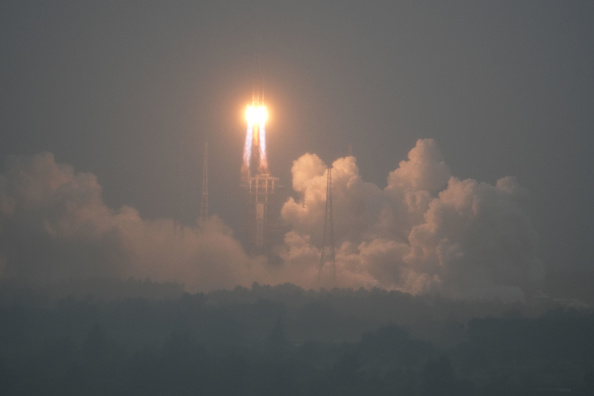
The mission has been a source of national pride in China. The probe’s launch in May drew thousands of tourists to the southern island province of Hainan and its every subsequent move, from landing on the moon’s far side to the return journey to Earth, has been a viral item on Chinese social media.
The successful transfer on Thursday of the precious samples, which scientists hope can reveal more about the origins of the solar system, also comes as the United States expresses growing concerns about the advances in China’s lunar and space exploration programmes.
Asked about the Chang’e-6 mission on Wednesday, U.S. space agency NASA chief Bill Nelson congratulated China but asked it to be more open about its space activities.
Nelson has repeatedly warned that the United States was in a “space race” with China to go back to the moon and that China would claim any water resources it found there as its own.
Responding to Nelson’s comments, Chinese foreign ministry spokesperson Mao Ning said on Thursday that the Chang’e-6 probe’s successful sampling on, and departure from, the moon’s far side represented historic steps for “mankind’s peaceful use of outer space” and that many countries praised the mission.
Mao also criticised the Wolf Amendment, a law passed by the U.S. Congress in 2011 that banned NASA from collaboration with “China or any Chinese-owned company unless such activities are specifically authorised.”
“Current China-U.S. space cooperation faces some problems and difficulties, the root cause is that U.S. domestic laws such as the Wolf Amendment have hindered normal exchanges and dialogues between the two countries’ space agencies,” Mao said.
(Reuters)