








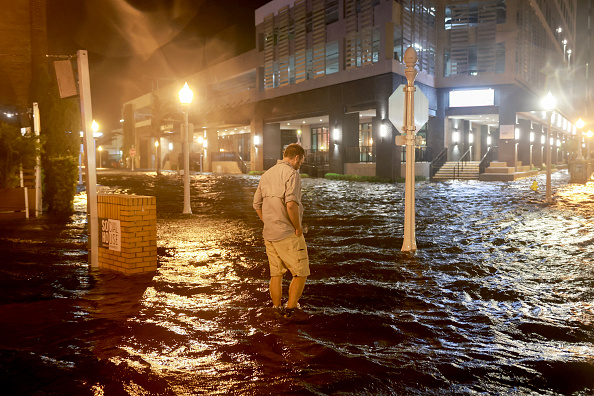
The brutal wind and torrential rainfall of Hurricane Milton that killed 16 people in Florida this week were worsened by human-caused climate change, a team of international scientists said on Friday.
Global warming made wind speeds around 10% stronger and rainfall greater by between 20% and 30%, according to an analysis by World Weather Attribution. The group of climate scientists studies the role of climate change in fueling extreme weather.
Milton intensified from a Category 1 storm into a tempestuous Category 5 in less than 24 hours, feeding off record- and near-record-warm waters in the Gulf of Mexico. It made landfall in Florida as a Category 3 hurricane.
Previous scientific analyses have shown climate change has made such temperatures in the Gulf between 400 and 800 times more likely.
This extra heat made Milton the third-fastest intensifying Atlantic hurricane on record, the U.S. National Hurricane Center said, with maximum sustained wind speeds reaching 180 mph (290 kph).
The scientist group noted that rainfall storms similar to Milton are now about twice as likely as they would be without human-induced warming.
“This study has confirmed what should already be abundantly clear: climate change is supercharging storms, and burning fossil fuels is to blame,” said Ian Duff, a campaigner at environmental nonprofit Greenpeace. “Millions of people across Florida – many of whom lack insurance – now face astronomical costs to rebuild shattered homes and communities.”
Scientists have previously identified a concerning trend of rapid hurricane intensification in the Atlantic over the past 50 years, which they said may be tied to climate change.
In light of extremely warm surface-water temperatures around Florida and the Caribbean, forecasters had expected a supercharged Atlantic hurricane season, with between four and seven major storms.
Milton is the second Category 5 hurricane this season, which runs from June through November. There have only been five other years since 1950 that registered more than one Category 5 hurricane in one season, the U.S. National Oceanic and Atmospheric Administration said.
(Reuters)