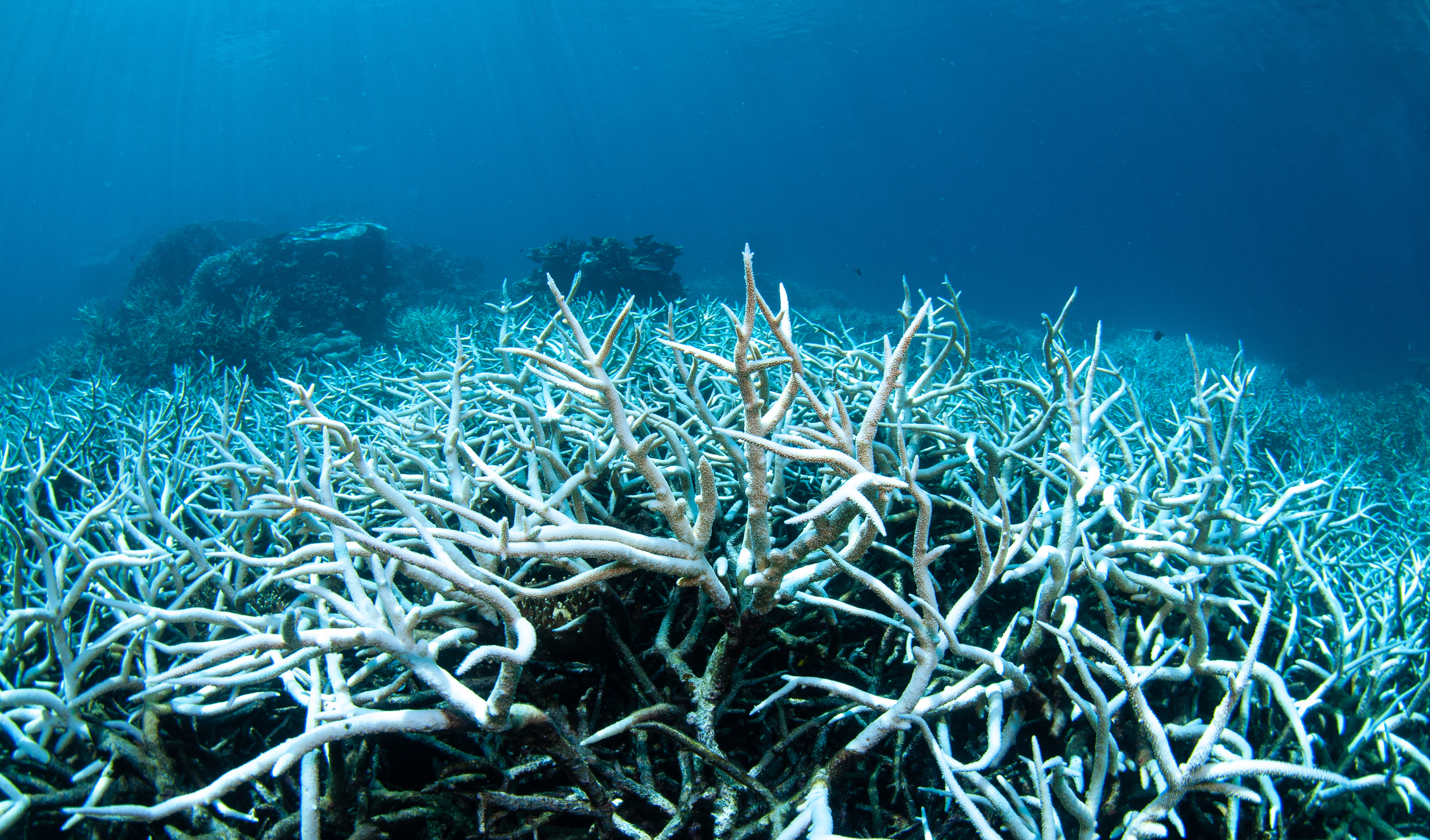
Global warming is crossing dangerous thresholds sooner than expected with the world’s coral reefs now in an almost irreversible die-off, marking what scientists on Monday described as the first “tipping point” in climate-driven ecosystem collapse.
The warning in the Global Tipping Points report by 160 researchers worldwide, which synthesizes groundbreaking science to estimate points of no return, comes just weeks ahead of this year’s COP30 climate summit being held at the edge of the Amazon rainforest in Brazil.
That same rainforest system is now at risk of collapsing once the average global temperature warms beyond just 1.5 degrees Celsius based on deforestation rates, the report said, revising down the estimated threshold for the Amazon.
Also of concern if temperatures keep rising is the threat of disruption to the major ocean current called the Atlantic Meridional Overturning Circulation, or AMOC, which helps to ensure mild winters in northern Europe.
“Change is happening fast now, tragically, in parts of the climate, the biosphere,” said environmental scientist Tim Lenton at the University of Exeter, who is the lead author of the report.
SOME POSITIVE SIGNS
Lenton noted positive signs when it came to phasing out the fossil fuels most responsible for climate change. Renewables, for example, accounted for more electricity generation than coal this year for the first time, according to data from the nonprofit think tank Ember.
“Nobody wants to be just traumatized and disempowered,” Lenton said. “We still have some agency.”
The scientists implored countries at November’s COP30 to work toward bringing down climate-warming carbon emissions.
Scientists have been surprised by how quickly changes are unfolding in nature, with average global temperatures already having warmed by 1.3-1.4 degrees Celsius (2.3 to 2.5 degrees Fahrenheit) above the preindustrial average, according to data from U.N. and EU science agencies.
WARMEST ON RECORD
The last two years were Earth’s warmest on record, with marine heatwaves that stressed 84% of the world’s reefs to the point of bleaching and, in some cases, death. Coral reefs sustain about a quarter of marine life.
For corals to recover, the world would need to drastically ramp up climate action to reverse temperatures back down to just 1 degree C above the preindustrial average, the scientists suggested.
“The new report makes clear that each year there is an increase in the scope and magnitude of the negative impacts of climate change,” said Pep Canadell, a senior scientist at Australia’s CSIRO Climate Science Centre.
The world is currently on track for about 3.1 degrees C of warming in this century, based on national policies.
(REUTERS)