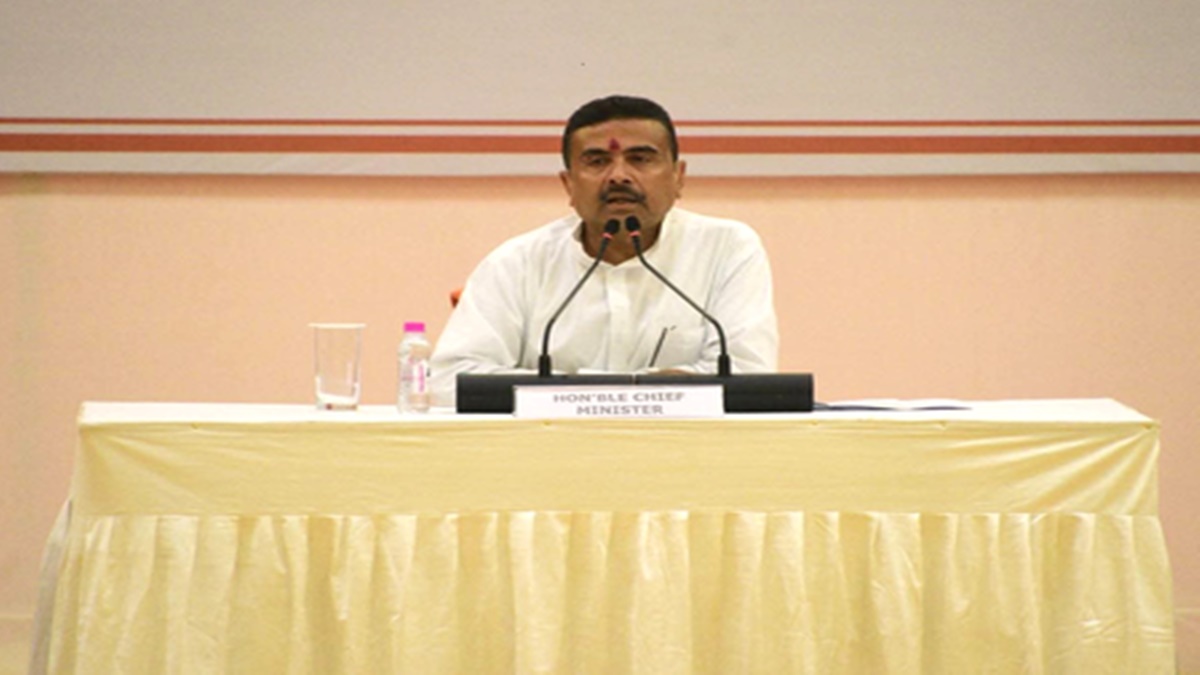
West Bengal Chief Minister Suvendu Adhikari will chair a key meeting at the state secretariat Nabanna on Friday to review and accelerate the census process in the state.
The decision to initiate the census process was taken at the first Cabinet meeting of the new government led by Adhikari after he assumed office as West Bengal’s ninth Chief Minister on May 11.
Subsequently, the state government issued a notification assigning responsibilities to officials at multiple administrative levels to carry out the exercise. At the district level, divisional commissioners, district magistrates, additional district magistrates, sub-divisional magistrates, block development officers (BDOs) and joint BDOs have been entrusted with census-related responsibilities.
In urban and municipal areas, commissioners, additional commissioners, municipal executive officers and officials of equivalent rank have been directed to oversee the process.
Friday’s meeting is expected to focus on reviewing the progress of preparatory work and identifying measures to expedite the census exercise.
Although preliminary groundwork for the census had begun in several states earlier, the process in West Bengal remained stalled until the Bharatiya Janata Party (BJP)-led government assumed office following the recent Assembly elections.
Adhikari has accused the previous Mamata Banerjee-led Trinamool Congress government of failing to extend adequate cooperation to the Union Home Ministry, resulting in delays in initiating the census process in the state.
According to sources in the state secretariat, key issues likely to be discussed at Friday’s meeting include census preparation, recruitment and deployment of staff, training of personnel, methods of data collection and coordination with the Union government.
“There could also be discussions on the possibility of digital data collection,” a state secretariat official said.
The Directorate of Census Operations, West Bengal, has indicated that a dedicated mobile application will be used by census officials during door-to-door data collection.
The process will also include a self-enumeration facility, allowing residents to voluntarily submit their details online through a government portal. After submission, a self-enumeration ID will be generated for verification purposes. Enumerators will then verify and upload the data to a central repository.
(IANS Inputs)