Dr Santosh Chauhan’s group at the CSIR-Centre for Cellular and Molecular Biology (CSIR-CCMB), Hyderabad, have discovered a critical mechanism that human cells use to detect and fight viral infections.
The study identifies a dual-action protein that acts as an early warning sensor and activator for the body’s immune system. It is now published in The EMBO Journal.
When a virus invades a cell, the host must quickly spot the intruder and sound the alarm before the virus multiplies. About seven years ago, Dr Chauhan’s group had hypothesised that a specialised group of human proteins could serve a dual role: directly detecting viral genetic material and immediately tagging key cellular proteins to sound the immune alarm.
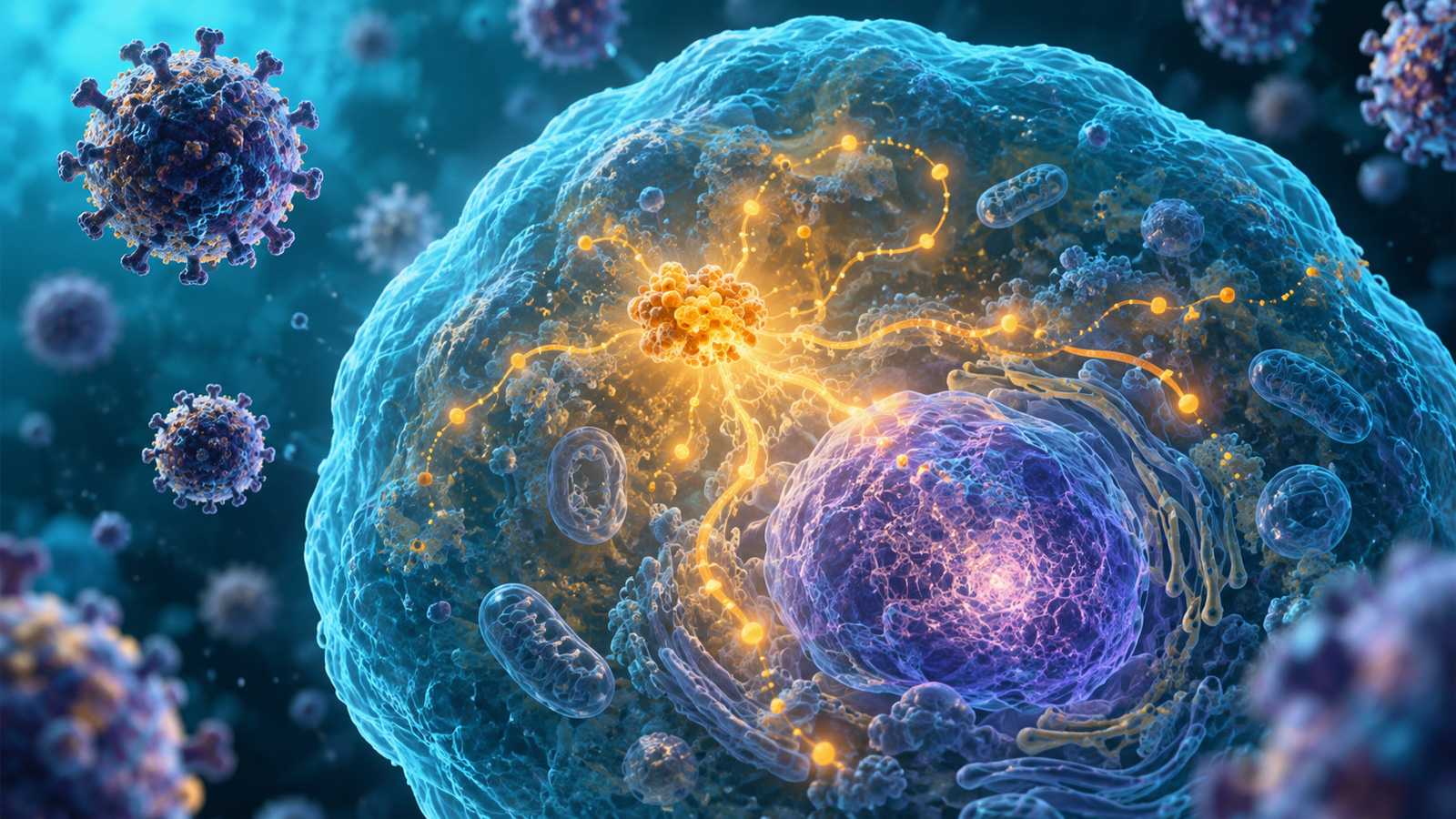
In the new study, the team has discovered that a protein called DZIP3 fulfils exactly this role. When DZIP3 detects viral RNA inside a cell, it changes its shape to turn itself on. Once activated, it moves to the cell’s energy factories, the mitochondria, where it tags and activates the major immune defence proteins. This triggers a powerful immune response, unleashing defensive molecules known as Type-I interferons to block the virus from multiplying.
The team demonstrated that this newly discovered pathway provides broad protection against several disease-causing viruses, including SARS-CoV-2, Chikungunya, and Japanese Encephalitis.
Building on this discovery, Dr Chauhan’s team is now developing small-molecule drug candidates to target and boost DZIP3 activity, aiming to artificially enhance the body’s natural antiviral immunity.
“Discovering how DZIP3 senses viral RNA and directly triggers the cell’s immune machinery gives us a deeper understanding of human immunity,” said Dr Santosh Chauhan, Senior Principal Scientist at CSIR-CCMB and lead author of the study. “Uncovering these natural cell defence mechanisms opens up exciting new possibilities, and targeting DZIP3 with small molecules could lead to broad-spectrum antiviral therapies against emerging viral threats.”
Dr Rinku Sahu was the first author of the study, with collaborators from national and international institutions. The research was funded by the Department of Biotechnology (DBT), Government of India.
(ANI)