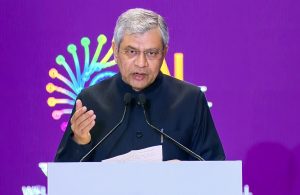








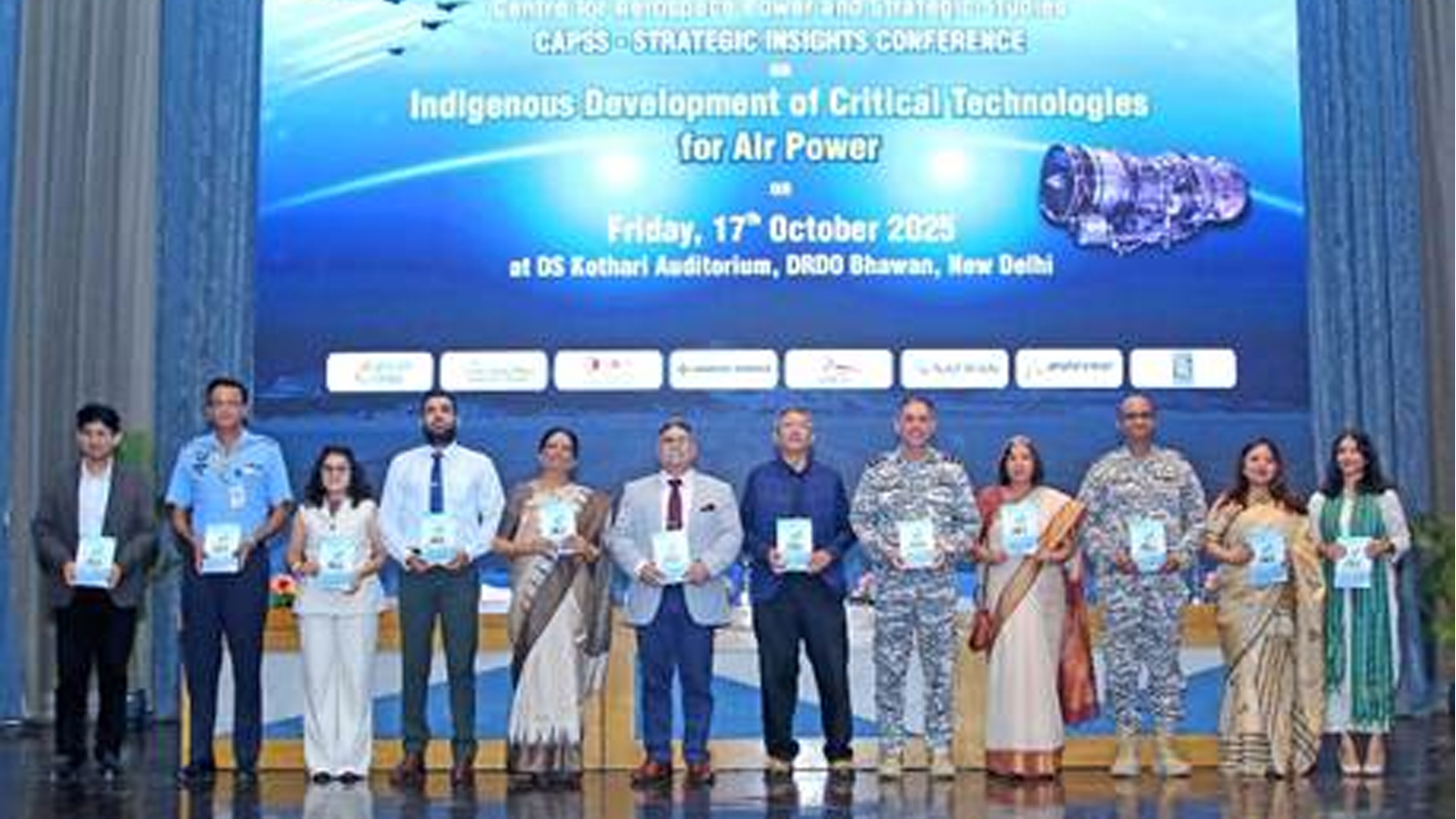
Defence Secretary Rajesh Kumar Singh on Friday emphasised the need for a structured policy framework to strengthen India’s domestic industrial base through a balanced partnership between the public and private sectors. He was delivering the inaugural address at the Strategic Insight Conference on Indigenous Development of Critical Technologies for Air Power, organised by the Centre for Aerospace Power and Strategic Studies (CAPSS) in New Delhi.
Singh stressed that diversifying the country’s defence industrial base would help end monopolies, promote innovation, and enhance ease of doing business. Reiterating the government’s commitment to Aatmanirbharta in defence, he underscored the importance of developing advanced aerospace technologies, conducting rigorous field trials, and indigenously producing long-range air-to-air missile systems to bolster India’s air power capabilities.
Highlighting the operational impact of air power, Vice Chief of the Air Staff Air Marshal Narmdeshwar Tiwari cited lessons from Operation Sindoor. He noted that while India has made significant strides in indigenous aircraft design and development, it must also advance in critical domains such as electronic warfare, advanced sensors, radar systems, and secure data links to enhance its operational edge.
In her keynote address, Director General, AERO, Defence Research and Development Organisation (DRDO) Dr K Rajalakshmi Menon, outlined the disruptive potential of unmanned aerial vehicles, multi-sensor fusion, and artificial intelligence in shaping future air operations. She also highlighted advancements in stealth technology, aerostats, and airships with enhanced sensors, as well as the integration of emerging technologies such as quantum computing, photonics, and blockchain into defence systems.
DG CAPSS Air Vice Marshal (Retd) Anil Golani drew attention to the evolving security landscape in India’s neighbourhood and the accelerating technological race. He stressed the importance of investing in next-generation avionics, intelligent propulsion systems, super-cruise capabilities, and fly-by-light technologies to secure India’s aerospace dominance in the years ahead.
As part of the event, the Defence Secretary released the book Asian Defence Review 2025: Geo-political Shifts and Strategic Partnership Multilateralism in the Indo-Pacific. The conference also featured multiple technical sessions on indigenous jet engine co-development, fighter aircraft programmes, unmanned systems, and strengthening the aerospace production ecosystem.
The event brought together senior officials from the Ministry of Defence, Indian Air Force, DRDO, and leading industry stakeholders to chart a path for India’s technological self-reliance in the aerospace and defence sectors.