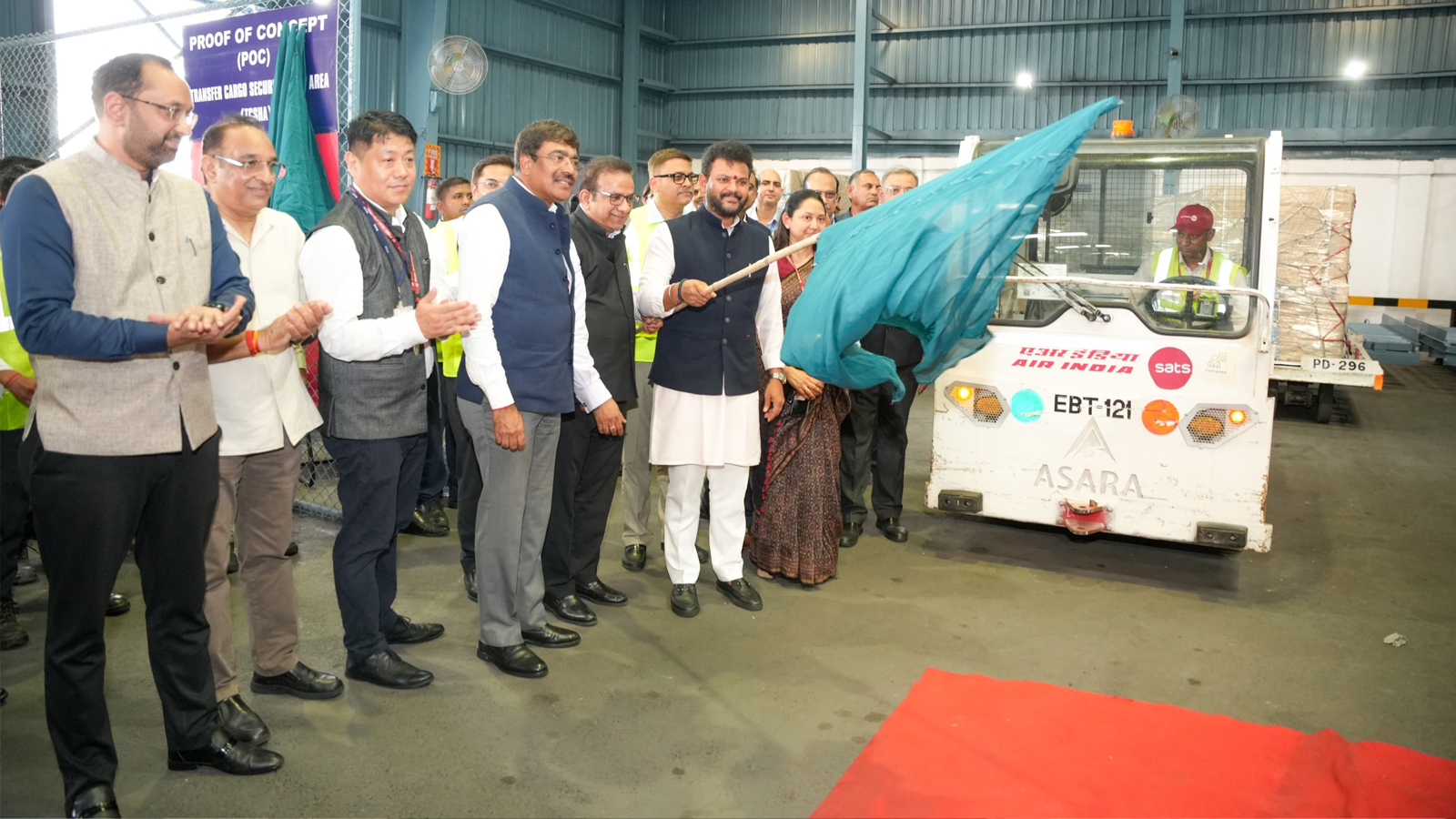
Civil Aviation Minister Ram Mohan Naidu on Wednesday flagged off the scaled-up phase of India’s transshipment cargo reform at the Indira Gandhi International Airport in Delhi, expanding the network to four additional domestic origin stations and two international destinations.
The expanded network will now connect Bengaluru, Ahmedabad, Mumbai and Hyderabad with London and Copenhagen through Delhi’s Transshipment Excellence Centre (TEC), following the successful completion of a proof-of-concept project on the Chennai-Delhi-Frankfurt route.
The proof of concept for domestic-to-international transshipment began on June 20, 2026, with Air India operating the service end-to-end. Since its launch, around 280 metric tonnes of cargo has been transshipped through the Delhi facility, while aircraft capacity utilisation increased from 75 per cent to nearly 100 per cent.
According to the Civil Aviation Ministry, the expansion is expected to increase Air India’s monthly cargo carriage on the covered routes from 1,763 metric tonnes to 3,183 metric tonnes, representing an increase of nearly 80 per cent.
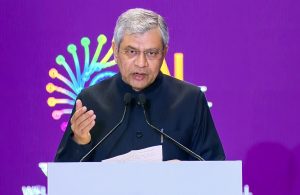
Speaking at the Transshipment Excellence Centre at Terminal 2 of IGI Airport, Naidu said the reform was aimed at reducing turnaround time, handling costs and congestion at cargo terminals.
The proof-of-concept exercise demonstrated a significant reduction in average end-to-end transit time on the Chennai-Delhi-Frankfurt route, from around 60 hours to 20 hours, he said.
The Minister said the government was working to expand the model further and eventually establish India as a global air cargo transshipment hub by leveraging the country’s geographical position between eastern and western markets.
“While our immediate focus is on Domestic-to-International transshipment, our larger ambition is to position India as a global cargo transshipment hub,” Naidu said, adding that the framework would subsequently be expanded to International-to-International and International-to-Domestic transshipment.
The reform follows a revised framework notified through Addendum-II to AVSEC Circular No. 6/2024 by the Bureau of Civil Aviation Security (BCAS) on July 21, 2025. Under the framework, secured transshipment cargo can be moved through dedicated Transfer Cargo Security Hold Areas (TCSHAs) without mandatory re-screening, subject to prescribed security safeguards.
Naidu said the removal of mandatory re-screening had addressed a long-standing industry concern and was helping improve the efficiency and competitiveness of India’s air cargo ecosystem.
He also said the initiative was part of the government’s broader effort to develop major Indian airports as global transit hubs. Following the strengthening of hub-and-spoke operations for passengers, similar measures are being undertaken to build India’s air cargo hub capabilities.
The Minister congratulated Delhi International Airport Limited (DIAL), BCAS, CISF, airlines, Customs and other stakeholders for their coordination in implementing the reform.
The ministry said additional domestic origin stations and international destinations are expected to be brought under the framework in the coming months, further expanding India’s air cargo connectivity and strengthening its position as a competitive global aviation hub.
The event was attended by Civil Aviation Secretary Samir Kumar Sinha, Airports Authority of India Chairman Vipin Kumar, Joint Secretary in the Ministry of Civil Aviation Asangba Chuba Ao, BCAS Joint Director General Pratibha Ambedkar and senior officials from the ministry, AAI, BCAS, DIAL, Air India and other stakeholders.