











Delhi has expanded its air quality monitoring network to 60 stations with the inauguration of 13 new Continuous Ambient Air Quality Monitoring Stations (CAAQMS), while 150 electric buses were flagged off as part of efforts to strengthen public transport and tackle air pollution.
Union Environment, Forest and Climate Change Minister Bhupender Yadav and Delhi Chief Minister Rekha Gupta reviewed pollution mitigation measures at the Anand Vihar hotspot on Tuesday. They also visited the Delhi Pollution Control Committee’s (DPCC) AI-enabled Integrated Command and Control Centre (ICCC) at Shastri Park.
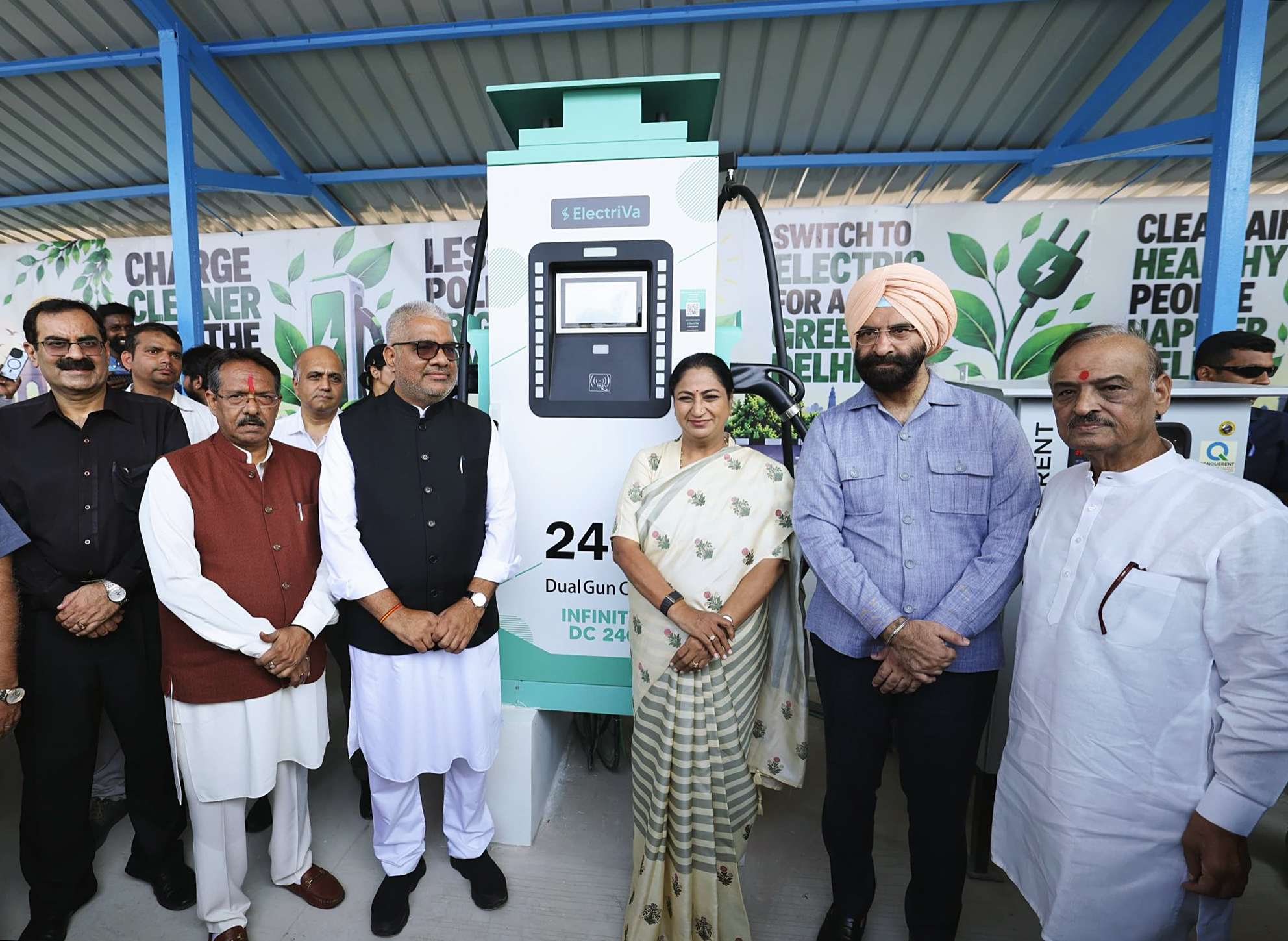
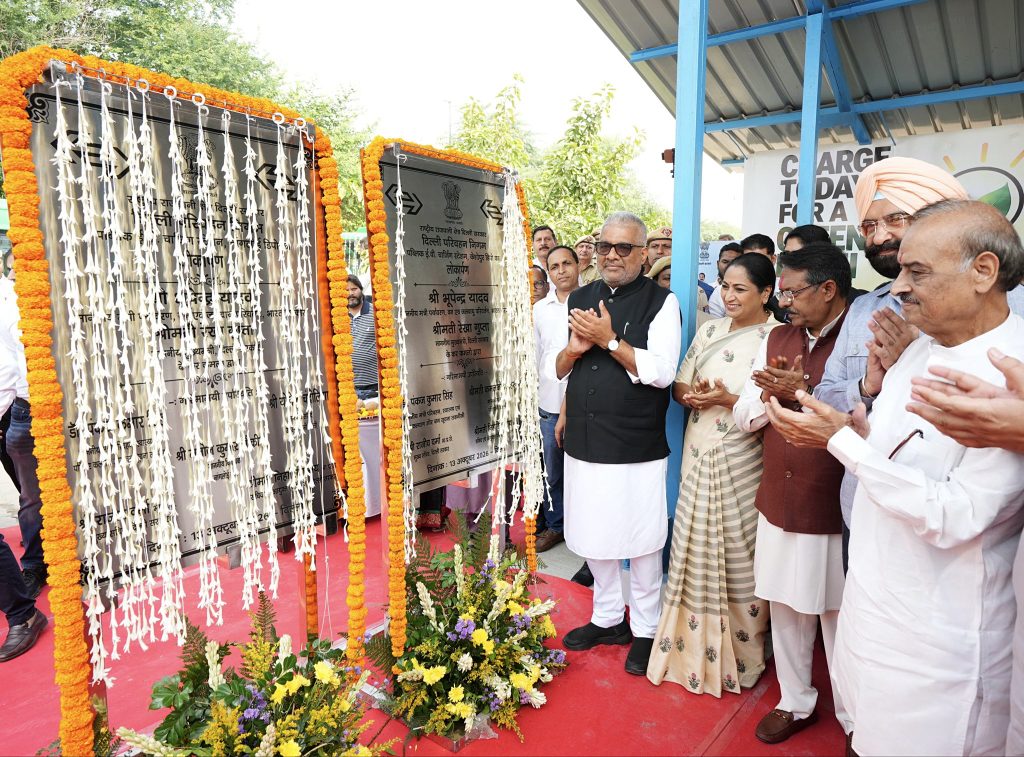
During the visit, Bhupender Yadav and Rekha Gupta virtually inaugurated public electric vehicle charging stations at ISBT Anand Vihar, Nand Nagri depot, Rohini Sector-37 depot, Nangloi depot and Keshopur depot. They also flagged off 150 electric buses from Swami Vivekanand ISBT, Anand Vihar.
The 13 new air quality monitoring stations have been installed across Delhi to provide continuous data on air quality and meteorological conditions. The information will support scientific assessment, regulatory enforcement and public dissemination of the Air Quality Index.
With these additions, Delhi’s monitoring network has increased from 47 to 60 stations operated by various agencies, including DPCC, the Central Pollution Control Board, the India Meteorological Department, the Indian Institute of Tropical Meteorology and the Ministry of Housing and Urban Affairs. Real-time air quality data is available through the CPCB server and the SAMEER mobile application.
Reviewing the situation at Anand Vihar, the ministers were briefed on the factors contributing to pollution in the area, including traffic congestion, road dust, unpaved surfaces, construction and demolition activities, and the open burning and dumping of waste.
Yadav said short- and long-term mitigation measures had been assigned to 11 agencies. Actions taken include paving internal roads, removing encroachments and illegal construction and demolition waste, and enforcing dust-control measures at construction sites. Greening activities are also being undertaken as part of longer-term efforts.
The Union Environment Minister credited coordinated action by various Delhi government departments with containing the persistent pollution problem at the Anand Vihar hotspot.
At the AI-enabled ICCC in Shastri Park, the delegation reviewed a digital monitoring platform designed to integrate data on air quality, dust-control sites, ambient noise, industrial emissions, stubble burning, public grievances and enforcement vehicles. The centre is intended to support real-time monitoring, data-driven decisions and coordinated enforcement across agencies.
According to the government, the ICCC is designed to integrate 15 external data systems, of which nine have been connected, while the remaining six are being integrated in phases.
Yadav congratulated the Delhi government on expanding electric mobility, strengthening the air quality monitoring network and connecting the monitoring infrastructure with the ICCC. The measures form part of broader efforts to improve pollution monitoring and enforcement in the national capital.









