







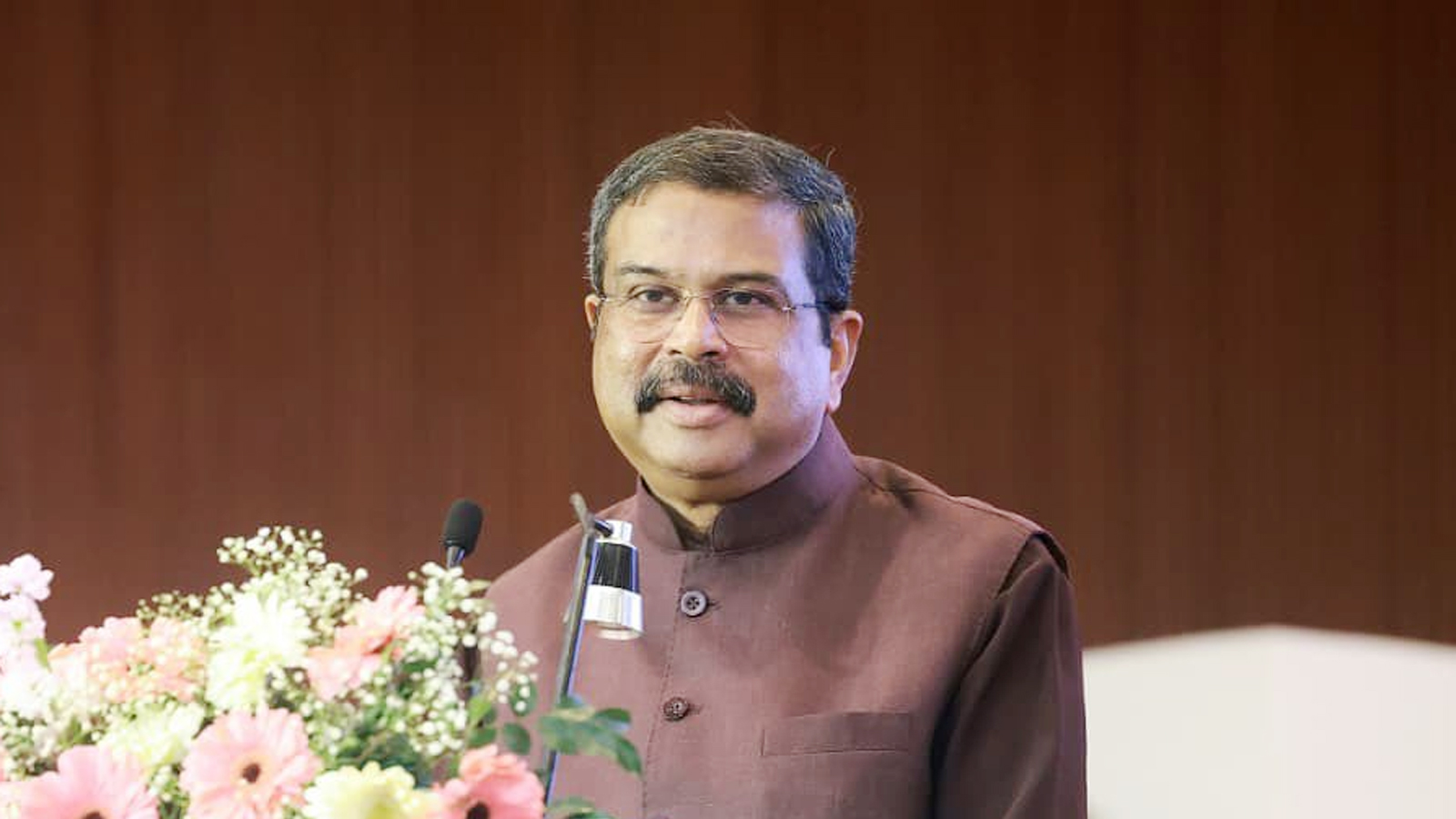
Union Education Minister Dharmendra Pradhan on Monday called upon foreign higher education institutions to collaborate with India’s fast-growing and innovation-driven education system, as he addressed diplomats from over 50 countries at the Study in India Edu-Diplomatic Conclave 2026 in the national capital.
The conclave, organised by the Ministry of Education at Sushma Swaraj Bhawan, brought together Ambassadors, High Commissioners and representatives of diplomatic missions to deliberate on strengthening international cooperation in higher education.
Highlighting the transformation underway under the National Education Policy 2020 (NEP 2020), Pradhan said India is making significant strides in the internationalisation of education, with a strong focus on quality, innovation and affordability.
Referring to Prime Minister Narendra Modi’s vision of India becoming a developed nation by 2047 – the centenary of Independence – the Minister said the country remains a bright spot in the global economic landscape, offering vast opportunities to learn, research, innovate and implement.
“India invites the world to study, innovate and grow together,” Pradhan said, underlining that education remains the most enduring bridge between societies in a rapidly changing world.
The Minister emphasised that India’s strengths lie in its vibrant knowledge ecosystem, demographic dividend and expanding economy. Through NEP 2020 and the Study in India initiative, he said, the country is creating wider global pathways for students, researchers and institutions.
From artificial intelligence and biotechnology to semiconductors and sustainable energy, Pradhan noted that India is emerging as a trusted innovation partner, advancing a collaborative Global South model rooted in shared knowledge and capacity-building.
He urged the assembled diplomats to deepen partnerships with India’s multidisciplinary and access-friendly higher education system.
Secretary, Higher Education, Dr. Vineet Joshi, said NEP 2020 has provided clear direction to higher education reforms over the past six years, particularly in promoting multidisciplinary education, integrating skilling into mainstream curricula, and strengthening international engagement.
He added that Indian institutions are expanding global outreach through joint, dual and twinning programmes, while premier universities are increasing their international footprint.
Dr. Joshi also highlighted that the University Grants Commission (UGC) has established a transparent and time-bound regulatory framework enabling foreign universities to set up campuses in India. Applications from leading institutions across Australia, Italy, the United Kingdom and the United States, he said, have been processed within a month under the 2023 regulations.
The conclave featured thematic sessions on Indian Knowledge Systems, academic partnerships through SPARC and GIAN, artificial intelligence and advanced technologies, UGC regulations for foreign university campuses, international branch campuses, skill internationalisation, and Bharat Innovates 2026.
Discussions highlighted concrete avenues for collaboration, including student mobility, joint academic programmes, research partnerships and the establishment of international campuses in India.
The Study in India Edu-Diplomatic Conclave 2026 served as a dedicated platform to strengthen India’s diplomatic engagement in education, inviting students from partner countries to pursue higher education and short-term programmes in India while encouraging globally ranked universities to establish campuses in the country.