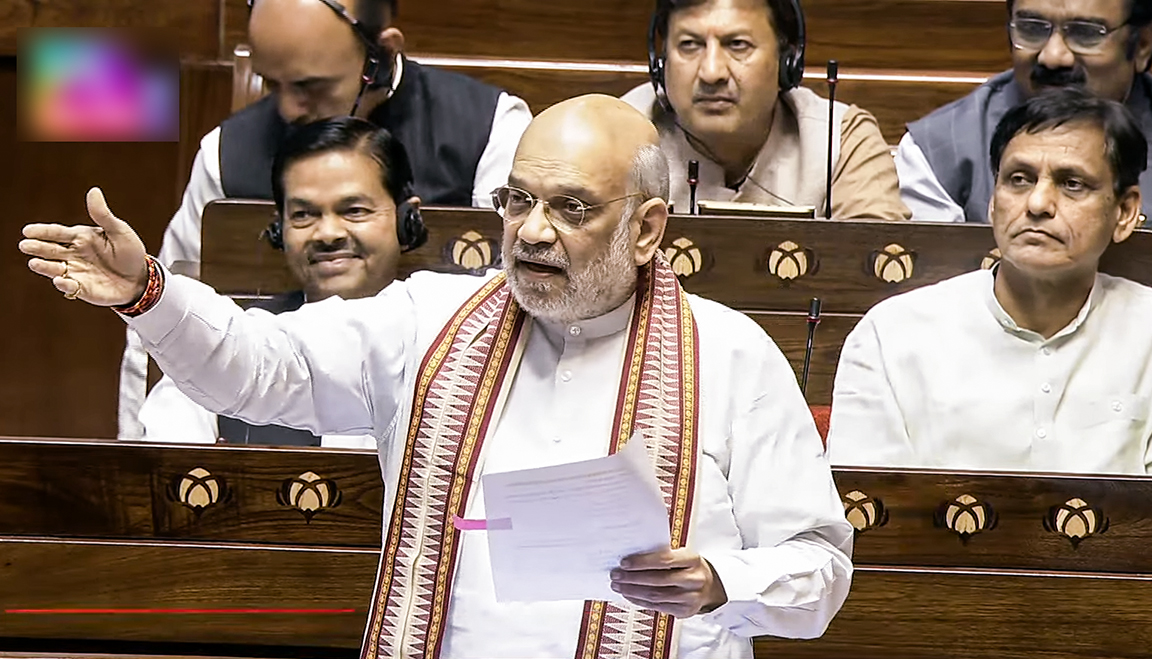
Union Home Minister Amit Shah introduced the Disaster Management Amendment Bill in the Rajya Sabha on Tuesday. During the discussion, the Home Minister emphasised that disasters are directly linked to climate change and stressed the need for proactive measures to mitigate their impact.
“The best way to prevent disasters is to address climate change,” he said.
Addressing concerns raised by several MPs about the Bill undermining the federal structure, the Home Minister clarified that the amendments do not centralise power. Instead, they enhance disaster management capabilities at the district level.
“This Bill does not infringe on the federal structure. The primary responsibility for disaster management lies with the District Disaster Management Authority (DDMA), which operates under the state government,” he said.
He further emphasised that disaster response funds would be allocated at both the state and district levels, ensuring a decentralised approach.
Refuting allegations of bias, the Home Minister said, “If there were bias, it would be due to the law made by the UPA government in 2005. We have not changed that framework. In fact, we have provided states with more financial assistance than what the Finance Commission recommended.”
The Home Minister said that disaster management is a shared responsibility between the Centre and the states. “Prime Minister Narendra Modi’s 10-point agenda on disaster risk reduction has been accepted by over 40 countries. This is not just the Centre’s responsibility, it involves state governments, local bodies, and every citizen,” he said.
Drawing on India’s ancient traditions, the Home Minister said, “Our concern for climate preservation is not new. From the Yajurveda’s prayers for universal peace to the advanced disaster management practices seen in the Harappan and Mauryan civilisations, India has always recognised the relationship between humanity and nature.”
The Home Minister also asserted that while traditional knowledge remains valuable, modern scientific approaches and global best practices must be adopted. “This amendment reflects that balance,” he added.
Earlier in the debate, Congress Rajya Sabha MP Neeraj Dangi criticised the proposed amendments, saying, “This Bill weakens federalism, ignores the expectations of local communities, and lacks a comprehensive approach to disaster risk management, including climate change adaptation and animal welfare.”
(Inputs from IANS)