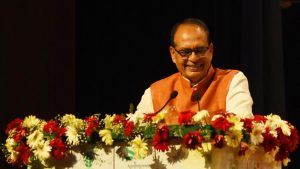
Union Agriculture and Farmers’ Welfare and Rural Development Minister Shivraj Singh Chouhan has called for an integrated approach combining science, policy and market support to transform dryland agriculture, strengthen food and nutritional security and improve farmers’ livelihoods.
Addressing the opening session of Dryland Congress 2026 at the National Agricultural Science Complex (NASC) in New Delhi on Thursday, Chouhan said drylands should not be viewed as a weakness. With appropriate scientific interventions, supportive policies and market access, they could become a major source of strength for India, Africa and other regions facing similar challenges.
The three-day Congress, which began on September 10, has brought together more than 800 delegates from over 25 countries, including scientists, policymakers, development partners, industry representatives, academicians, civil society organisations and farmers.
Focus on resilient and profitable dryland agriculture
Chouhan said food security, nutritional security and farmers’ prosperity must remain at the centre of agricultural transformation. He stressed that the success of agricultural systems should not be measured only by higher production but also by improved livelihoods and greater prosperity for farming communities.
The Congress is focusing on crop resilience, sustainable management of dryland landscapes, nutrition, markets and policies, as well as livelihood opportunities for communities dependent on dryland agriculture.
The farmer perspective was represented by Padma Shri awardee and farmer Bhikiya Ladakya Dhinda, highlighting the importance of incorporating farmers’ experiences and requirements into strategies for transforming dryland agriculture.
Whole-of-system approach needed
Dr M. L. Jat, Secretary, Department of Agricultural Research and Education (DARE) and Director General, ICAR, called for a whole-of-system, whole-of-society and whole-of-government approach to transform drylands.
Drawing on India’s experience in transforming agricultural systems, Jat said interventions must go beyond agriculture to create new opportunities and improve livelihoods in dryland regions. He emphasised the need to move from recommendations to action and from isolated interventions to integrated systems.
Narendra Bhooshan, Secretary, Department of Land Resources, highlighted the potential of digital public infrastructure, land-resource management and community action in reimagining dryland regions.
Science and innovation at the centre
The first day featured three thematic sessions on breeding for accelerated genetic gains, climate-resilient dryland landscapes, and better diets and nutrition through markets and policies.
Experts discussed faster crop improvement, climate resilience, sustainable landscape management, improved nutrition and stronger livelihood opportunities.
ICRISAT Director General Dr Himanshu Pathak stressed the global importance of drylands for food systems and livelihoods and called for a roadmap to make drylands more productive, profitable and resilient while reducing out-migration.
Former ICAR Director General Dr R. S. Paroda highlighted the importance of water management and called for greater economic and nutritional value from every drop of water. Former ICAR chief Dr Panjab Singh emphasised the need for farming systems that are profitable, resilient, environmentally sustainable and attractive to future generations.
South-South cooperation highlighted
Speakers also stressed the importance of South-South cooperation in sharing knowledge, expertise and successful models across dryland regions.
Former ICRISAT Director General Dr William D. Dar said such cooperation enables countries of the Global South to learn, innovate and scale solutions together as equal partners. CGIAR Chief Scientist Dr Sandra Milach said India is increasingly emerging as a source of solutions for the Global South that can be adapted to dryland regions facing similar challenges.
During the opening session, Chouhan also launched “Transforming the Drylands: The ICRISAT Journey”, documenting more than five decades of ICRISAT’s work in science, innovation, partnerships and impact. The Dryland Congress 2026 Abstract Book, containing more than 250 abstracts, and ICRISAT’s research and corporate profile were also released.
The Congress will continue over the next two days with deliberations on scientific innovation, climate resilience, sustainable farming systems, nutrition, markets, policies and livelihood opportunities for transforming dryland agriculture.