India’s decision to suspend the Indus Waters Treaty (IWT) following the recent terror attack in Pahalgam marks a significant diplomatic escalation in its response to cross-border terrorism. On Tuesday, terrorists killed 26 tourists at the Baisaran meadow in Pahalgam, Jammu and Kashmir—a brutal strike that has become one of the deadliest in the Valley since the 2019 Pulwama attack. In response, the Ministry of External Affairs announced strong retaliatory measures, including putting the IWT in abeyance “with immediate effect” until Pakistan “credibly and irreversibly abjures its support for cross-border terrorism.”
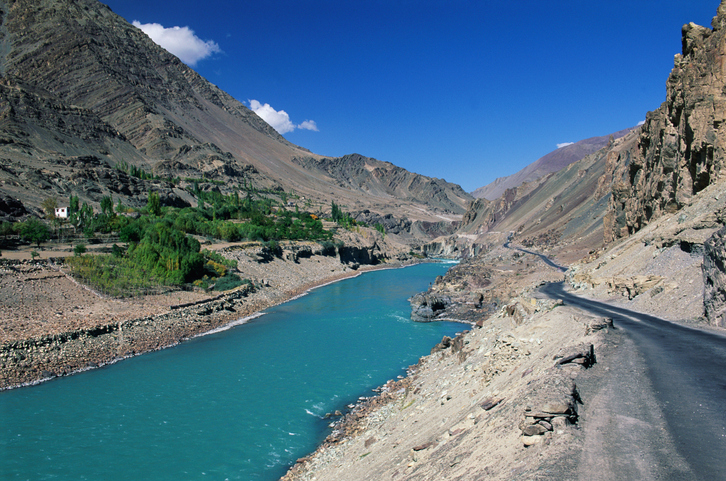
Signed in 1960, the Indus Waters Treaty is considered a landmark international agreement between India and Pakistan. It was negotiated with the help of the World Bank and allocates the eastern rivers of the Indus system (Ravi, Beas, and Sutlej) to India, and the western rivers (Indus, Jhelum, and Chenab) to Pakistan. Although Pakistan receives roughly 80% of the total water from the system, India is permitted limited use of the western rivers for non-consumptive needs such as irrigation, transport, and hydropower. The treaty includes dispute resolution mechanisms ranging from a bilateral Permanent Indus Commission to international arbitration.
Despite multiple conflicts between India and Pakistan, the IWT has endured and is widely regarded as a rare and successful example of sustained cooperation in South Asia. Former U.S. President Dwight D. Eisenhower even described the treaty as “one bright spot” in a troubled region. However, the treaty has not been immune to strain. India has long expressed dissatisfaction with the pact, especially during periods of heightened terrorism. Prime Minister Narendra Modi, after the 2016 Uri attack, famously stated, “Rakt aur paani ek saath nahin beh sakta” (blood and water cannot flow together).
India’s grievances with Pakistan include repeated objections raised by Islamabad over hydropower projects such as Kishanganga and Ratle in Jammu and Kashmir. Pakistan has argued that these projects violate treaty terms, while India maintains they are fully compliant. In September 2024, India formally notified Pakistan of its intent to amend the treaty, indicating a shift in its long-standing posture.
Following the Pahalgam attack, India’s move to suspend the treaty adds a new dimension to this strained water-sharing relationship. Additionally, India expelled Pakistan’s military, naval, and air advisors from the High Commission in New Delhi, declaring them persona non grata. India will also withdraw its corresponding advisors from Islamabad, and five support staff members from each side will also return home. The Integrated Check Post at Attari has been closed with immediate effect.
Pakistan’s Defence Minister Khawaja Asif accused India of exploiting a terror incident to dismantle a treaty it has long sought to evade. He posted portions of the treaty on social media, arguing that India’s action violates its binding legal obligations. Deputy Prime Minister and Foreign Minister Ishaq Dar said Prime Minister Shehbaz Sharif had convened the National Security Committee to respond to India’s decisions. Other Pakistani leaders, including National Assembly Speaker Ayaz Sadiq and former Information Minister Fawad Chaudhry, condemned the suspension as politically motivated and a breach of international law, claiming it would disproportionately harm Pakistani farmers.
International experts have expressed concern as well. Michael Kugelman, Director of the South Asia Institute at the Wilson Center, noted that the treaty has served as a valuable confidence-building measure between the two countries. Its suspension, he said, is unprecedented and represents a major setback for regional water diplomacy.
(With ANI inputs)