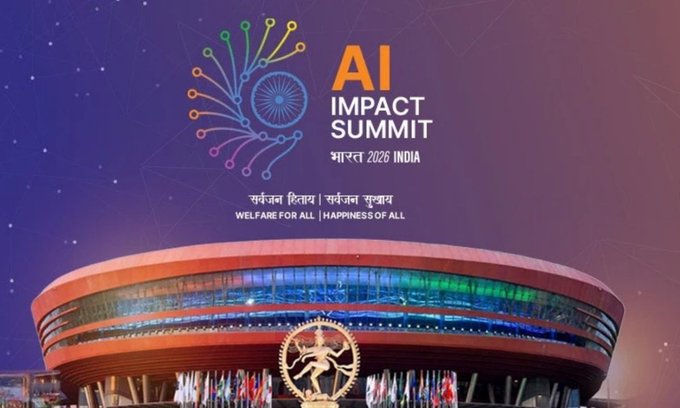
India will host the India–AI Impact Summit 2026 in New Delhi from February 16 to 20, bringing together governments, industry leaders and researchers from over 100 countries. The summit, according to the Ministry of Electronics & IT (MeitY), is aimed at shaping global cooperation on artificial intelligence with a focus on real-world outcomes rather than broad declarations.
At the centre of the summit’s framework are the “Seven Chakras”, or seven interlinked working groups designed around thematic areas that shape how AI should be developed, governed and deployed, especially in emerging and developing economies.
Why are the Chakras important?
The Ministry views AI as a strategic tool for economic growth, social inclusion and national capacity building. The Chakras aim to translate this vision into specific policy areas, linking technology with employment, governance, sustainability, and public services.
What are the guiding principles?
The summit is anchored around three broad principles, or Sutras: People, Planet and Progress. These principles focus on human-centric AI, environmentally responsible systems, and inclusive economic development. The Seven Chakras are built to operationalise these principles.
Seven Chakras explained
- Human Capital
This Chakra focuses on preparing the workforce for an AI-driven economy. India has seen rapid growth in AI talent over the last decade, and the emphasis is on skilling, reskilling and managing job transitions so that automation does not widen employment gaps.
- Inclusion for Social Empowerment
Here, the focus is on using AI to improve access to services. Initiatives such as language translation platforms, voice-based citizen services and AI tools for farmers are cited as examples of how technology can reach rural and underserved populations.
- Safe and Trusted AI
This Chakra deals with governance, ethics and risk management. India is working on institutional frameworks and safety mechanisms to ensure AI systems remain transparent, accountable and aligned with public interest as their use expands.
- Science and Research
AI’s role in scientific advancement forms the core of this group. Applications include climate modelling, health research and agricultural innovation, with an emphasis on strengthening domestic research capacity.
- Resilience, Innovation and Efficiency
This Chakra looks at how AI can improve efficiency in infrastructure, disaster response and public administration, while also making systems more resilient to shocks and disruptions.
- Democratising AI Resources
Access to computing power, data and models remains concentrated globally. This group focuses on expanding access through shared infrastructure, public datasets and affordable compute resources, particularly for startups and academic institutions.
- AI for Economic Development and Social Good
The final Chakra examines sector-specific applications of AI in areas such as agriculture, healthcare, education and the justice system, linking AI deployment directly to development outcomes.
What is the larger significance?
By structuring the summit around the Seven Chakras, India is positioning itself as a voice for the Global South in global AI governance. The framework reflects an attempt to balance innovation with regulation, and economic growth with social responsibility, an approach MeitY believes is essential as AI adoption accelerates worldwide.