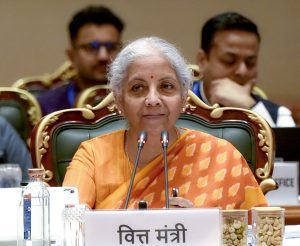
Finance Minister Nirmala Sitharaman on Saturday said India has safeguarded the sensitivities of its agriculture and animal husbandry sectors under the interim trade framework with the United States, while securing expanded market access for Indian exports.
She said the framework protects key farm, dairy and allied products, helping strengthen farmer incomes and sustain rural livelihoods.
Under the interim trade framework, the US will reduce reciprocal tariffs on Indian goods to 18 per cent, creating significant export opportunities in sectors such as textiles and apparel, leather and footwear, plastic and rubber products, organic chemicals, home décor, artisanal goods and select machinery.
“The framework protects key farm and dairy products, spices and staples, strengthening farmer incomes,” the finance minister said.
She added that sensitive agricultural and dairy products, including maize, wheat, rice, soya, poultry, milk, cheese, ethanol (fuel), tobacco, select vegetables and meat, have been completely protected to safeguard farmers’ interests.
The framework also provides for preferential market access between India and the US in sectors of mutual interest on a sustained basis. Both sides will establish rules of origin to ensure that the benefits of the agreement accrue primarily to India and the United States.
In a statement, the White House said both countries have committed to addressing non-tariff barriers affecting bilateral trade. It added that India has agreed to work towards resolving long-standing non-tariff issues related to US food and agricultural products.
The White House also said the two sides will work to expand market access further through negotiations on a comprehensive Bilateral Trade Agreement (BTA). The United States affirmed that it would take into consideration India’s request for continued reduction of tariffs on Indian goods during these negotiations.
Under the framework, India will also receive exemptions under Section 232 on aircraft parts, tariff rate quotas on auto parts, and negotiated outcomes on generic pharmaceuticals, leading to tangible export gains in these sectors.
— IANS