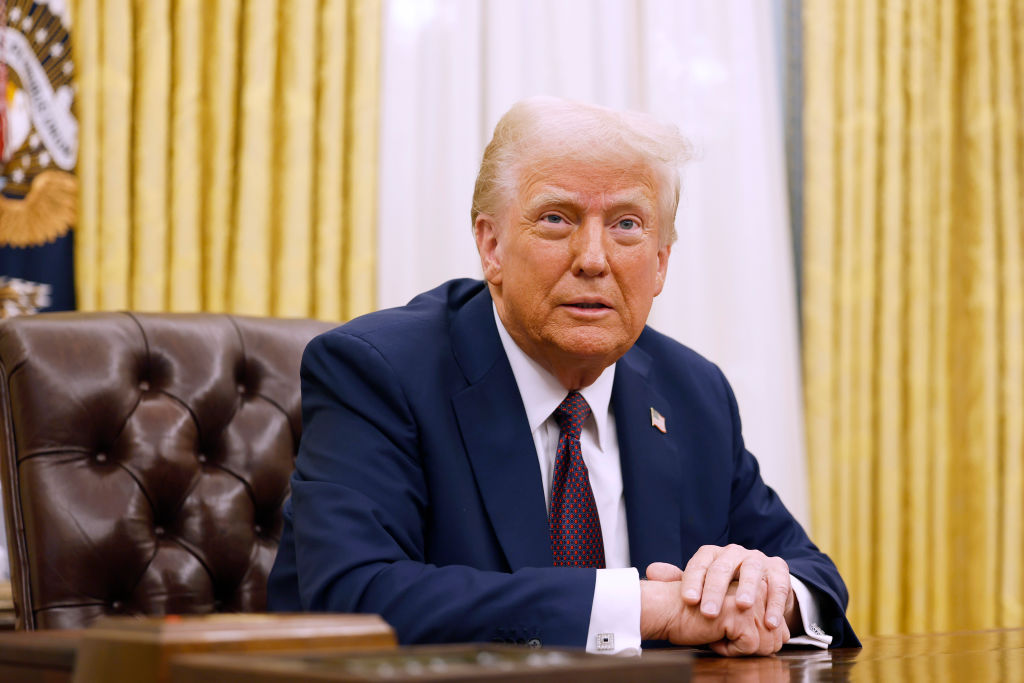
A federal judge in Seattle has issued a temporary restraining order halting former President Donald Trump’s controversial executive order to terminate birthright citizenship, deeming the policy “blatantly unconstitutional,” as reported by CNN.
Judge John Coughenour, appointed by former President Ronald Reagan, ruled in response to a lawsuit filed by Washington Attorney General Nick Brown and three other Democratic-led states. The restraining order, effective for 14 days, pauses the policy’s implementation to allow for additional legal arguments.
“I have been on the bench for over four decades. I can’t recall a case where the legal question was so unequivocal,” Judge Coughenour remarked, expressing shock over the executive order’s legitimacy. “Where were the lawyers?” he questioned, calling the order’s constitutionality mind-boggling.
The legal challenge contends that the executive order violates the 14th Amendment, which guarantees citizenship to all children born in the United States and “subject to the jurisdiction thereof.” Lane Polozola, an attorney representing Washington state, emphasized the immediate harm posed by the policy, stating, “Babies are being born today under a cloud of uncertainty about their citizenship.” He further warned that denying citizenship to these children could result in “long-term substantial negative impacts” and impose significant financial burdens on state programs.
The Trump administration, however, argues that the 14th Amendment’s jurisdiction clause allows the president to exclude children of undocumented immigrants and non-permanent residents. Justice Department attorney Brett Shumate urged the court to refrain from making a “snap judgment” on the matter, requesting additional time for briefing.
Despite the restraining order, Trump expressed his administration’s intent to challenge the ruling. The executive order has already faced multiple lawsuits, including cases brought by immigrant rights groups, Democratic attorneys general, and individual plaintiffs.
In a separate Maryland case, Justice Department attorney Brad Rosenberg admitted that federal agencies had not yet begun enforcing the order. “The executive order was issued three days ago during a time of transition between administrations,” Rosenberg explained, adding that agencies needed time to develop implementation policies.
Upcoming hearings are scheduled to address the policy’s legal challenges. In Maryland, a hearing on February 5 will consider a temporary block of the order, while a New Hampshire federal court will hear arguments on February 10 regarding a preliminary injunction sought by civil rights and immigration groups.
(Inputs from ANI)