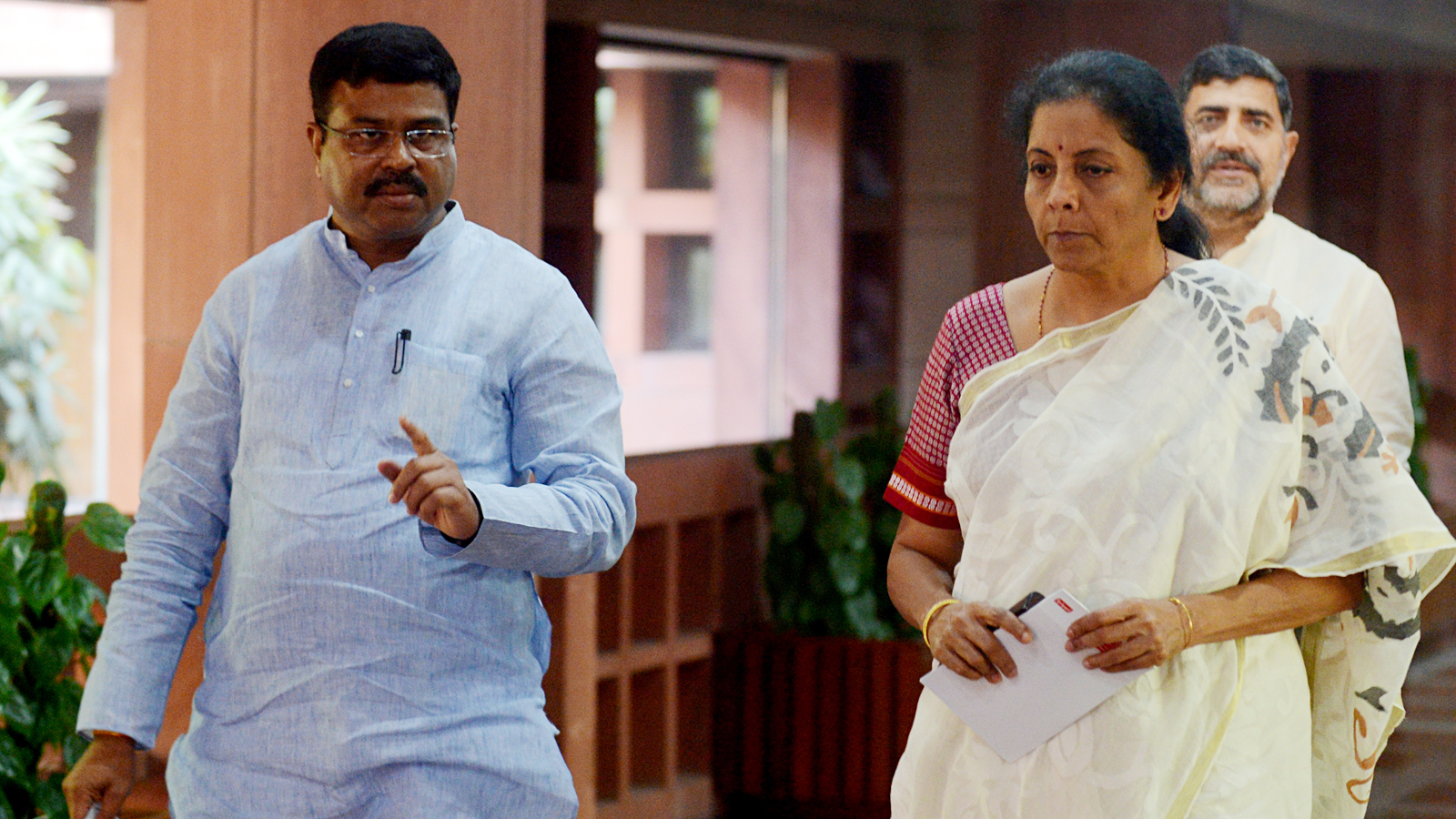
Union Education Minister Dharmendra Pradhan on Sunday lauded the Union Budget 2026–27, calling it a “Yuva Shakti–driven budget” that places human capital at the centre of India’s development journey towards a Viksit Bharat. He said the Budget provides a strong boost to education, skilling and employment creation, while laying out a clear blueprint for the country’s next phase of growth.
The Minister informed that the total allocation for the Ministry of Education has risen to ₹1,39,289.48 crore in 2026–27, marking an increase of 8.27 per cent over the Budget Estimates of 2025–26. He expressed gratitude to Prime Minister Narendra Modi and Union Finance Minister Nirmala Sitharaman for presenting what he described as a futuristic, pro-people and employment-oriented Budget.
Pradhan said the Budget, inspired by the three Kartavyas outlined by the Finance Minister – accelerating and sustaining economic growth, fulfilling aspirations and building capacities, and ensuring access to resources and opportunities for all – will spur inclusive development across sectors. He noted that the proposals will strengthen education, innovation and skilling, support MSMEs, boost tourism and healthcare, and transform Tier-II and Tier-III cities into new growth centres, ensuring that economic growth translates into tangible gains for citizens.
Highlighting key education initiatives, the Minister announced that one girls’ hostel will be established in every district through viability gap funding and capital support to further enhance enrolment of girls, particularly in STEM education. He pointed out that India already has one of the highest rates of female participation in STEM globally, and the new measure will help sustain and expand this trend.
The Budget also proposes the setting up of five University Townships near major industrial and logistics corridors. These planned academic zones will host multiple universities, colleges, research institutions, skill centres and residential complexes, creating integrated ecosystems for education, research and industry collaboration.
Another major announcement is the proposal to constitute a high-powered ‘Education to Employment and Enterprise’ Standing Committee. The committee will focus on the services sector and examine the impact of emerging technologies, including artificial intelligence, on jobs and skill requirements. It will recommend measures such as embedding AI in school curricula and upgrading SCERT institutions for teacher training.
Pradhan also welcomed the proposal to establish Animation, Visual Effects, Gaming and Comics (AVGC) Content Creator Labs in 15,000 secondary schools and 500 colleges, which he said would support the rapidly growing creative economy and provide opportunities for up to two million professionals by 2030.
For higher education, the overall allocation in 2026–27 stands at ₹55,727.22 crore, reflecting an 11.28 per cent increase over the previous year. Central Universities have been allocated ₹17,440 crore, while the University Grants Commission will receive ₹3,709 crore. Allocations to IITs, NITs, IIMs and deemed universities have also seen significant increases.
Among major schemes, ₹2,200 crore has been allocated for PM-One Nation One Subscription, ₹200 crore for the new PM Research Chair scheme, and ₹100 crore for Centres of Excellence in Artificial Intelligence for Education. Funding for World Class Institutions has nearly doubled to ₹900 crore.
The Department of School Education and Literacy has received its highest-ever allocation of ₹83,562 crore. Flagship schemes such as Samagra Shiksha, PM-POSHAN and PM-SHRI have seen substantial increases, while Kendriya Vidyalaya Sangathan and Navodaya Vidyalaya Samiti have also received enhanced funding. A new central sector initiative for Atal Tinkering Labs has been introduced with an allocation of ₹3,200 crore.
Summing up, Pradhan said the Union Budget 2026-27 reinforces the government’s commitment to empowering youth, strengthening India’s education ecosystem and building a skilled workforce that will drive sustainable and inclusive growth in the years ahead.