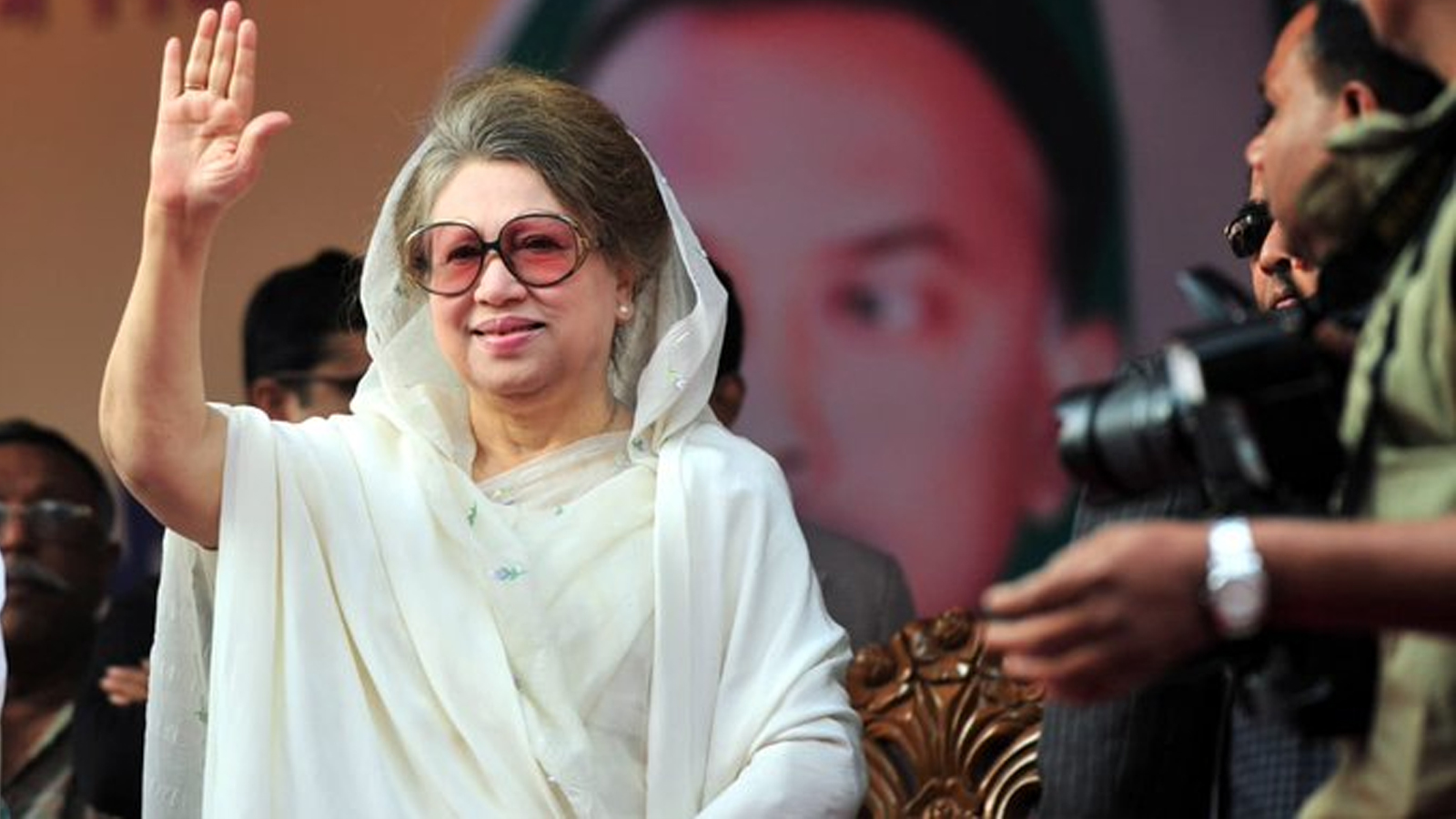
Begum Khaleda Zia’s journey – from being born in undivided India to becoming Bangladesh’s first woman Prime Minister – established her as one of the most influential figures in the country’s politics for more than four decades.
Zia, a three-time Prime Minister and chairperson of the Bangladesh Nationalist Party (BNP), died early on Tuesday morning after a prolonged illness. She was 80.
Rising from a largely private life, Khaleda Zia went on to become the country’s first female head of government and a defining figure in Bangladesh’s post-independence political history.
Born in 1945 in Jalpaiguri, then part of Greater Dinajpur in undivided India, Zia later moved with her family to what was then East Pakistan following the Partition.
In 1960, she married Ziaur Rahman, who was then a captain in the Pakistani Army. Ziaur Rahman later revolted against Pakistani forces during the 1971 Bangladesh Liberation War, and subsequently emerged as a national leader.
He served as President of Bangladesh from 1977 and founded the Bangladesh Nationalist Party the following year. After his assassination on May 30, 1981, the BNP plunged into crisis, prompting senior leaders and party workers to urge Khaleda Zia to take on a leadership role.
She was appointed BNP vice-president on January 12, 1984, and was elected party chairperson on May 10 the same year. She retained the position through successive party councils in 1993, 2009 and 2016, marking nearly 41 years at the helm of the BNP.
Following the BNP’s victory in the 1991 parliamentary elections, Khaleda Zia was sworn in as Bangladesh’s first female Prime Minister. She returned to office for a second term after the controversial February 1996 elections, which were boycotted by major opposition parties, and assumed the premiership for a third time on October 10, 2001.
(IANS)