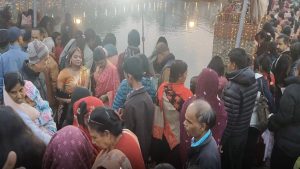
The world’s bloodiest festival continues to face criticism from animal activists campaigning vigorously for decades, but it did not stop more than two crore people from attending Gadhimai Mahotsav this year. This Hindu festival, held once every five years at the Gadhimai Temple in Bariyarpur, Bara district of Madhesh Province, Nepal, near the Indo-Nepal border, started on December 2 and concluded on Shukla Purnima, a Sunday.
The festival features the world’s largest animal sacrifice, occurring on Saptami, Ashtami, and Navami of the Lunar Calendar. Devotees sacrifice water buffaloes, goats, cocks, and ducks, and release doves in the temple premises when they believe their wishes have been fulfilled.
Animal sacrifices commence only after a shaman, as part of the rituals, offers his blood and sacrifices five forest animals: a rat, duck, cock, dove, and boar. According to a priest, a lamp lights up automatically following the shamanic sacrifice, signaling the Goddess’s readiness to accept further offerings. Devotees then proceed with offerings such as buffaloes, goats, cocks, and ducks. In the patriarchal traditions of the Terai and Gangetic belt, devotees often seek blessings for sons, with animal sacrifices made as thanks upon the birth of a boy.
Several NGOs, including Humane Society International, Sneha’s Care, and vegetarianism-promoting civil society groups, have long campaigned against the mass sacrifices during the Gadhimai Mahotsav. In the 2009 festival, over five lakh animals were slaughtered. Locals, however, assert that this practice is a more than 600-year-old ritual and an inviolable part of their faith. Political reluctance to intervene stems from fear of offending religious sentiments.
In 2024, the Supreme Court of India directed state governments to restrict the export and transport of animals intended for sacrifice. Nepal’s Supreme Court ordered a ban on animal sacrifices in 2019, but the ruling remains largely unenforced. Sacrifices now occur behind closed doors to prevent public viewing, with only devotees accompanied by animals permitted into the sacrificial grounds. The animals’ heads are offered to the Goddess, buried by the temple, and the carcasses are auctioned, with the meat frequently exported to China and other countries.
Locals reported a footfall of approximately 2.5 crore people during the 14-day festival, which included entertainment, sports, food stalls, and adventure activities. This inflow significantly boosts tourism, providing local communities with their highest earnings during this period. The substantial revenue generated by the event is a key factor in the lack of political will to discontinue animal sacrifices, as civil societies struggle to oppose these practices without appearing to interfere with deeply rooted religious beliefs.