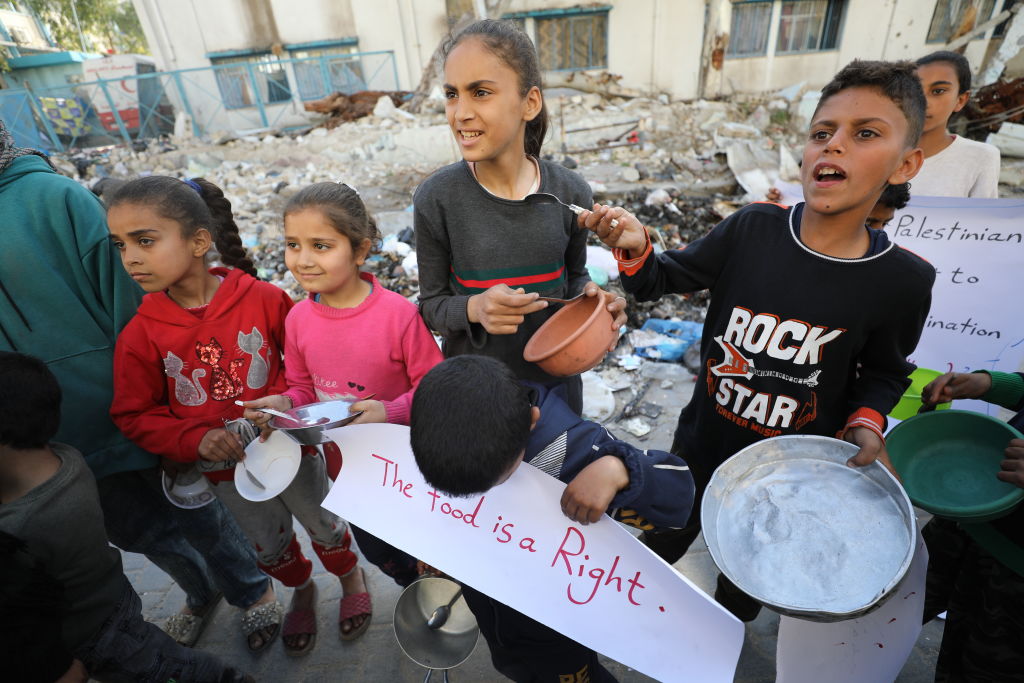
The number of hungry people around the world fell for a third straight year in 2024, retreating from a COVID-era spike, even as conflict and climate shocks deepened malnutrition across much of Africa and western Asia, a U.N. report said on Monday.
Around 673 million people, or 8.2% of the world’s population, experienced hunger in 2024, down from 8.5% in 2023, according to the State of Food Security and Nutrition in the World report, jointly prepared by five U.N. agencies.
They said the report focussed on chronic, long-term problems and did not fully reflect the impact of acute crises brought on by specific events and wars, including Gaza.
Maximo Torero, the chief economist for the U.N. Food and Agricultural Organization, said improved access to food in South America and India had driven the overall decline but cautioned that conflict and other factors in places such as Africa and the Middle East risked undoing those gains.
“If conflict continues to grow, of course, if vulnerabilities continue to grow, and the debt stress continues to increase, the numbers will increase again,” he told Reuters on the sidelines of a U.N. food summit in Ethiopia.
“Conflict continues to drive hunger from Gaza to Sudan and beyond,” U.N. Secretary-General Antonio Guterres said in remarks delivered by video link to the summit. “Hunger further feeds future instability and undermines peace.”
In 2024, the most significant progress was registered in South America and Southern Asia, the U.N. report said.
In South America, the hunger rate fell to 3.8% in 2024 from 4.2% in 2023. In Southern Asia, it fell to 11% from 12.2%.
Progress in South America was underpinned by better agricultural productivity and social programmes like school meals, Torero said. In Southern Asia, it was mostly due to new data from India showing more people with access to healthy diets.
The overall 2024 hunger numbers were still higher than the 7.5% recorded in 2019 before the COVID pandemic.
The picture is very different in Africa, where productivity gains are not keeping up with high population growth and the impacts of conflict, extreme weather and inflation.
In 2024, more than one in five people on the continent, 307 million, were chronically undernourished, meaning hunger is more prevalent than it was 20 years ago.
Africa is projected to account for nearly 60% of the world’s hungry people by 2030, the report said.
The gap between global food price inflation and overall inflation peaked in January 2023, driving up the cost of diets and hitting low-income nations hardest, the report said.
Overall adult obesity rose to nearly 16% in 2022, from 12% in 2012, it added.
The number of people unable to afford a healthy diet dropped globally in the past five years to 2.6 billion in 2024 from 2.76 billion in 2019, the report said.
(Reuters)