The Centre on Tuesday detailed a comprehensive, multi-ministerial response to the ongoing West Asia conflict, highlighting measures taken to stabilise aviation operations, ensure fuel availability, maintain maritime safety, and assist Indian nationals in the region.
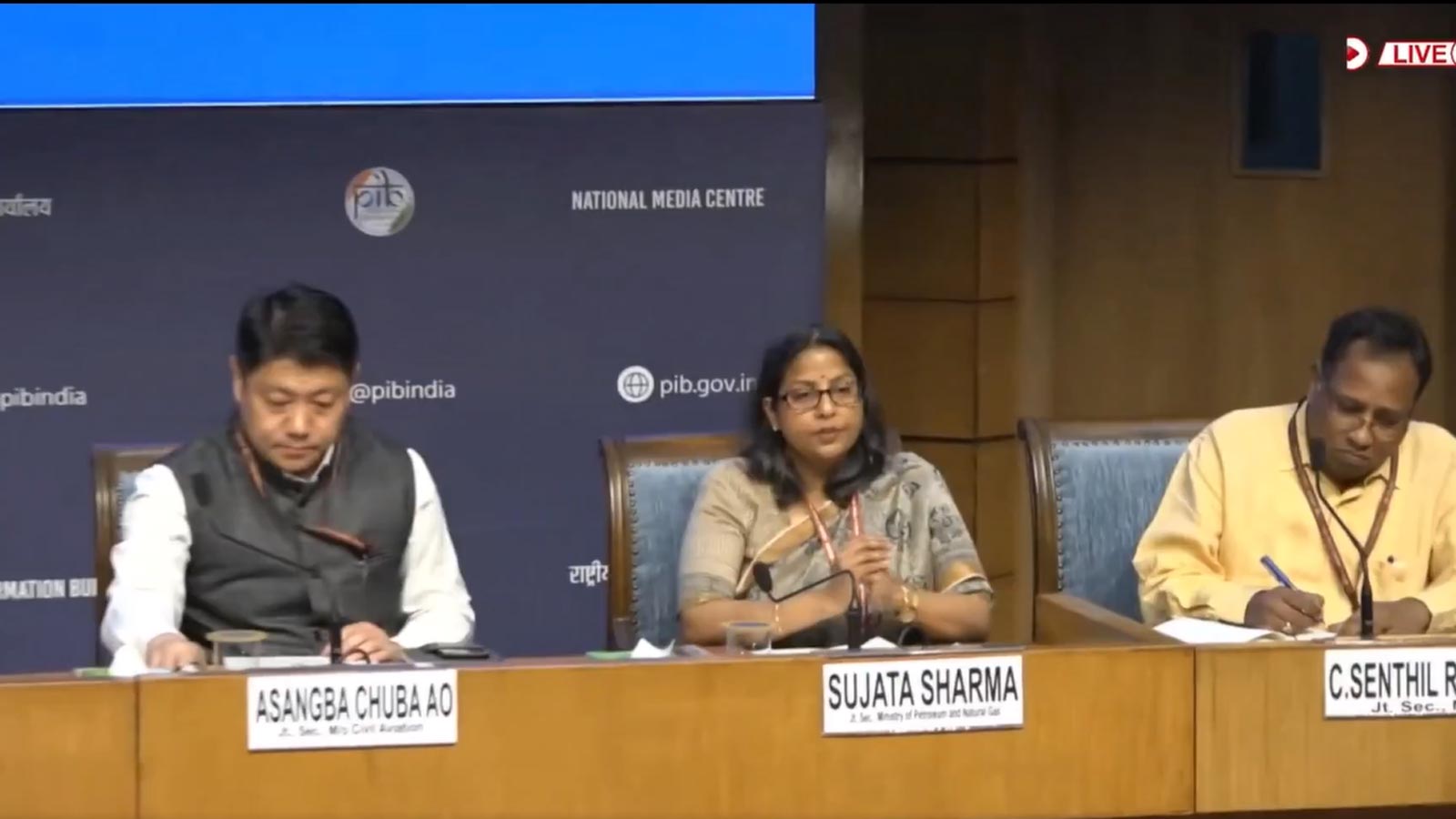
At an inter-ministerial briefing held at the National Media Centre, officials from key ministries, including Civil Aviation, Petroleum and Natural Gas, External Affairs, and Ports Shipping and Waterways, said the government has adopted a coordinated approach to mitigate the impact of the crisis, which has disrupted global connectivity and energy supply chains since late February.
Aviation sector adapts to disruptions
The Ministry of Civil Aviation said Indian carriers are navigating “serious operational and financial challenges” due to widespread airspace restrictions across several West Asian countries, including Iran, Iraq, Israel, and the Gulf region.
Flights to Europe and North America are being rerouted along longer paths, increasing travel time and operational costs. However, timely government intervention in Aviation Turbine Fuel (ATF) pricing has helped maintain stability in domestic airfares despite rising costs.
To ease pressure on airlines, regulators have granted operational relaxations, including temporary adjustments to pilot duty time norms to address crew shortages. Special permissions have also been given to foreign carriers such as Emirates and Kuwait Airways to operate passenger aircraft for cargo services, ensuring continuity in supply chains.
Fuel supply remains stable despite global pressures
The Ministry of Petroleum and Natural Gas assured that domestic fuel supplies, including LPG, petrol, and diesel, remain stable, even as global crude prices remain volatile due to tensions around the Strait of Hormuz.
Domestic LPG cylinder deliveries continue normally, with no reports of shortages. To support vulnerable sections, the government has doubled the daily allocation of 5 kg free trade LPG cylinders for migrant labourers beyond earlier limits.
Public sector oil marketing companies have ramped up awareness efforts, organising around 1,300 camps in the past four days and facilitating the sale of over 1.06 lakh small cylinders in a single day.
Authorities also reported that nearly 3.76 lakh piped natural gas (PNG) connections have been activated since March, with over 4.1 lakh new consumers registered, as part of a push towards cleaner and more reliable fuel alternatives.
To curb hoarding and black marketing, enforcement agencies conducted over 4,300 raids in a single day, seizing more than 1,200 LPG cylinders and initiating action against errant distributors.
Ports, shipping and seafarers remain secure
The Ministry of Ports, Shipping and Waterways (MoPSW) said maritime operations across Indian ports continue without disruption, with no congestion reported. In the Persian Gulf region, 16 Indian-flagged vessels with over 400 Indian seafarers remain operational, with no recent incidents reported.
The Directorate General of Shipping has facilitated the repatriation of more than 1,691 Indian seafarers so far, including 92 in the past 24 hours, while maintaining round-the-clock monitoring through its control room.
Large-scale assistance to Indian nationals
The Ministry of External Affairs (MEA) said the safety of Indian nationals in West Asia remains a top priority. Since February 28, around 7.6 lakh passengers have travelled from the region to India, despite flight disruptions.
Indian missions have been actively facilitating travel through alternative routes, including transit via Saudi Arabia, Egypt, and Jordan, amid airspace closures in several countries.
In Iran, the Indian Embassy has assisted 1,862 citizens, including students and fishermen, in moving to neighbouring countries such as Armenia and Azerbaijan for onward travel to India.
Missions across the region are operating 24×7 helplines, issuing advisories, and coordinating with local authorities, airlines, and community organisations to provide logistical and consular support.
Government urges calm and responsible consumption
The government has advised citizens not to panic or indulge in panic buying of fuel and LPG, assuring adequate availability. It has also urged people to rely on official information sources, conserve energy, and consider alternative fuels such as PNG and electric cooking solutions.
The government emphasised that the situation remains dynamic but under close monitoring, with coordinated efforts across ministries aimed at ensuring stability in essential sectors and safeguarding the interests of Indian citizens at home and abroad.