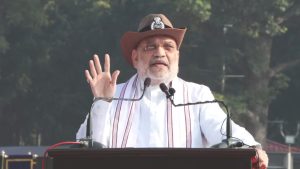
Union Road Transport and Highways Minister Nitin Gadkari on Monday launched a barrier-less Multi-Lane Free Flow (MLFF) tolling system at the Mundka-Bakkarwala stretch of Urban Extension Road-II in the National Capital Region, saying the technology-driven initiative would reduce congestion, fuel consumption and pollution.
The MLFF system, introduced by the Ministry of Road Transport and Highways and the National Highways Authority of India, enables contactless and uninterrupted toll collection without vehicles having to stop at toll plazas.
The system integrates Automatic Number Plate Recognition technology with FASTag-based electronic toll collection to automate user fee collection with minimal human intervention.
The minister said the new tolling mechanism would significantly reduce waiting time at toll plazas, improve traffic flow and ensure smoother travel for commuters. He added that the initiative was part of the government’s push towards world-class highway infrastructure and technology-driven reforms.
Gadkari said toll collection operations, which earlier incurred expenditure of nearly 15 per cent, were expected to come down to around 3-4 per cent under the MLFF system, potentially resulting in annual savings of Rs 5,000-6,000 crore.
He also said the system was expected to save nearly 250 crore litres of fuel annually and reduce around 81,000 tonnes of carbon emissions, particularly benefiting pollution control efforts in the Delhi-NCR region.
The event was attended by Ministers of State Ajay Tamta and Harsh Malhotra, MPs Kamaljeet Sherawat and Yogender Chandolia, and NHAI Chairman Santosh Kumar Yadav, along with senior officials from the ministry, NHAI and the Indian Highways Management Company Limited.
Highlighting the environmental aspect of infrastructure development, Gadkari said municipal waste generated in Delhi was being processed and used in highway projects such as the Dwarka Expressway and the Delhi-Mumbai Expressway. He also referred to the use of bio-bitumen made from crop residue and waste material in road construction.
On road safety, the minister said AI-based technologies integrated into the MLFF framework would improve traffic monitoring and management.
Under the system, highway users will need to maintain adequate balance in their FASTag accounts. In cases of insufficient balance or invalid FASTags, users will receive an electronic notice and will have 72 hours to pay the toll amount. Failure to comply could result in double toll charges, FASTag blacklisting and restrictions linked to vehicle services through the VAHAN platform.
The NHAI had earlier launched the MLFF-based tolling system at the Chorayasi Toll Plaza on the Surat-Bharuch section of NH-48 in Gujarat earlier this month.