





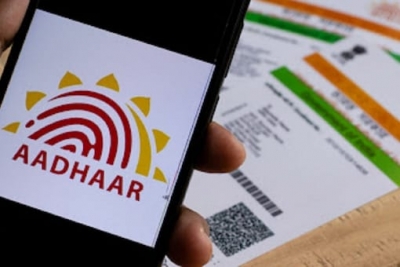
The government has deactivated more than 2.5 crore Aadhaar numbers belonging to deceased persons as part of a nationwide effort to prevent identity fraud, Union Minister of State for Electronics and Information Technology Jitin Prasada informed Parliament on Wednesday.
Aadhaar is the world’s largest biometric identity system, with around 134 crore active Aadhaar holders.
“As part of a nationwide clean-up effort to maintain the continued accuracy and integrity of the Aadhaar database, Unique Identification Authority of India (UIDAI) has deactivated more than 2.5 crore Aadhaar numbers of deceased persons till date,” Prasada said.
“In case of the death of a person, it is essential that his/her Aadhaar number is deactivated to prevent potential identity fraud, or unauthorized usage of such Aadhaar number for availing welfare benefits,” he added.
The minister clarified that the State or Union Territory mentioned in an Aadhaar holder’s address may differ from the State or UT where the death was registered.
Prasada also outlined a range of measures undertaken to strengthen identity security and ensure leak-proof delivery of government benefits. These include the biometric lock and unlock feature, which allows Aadhaar holders to secure their biometric data and prevent unauthorised authentication attempts.
The rollout of face authentication with a ‘liveness detection’ feature has further strengthened safeguards by preventing spoofing and ensuring the physical presence of beneficiaries during transactions.
Other initiatives include the promotion of Aadhaar Secure QR Codes, paperless offline e-KYC, e-Aadhaar, and Aadhaar verifiable credentials, enabling secure offline identity verification without sharing biometric data.
The UIDAI does not share core biometric information of Aadhaar holders and mandates the use of Aadhaar data vaults by all requesting entities to store Aadhaar numbers in encrypted form. Additional safeguards include database sanitisation, regular de-duplication exercises, and strict document-based norms for updating demographic details.
The authority has also launched a new Aadhaar mobile application that enables Aadhaar holders to securely share verified credentials with Offline Verification Seeking Entities (OVSEs), enhancing both convenience and data protection.
(With inputs from IANS)