







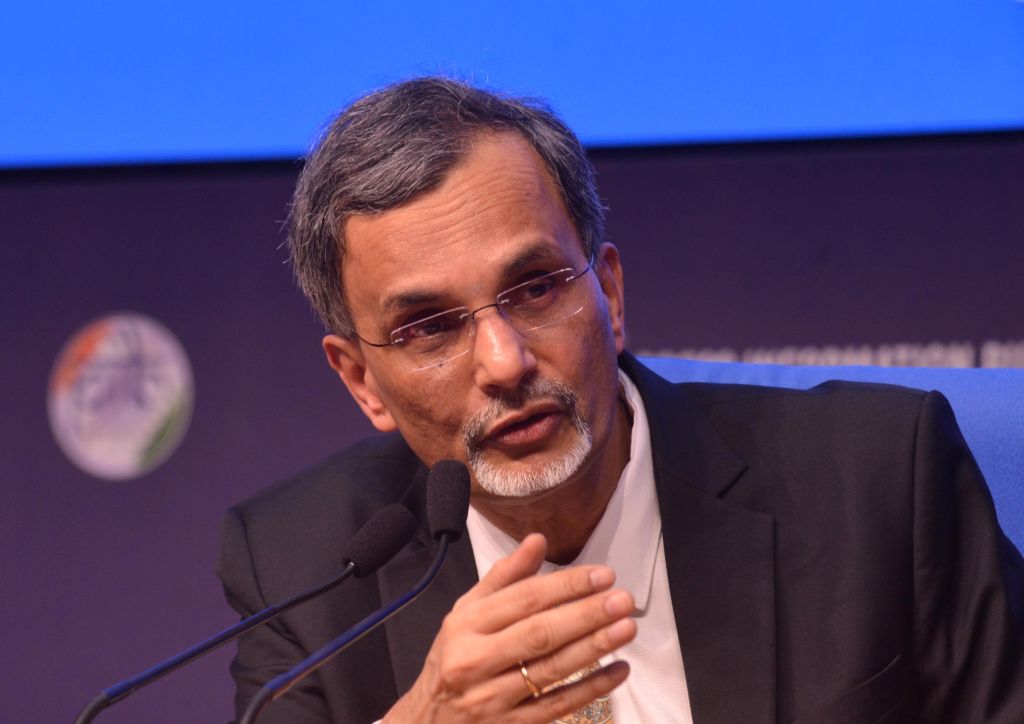
India’s economic growth momentum has strengthened even as inflationary pressures have eased sharply, Chief Economic Advisor V. Anantha Nageswaran said on Thursday while presenting the Economic Survey. He pointed to robust domestic demand and a sustained moderation in prices as key drivers supporting the outlook through FY26.
Real GDP growth, the CEA said, has inched up from an average of 6.4 per cent in the pre-Covid period (FY12–FY20) to 6.5 per cent in FY25, and is projected to accelerate to 7.4 per cent in FY26. The recovery, he noted, is being underpinned by resilient consumption and a pickup in investment activity.
Private consumption expenditure growth rose from 6.8 per cent in FY12–FY20 to 7.2 per cent in FY25, before easing marginally to 7.0 per cent in FY26. Investment trends have strengthened more decisively, with real gross fixed capital formation growth increasing from 6.3 per cent in the pre-pandemic years to 7.1 per cent in FY25 and an estimated 7.8 per cent in FY26, signalling sustained capital formation.
Inflation has softened significantly, according to the survey. Headline CPI inflation declined from 6.7 per cent in FY23 to 5.4 per cent in FY24 and further to 4.7 per cent in FY25, before falling to 1.7 per cent in FY26 so far (up to December). Core inflation, excluding gold and silver, moderated from 6.1 per cent in FY23 to 3.0 per cent in FY25, and stood at 2.9 per cent in FY26 to date.
On the fiscal front, the government has continued to narrow the deficit. After peaking at 9.2 per cent of GDP in FY21, the fiscal deficit fell to 6.7 per cent in FY22, 6.5 per cent in FY23 and 5.5 per cent in FY24. It is estimated at 4.8 per cent in FY25 and budgeted at 4.4 per cent in FY26. Revenue buoyancy has improved alongside a widening tax base, with income tax payers rising from 6.9 crore in FY22 to 9.2 crore in FY25, while capital expenditure has increased as a share of GDP, reflecting a sharper focus on growth-oriented spending.
(ANI)