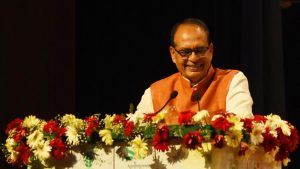
The GST reforms will have a wide-scale impact on the agriculture sector, benefitting small and medium farmers because due to reduced GST rates on agricultural equipment, the cost of agriculture will decrease, and farmers’ profits will increase, according to Union Agriculture Minister Shivraj Singh Chouhan.
The GST on bio-pesticides and micro-nutrients has been reduced, which will benefit farmers. Also, the trend of farmers towards bio-fertilisers from chemical fertilisers will definitely increase.
In the dairy sector, there will now be no GST on milk and cheese. This will not only benefit the common man, but farmers, cattle breeders and milk producers will also benefit, said Chouhan during a press meet in Bhopal.
“The government and the Prime Minister are trying to ensure that there are no difficulties in the life of the common man. From the ramparts of the Red Fort, he had told the country that next generation reforms will be brought in GST and those reforms will bring great relief to the people,” said the minister.
As a farmer and Agriculture Minister, “I thank Prime Minister Narendra Modi. Our resolution is to reduce the cost of production in agriculture and increase production. If production increases and cost decreases, then the farmer’s profit in farming will increase,” he added.
Chouhan further stated that if we look at the reforms that have been made in GST, then the farmers of the country are going to get great benefits from them.
Some companies have started it. The reduction of GST to 5 per cent on agricultural equipment, be it tractors, harvesters, rotavators, of different types, will prove to be a boon for the farmers.
“The size of the landholdings of the farmers of our country is small. That is why we are trying to integrate farming, which means that the farmer should be involved in farming and do some other work in the allied sector,” said the minister.
If we look at the GST reforms, for example, if a tractor used to cost ₹9 lakh and was bought for ₹9 lakh, then the farmer will now save ₹65,000 on it.
“GST has been reduced on butter and ghee, so definitely these indigenous products will start selling more. GST has also been reduced on milk cans; the dairy sector will also get its benefit, and if the dairy sector progresses, then farmers and cattle rearers will directly progress,” the minister noted.
There are 12 biological pesticides and micronutrients, and GST has been reduced on them as well. GST on fertilisers like ammonia, sulphuric acid, and nitric acid has also been reduced from 18% to 5%. These are the raw materials used to prepare fertilisers, so their prices will definitely come down, and farmers will also benefit from that.
(IANS)