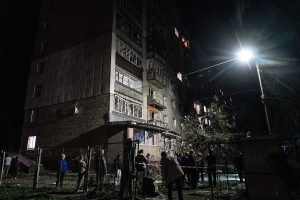








Hezbollah in Lebanon and the Israeli army made statements suggesting the two avowed enemies wanted to avoid risking the further spread of war beyond the Gaza Strip after a drone strike killed a Palestinian Hamas deputy leader in Beirut.
In a speech in Beirut on Wednesday, Hezbollah leader Hassan Nasrallah vowed that his powerful Iran-backed Shi'ite militia “cannot be silent” following the killing of Hamas deputy Saleh al-Arouri on Tuesday.
Nasrallah said his heavily armed forces would fight to the finish if Israel chose to extend the war to Lebanon, but he made no concrete threats to act against Israel in support of Hamas, Hezbollah's ally also backed by Iran.
Israel neither confirmed nor denied assassinating Arouri but has promised to annihilate Hamas, which rules Gaza, following the group's Oct. 7 cross-border assault in which Israel says 1,200 people were killed and some 240 abducted.
Israel launched a ground and aerial blitz of Gaza in response, and the total recorded Palestinian death toll had reached 22,313 by Wednesday – almost 1% of its 2.3 million population, the Gaza health ministry said.
Israeli military spokesperson, Rear Admiral Daniel Hagari, when asked what Israel was doing to prepare for a potential Hezbollah response, told a reporter: “I won't respond to what you just mentioned. We are focused on the fight against Hamas.”
White House spokesperson John Kirby, asked about Nasrallah's speech, told reporters: “We haven't seen Hezbollah jump in with both feet to come to Hamas' aid and assistance.”
Another U.S. official, speaking to reporters on condition of anonymity, suggested neither Hezbollah nor Israel wanted a war.
“From everything that we can tell, there is no clear desire for Hezbollah to go to war with Israel and vice versa,” said the official.
U.S. Secretary of State Antony Blinken will depart on Thursday for the Middle East, including a stop in Israel, as the United States continues diplomatic consultations on the Israel-Gaza conflict, a senior U.S. official said on Wednesday.
The official, briefing reporters on condition of anonymity, said U.S. diplomatic envoy Amos Hochstein will also travel to Israel to work to soothe tensions between Israel and Hezbollah.
Arouri's killing was a further sign of the potential the nearly three-month-old war might spread well beyond Gaza, drawing in the Israeli-occupied West Bank, Hezbollah forces on the Lebanon-Israel border and Red Sea shipping lanes.
Arouri, 57, who lived in Beirut, was the first senior Hamas political leader to be assassinated outside Palestinian territories since Israel began its offensive against the Palestinian Islamist group following the Oct. 7 assault.
Hezbollah has been embroiled in nearly daily exchanges of shelling with Israel across Lebanon's southern border since the Gaza war began. On Wednesday, a local Hezbollah official and three other members were killed in an Israeli strike on southern Lebanon, two security sources told Reuters.
More than 120 Hezbollah fighters and two dozen civilians have been killed on Lebanese territory, as well as at least nine Israeli soldiers in Israel.
Nasrallah said there would be “no ceilings” and “no rules” to Hezbollah's fighting if Israel launched a full war on Lebanon.
Arouri's death removes a big name from Israel’s most-wanted list of top Islamist foes, and could drive Hamas' exiled leaders deeper into hiding, hampering efforts to negotiate further Gaza ceasefires and hostage releases.
Israel had long accused him of orchestrating attacks on its citizens. But a Hamas official said he was also “at the heart of negotiations” conducted by Qatar and Egypt over the outcome of the Gaza war and the release of Hamas-held Israeli hostages.
Nasrallah spoke to commemorate four years since the killing of Iranian Revolutionary Guards top commander Qassem Soleimani in a U.S. drone strike in Iraq.
Two explosions on Wednesday during a memorial ceremony at a cemetery in southeastern Iran where Soleimani is buried killed nearly 100 people, at a time of high tension between arch-enemies Iran and Israel.
AERIAL, GROUND BLITZ
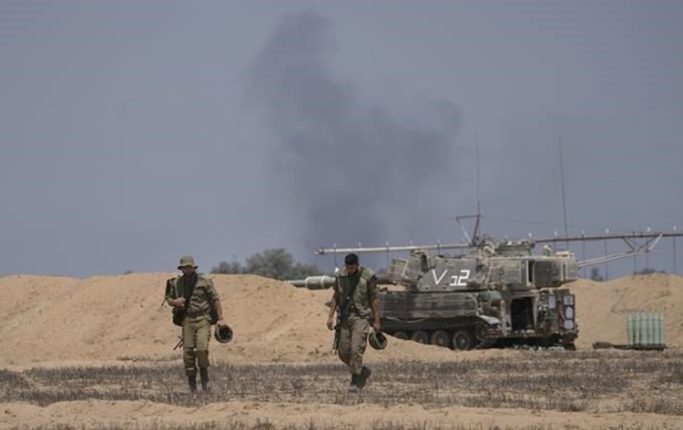
Israeli forces meanwhile kept up their aerial and ground blitz against Hamas militants, targeting the southern Gaza city of Khan Younis and Al-Bureij refugee camp in central Gaza.
Israeli bombardments have flattened much of the densely populated enclave, wreaking a humanitarian disaster. Most Gazans have been left homeless, crammed into shrinking areas in hope of rudimentary shelter, with food shortages threatening famine.
The Israeli military says it tries to avoid harm to civilians and blames Hamas for embedding fighters within residential areas, a charge the group denies.
The Israeli military said the number of its soldiers killed since its first ground incursion on Oct. 20 had reached 177.
(REUTERS)