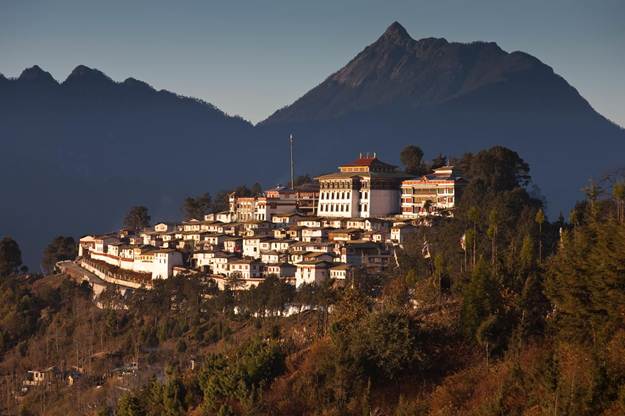
The sacred relics of Lord Buddha, preserved at the National Museum in New Delhi, will be displayed for public veneration across three locations in Arunachal Pradesh from October 31 to November 21, 2026. The exposition will cover Tawang, Bomdila and Namsai, offering devotees an opportunity to pay homage to the sacred relics.
Union Minister of Culture and Tourism Gajendra Singh Shekhawat will attend the inaugural ceremony at the historic Gaden Namgyal Lhatse (Tawang Monastery) on October 31. The programme will bring together representatives of the Arunachal Pradesh government, Buddhist monks, religious institutions and devotees.
The exposition is being organised by the Ministry of Culture in collaboration with the Government of Arunachal Pradesh, the International Buddhist Confederation and the National Museum, New Delhi. The initiative aims to promote India’s Buddhist heritage and strengthen cultural and spiritual connections with Buddhist communities.
The sacred relics will first be displayed at Tawang Monastery from November 1 to 7, followed by TGL Monastery (Lower Gompa) in Bomdila from November 8 to 13. They will subsequently be taken to the Golden Pagoda in Namsai, where devotees can offer prayers and pay their respects from November 14 to 20. The relics will return to the National Museum on November 21.
The exposition coincides with Lhabab Düchen, an important festival in the Tibetan Buddhist tradition that commemorates Lord Buddha’s descent from the heavenly realm.
The relics originate from Piprahwa in Uttar Pradesh’s Siddharthnagar district, an archaeological site associated with ancient Kapilavastu and the Shakya tradition of Lord Buddha. In 1898, British engineer William Claxton Peppé excavated a stupa at the site, discovering reliquaries containing bone fragments and precious objects. Subsequent excavations conducted by the Archaeological Survey of India between 1971 and 1977 uncovered additional relics.
Of the 22 sacred bone fragments recovered during the later excavations, 20 are preserved at the National Museum in New Delhi, while two are housed at the Indian Museum in Kolkata. These relics hold immense archaeological and religious significance for Buddhist communities.
Alongside the exposition, the International Buddhist Confederation will organise an exhibition titled Unearthing the Sacred Piprahwa: The Story of the Holy Buddha Relics and Their Discovery. It will trace the archaeological discoveries at Piprahwa, the history of relic veneration and the efforts undertaken to bring India’s cultural heritage back to the country.
An international conference on Buddhism: Dissemination in the Himalayan Region and Beyond will also be held at Tawang on November 2. The conference will bring together Buddhist monks, scholars and delegates from India, Nepal, Sri Lanka, Myanmar, Malaysia, Indonesia and Germany to discuss the spread of Buddhism, preservation of monastic traditions and the contemporary relevance of Buddhist philosophy.
The conference will focus on three broad themes: carrying forward the Buddha’s legacy after Mahāparinirvāṇa, the historical and doctrinal continuity of Buddhism, and the relevance of Buddhist teachings on right livelihood.
Arunachal Pradesh holds a distinctive place in India’s Buddhist heritage, with Mahayana and Vajrayana traditions prevalent in Tawang and West Kameng, while Theravada Buddhism is followed by communities in Namsai and adjoining areas. The exposition across these three locations will bring together diverse Buddhist traditions and highlight the state’s cultural and spiritual significance.
The transportation and security arrangements for the sacred relics are being coordinated by the Ministry of Culture, Ministry of Defence, Indian Air Force, National Museum and the Arunachal Pradesh government. Special aircraft and helicopter arrangements have been planned to ensure their safe transportation, keeping in view the region’s challenging terrain.
-PIB