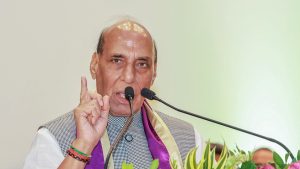
Union Home Secretary Govind Mohan on Friday inaugurated the National Dialogue on Online Crimes Against Women and Children (OCWC) in New Delhi, stressing the need for stronger coordination and institutional capacity to tackle cyber offences targeting vulnerable groups.
The event was organised by the Indian Cyber Crime Coordination Centre (I4C) under the Ministry of Home Affairs and brought together stakeholders from government, law enforcement agencies, digital platforms, academia and civil society to deliberate on strategies to combat online crimes.
The initiative is part of the government’s broader effort, under the leadership of Prime Minister Narendra Modi and the guidance of Union Home Minister Amit Shah, to ensure a safe and secure digital environment for women and children.
Addressing the gathering, Mohan highlighted the increasing challenges posed by cyber offences in a rapidly expanding digital ecosystem and emphasised the need to strengthen institutional mechanisms across states and Union Territories.
He urged states and UTs to establish robust and specialised units dedicated to handling online crimes against women and children and to develop coordinated response mechanisms to ensure timely investigation, effective victim support and swift action against offenders.
The Home Secretary also directed law enforcement agencies to accord priority to such cases and ensure prompt and coordinated responses.
Mohan further called on IT intermediaries and digital platforms to strictly comply with the provisions of the Information Technology Act, 2000 and relevant rules to help curb the spread of harmful and illegal content online.
The dialogue served as a platform for knowledge exchange, sharing of best practices and collective deliberation on building a coordinated national strategy to address the evolving challenges of cyber crimes targeting women and children.
During the event, the government also launched the Master Trainers Induction Programme for states and Union Territories. The programme aims to create a national pool of trained officers equipped with specialised knowledge, investigative techniques and best practices to tackle cyber offences.
Officials selected under the programme will further train law enforcement personnel at the state and district levels, strengthening the country’s capacity to respond to such crimes.
The national dialogue saw participation from senior officials of state and UT law enforcement agencies, representatives from various ministries and departments of the Government of India, social media intermediaries, internet service providers, legal experts, academics, civil society organisations and student representatives.
Discussions during the event focused on emerging trends in online crimes against women and children, strengthening digital forensics and investigative capabilities, improving reporting and victim support mechanisms, and enhancing cooperation with digital platforms for the timely removal of harmful content.