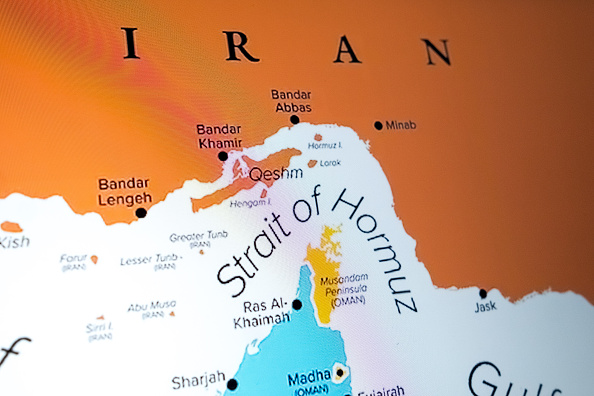
The Strait of Hormuz, one of the world’s most critical energy routes, is facing severe disruption as tensions escalate in West Asia. The narrow waterway lies between Iran to the north and the Musandam Peninsula to the south, a territory shared by Oman and the United Arab Emirates. Stretching about 178 kilometres in length and narrowing to roughly 39 kilometres at its tightest point, the strait carries around 20 million barrels of oil each day under normal conditions. That accounts for nearly one in every five barrels of oil consumed worldwide, making it the single most important oil transit chokepoint on the planet. However, amid the ongoing conflict, shipping activity through the strait has slowed dramatically.
Despite its narrow width, the strait is deep and relatively free of major maritime hazards, particularly near the Omani coast along the Musandam Peninsula. To manage heavy maritime traffic, the International Maritime Organization operates a traffic separation scheme with two designated shipping lanes, one inbound and one outbound, each about two miles wide and separated by a two-mile buffer zone. Iran maintains naval and air bases on several nearby islands, including Abu Musa and the Greater and Lesser Tunb islands, which remain the subject of a long-standing territorial dispute with the UAE. These strategic positions allow Tehran significant oversight of vessels transiting the waterway, placing the strait at the centre of the current crisis.
Since the conflict began on the 28th of February, tanker traffic through the strait has reportedly dropped by about ninety percent. Many vessels are now anchored in open waters waiting for safer conditions. Reports suggest that between eight and ten commercial ships have been damaged in attacks involving drones, missiles or explosive surface craft in and around the Strait of Hormuz and the Gulf of Oman.
Iran is also reported to have blocked most commercial traffic through the strait and targeted several vessels attempting to pass through the route. In addition, widespread GPS jamming has been reported, increasing the risk to navigation even for ships not directly under attack. The disruption has raised concerns for countries heavily dependent on these energy shipments. More than eighty percent of the oil and gas transported through the strait is bound for Asian markets, including Japan, South Korea, India and China.
Only Saudi Arabia and the United Arab Emirates currently operate pipelines that can partially bypass the Strait of Hormuz. However, their combined spare capacity of about three and a half million barrels per day falls far short of replacing the normal flow through the waterway. Global markets have already reacted, with oil prices rising above one hundred dollars a barrel and briefly approaching one hundred and twenty dollars. Analysts say the impact of any prolonged disruption in this narrow passage will be felt far beyond West Asia, with higher energy costs likely to affect households and economies around the world.