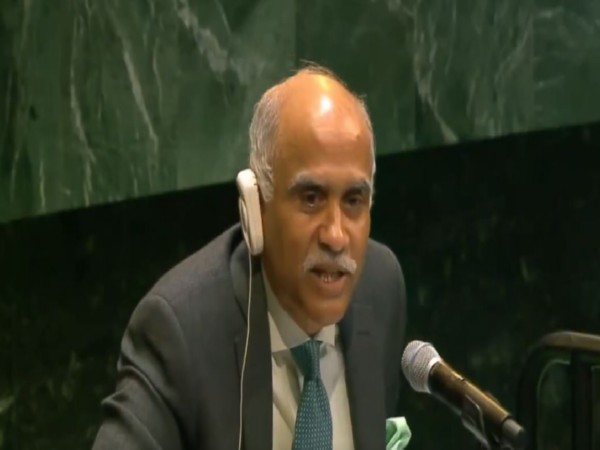
India’s Permanent Representative to the United Nations, Ambassador Parvathaneni Harish, on Thursday underscored the need for the responsible and ethical use of artificial intelligence (AI). He also highlighted the actions taken by the central government to integrate AI for good governance and developmental practices.
Speaking at the UN, Harish said that technology serves as a bridge to accelerate development and showcased how India is leveraging AI to achieve economic and developmental goals. He cited examples such as national biometric systems and financial inclusion initiatives as key measures demonstrating India’s integration of AI into development.
“We have integrated national AI missions and systems in a way that facilitates the removal of digital divides within and among countries. We cannot afford to leave anyone digitally behind in this new era. For example, when we deploy digital systems, they are designed to be accessible to all, regardless of economic status or educational background,” he said.
He further elaborated on how digital financial payment systems have empowered citizens.
“A vegetable vendor in Delhi or Mumbai no longer needs to wait for cash payments. Even if they are illiterate, they can use digital payment systems to conduct daily business. Similarly, someone who is illiterate can open a bank account without barriers related to education or class by using biometric identification systems linked to the financial system. Our focus is on ensuring that technological frameworks adhere to common design principles—systems that are open, modular, scalable, and interoperable,” he said.
Harish highlighted that India has developed many digital governance tools in an open-source format and has made their source codes publicly available online.
“This allows our friendly partner countries and companies to use and adapt these tools to their own national circumstances. This represents the future—where AI is not seen as a threat but as a cooperative, interoperable, open-source tool adaptable to different conditions worldwide. In this scenario, access to AI tools is not determined by a country’s wealth or GDP, nor by its membership in any particular group. Instead, AI should be accessible to all because, at a global level, we cannot afford to leave any nation behind in the digital and AI age,” he stressed.
The Ambassador reiterated Prime Minister Narendra Modi’s stance, as expressed at the recent AI Action Summit in Paris, advocating for a strong cooperative framework among all nations to establish effective regulatory systems.
He also announced that India will host the next AI Action Summit, which will serve as a guiding platform for global discussions on AI governance.
(ANI)