The first round of negotiations for the India–New Zealand Free Trade Agreement (FTA) concluded successfully on Friday in the national capital. The talks, held from May 5 to May 9, represent a significant milestone in the growing economic relations between the two nations.
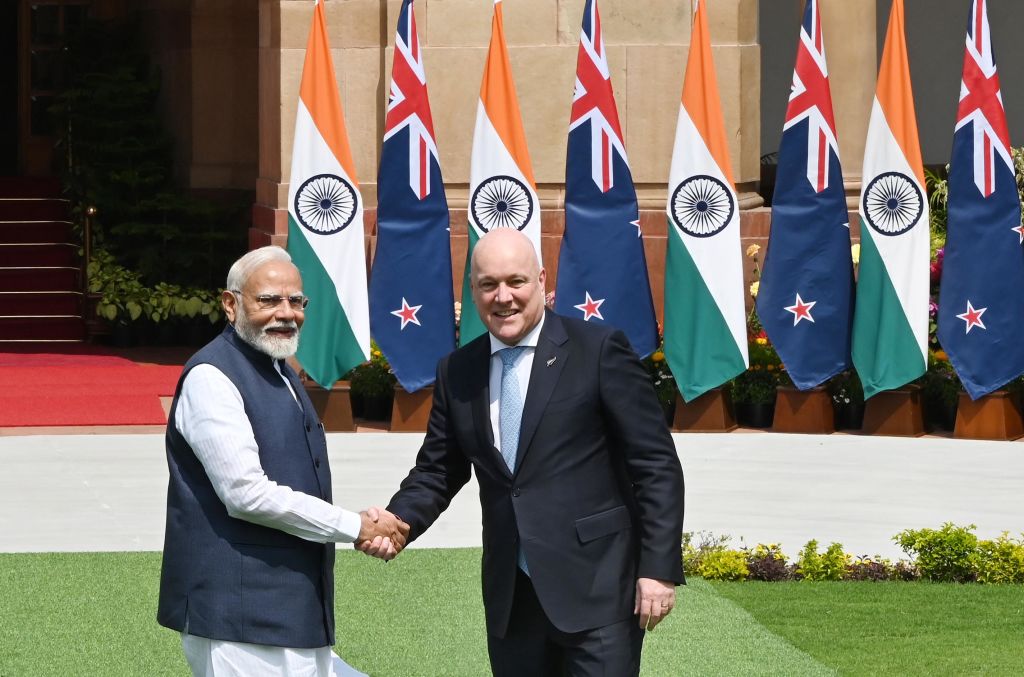
The initiative builds on the visit of New Zealand Prime Minister Christopher Luxon to India in March 2025, where he and Prime Minister Narendra Modi discussed expanding economic cooperation. The FTA was formally launched during a meeting on 16 March 2025, between Piyush Goyal, India’s Minister of Commerce and Industry, and Todd McClay, New Zealand’s Minister for Trade and Investment.
Groundwork and Key Areas of Negotiation
Prior to the in-person talks, both countries held a series of virtual discussions to lay the groundwork for the negotiations. The first round of face-to-face talks covered a wide range of crucial areas, including Trade in Goods and Services, Trade Facilitation, and mutually beneficial sectors of economic cooperation. These constructive discussions underline the strategic importance both nations place on creating a balanced, fair, and mutually advantageous trade agreement.
The two sides focused on creating a framework that will not only boost trade but also address the changing global economic landscape. The FTA negotiations are designed to foster a more robust and predictable trading environment, enhancing economic cooperation and fostering deeper ties between the two nations.
Bilateral Trade Growth and FTA Expectations
The bilateral trade relationship between India and New Zealand has witnessed a remarkable growth trajectory in recent years. Merchandise trade between the countries reached an impressive USD 1.3 billion in the financial year 2024–25, marking a strong year-on-year growth of 48.6%. This surge in trade underscores the growing potential of the India-New Zealand economic partnership.
The FTA is expected to further elevate this partnership by improving supply chain integration, reducing trade barriers, and enhancing business opportunities on both sides. It will provide a solid framework for fostering cross-border investment, creating new avenues for businesses, and aligning trade policies with global aspirations.
Looking Ahead
Both countries have reaffirmed their mutual understanding and commitment to working towards a future-ready framework and aim to conclude the FTA by the end of this year. The second round of negotiations will take place in July 2025, with both sides aiming to build on the progress made in the first round.
India’s growing network of trade agreements, including this one with New Zealand, reflects its steadfast commitment to enhancing economic partnerships in line with its national priorities. As the global trade landscape evolves, this FTA holds the potential to be a transformative agreement, positioning both nations for greater economic success in the years to come.