The Income Tax Department has notified amendments to the India-Mauritius Double Taxation Avoidance Agreement (DTAA), introducing a principal purpose test (PPT) aimed at preventing the misuse of treaty provisions for tax avoidance and evasion.
Under the revised agreement, tax treaty benefits may be denied if obtaining such benefits is found to be one of the principal purposes of a transaction or arrangement.
According to the notification, benefits will not be granted if, after considering the relevant facts and circumstances, it is reasonable to conclude that securing a treaty benefit was among the principal purposes of an arrangement or transaction, unless granting the benefit is consistent with the objectives of the relevant treaty provisions.
The amendment seeks to prevent the misuse of treaty provisions to secure unintended tax advantages while maintaining the agreement’s objective of eliminating double taxation.
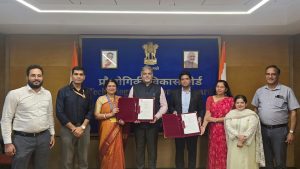
India and Mauritius signed the protocol amending their existing DTAA on March 7, 2024, in Port Louis, with the aim of strengthening safeguards against tax avoidance while facilitating bilateral trade and investment.
The amended agreement came into force on August 10, 2026, following the completion of the necessary legal formalities by both countries.
Under the protocol, India and Mauritius were required to notify each other upon completing their respective domestic procedures, with the agreement entering into force on the date of the later notification.
The Central Government has now notified the amendments under Section 159(1) of the Income-tax Act, 2025, giving effect to the revised treaty provisions in India.
Commenting on the development, Riaz Thingna, Partner, Tax, at Grant Thornton Bharat, said the amendments revise the treaty’s preamble and provisions governing entitlement to benefits.
“The revised treaty expressly clarifies that its objective is to eliminate double taxation without creating opportunities for non-taxation or reduced taxation through tax evasion or avoidance,” Thingna said.
He noted that the introduction of the principal purpose test would allow authorities to deny treaty benefits where obtaining those benefits was one of the principal purposes of a transaction or arrangement.
“These amendments have to be read in light of the clarifications earlier provided by CBDT, particularly on grandfathering,” he added.
The changes strengthen the anti-abuse provisions of the India-Mauritius tax treaty while retaining its broader objective of preventing double taxation and supporting legitimate cross-border investment.
(ANI Inputs)