







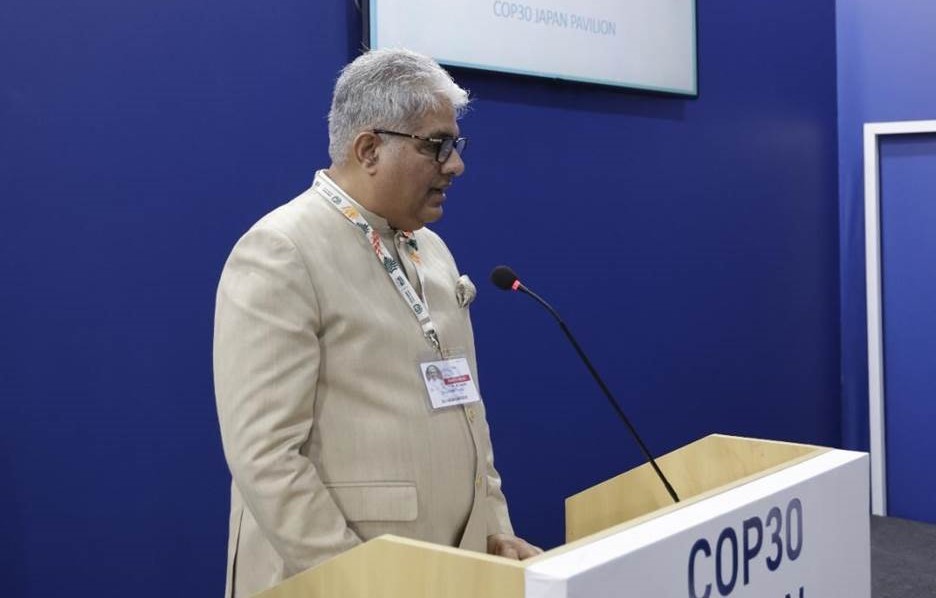
India on Wednesday described the Joint Crediting Mechanism (JCM) as a key instrument for expanding equitable and technology-driven climate action, as Environment Minister Bhupender Yadav joined the 11th JCM Partner Countries’ Meeting on the sidelines of the UN climate summit in Belem, Brazil.
The JCM is a bilateral initiative that allows a partner country, such as India, to cooperate with Japan to implement low-carbon projects and receive carbon credits. These credits, generated from projects that reduce greenhouse gas emissions, can be used by both countries to help meet their national climate targets. The JCM facilitates technology transfer, mobilizes investment in green technologies, and promotes sustainable development in the partner country
The meeting, organised by Japan’s Ministry of the Environment and chaired by Hirotaka Ishihara, brought together ministers and senior representatives from partner nations to review progress under the JCM. Ishihara informed delegates that the mechanism now has 31 partner countries and more than 280 projects being implemented under Article 6 of the Paris Agreement. He said Japan aims to expand the mechanism globally by strengthening investment frameworks, increasing participation opportunities for partner countries, and enhancing capacity-building initiatives.
Addressing the session, Yadav underlined the importance of cooperative approaches at a time when nations are seeking scalable and equitable climate solutions. He said the JCM represents a strong model for strengthening climate action while supporting national development priorities, particularly for developing countries. He also noted that India and Japan share a long-standing climate partnership rooted in trust, technology cooperation and a shared commitment to sustainable development.
Referring to the India–Japan Memorandum of Cooperation signed in August 2025, Yadav said the JCM aligns closely with Article 6 of the Paris Agreement by providing a clear framework for governments and the private sector to jointly develop mitigation projects, mobilise finance, deploy advanced technologies and transparently allocate emission reductions. He described the JCM as an example of how bilateral cooperation can reinforce global climate goals in a practical and mutually beneficial manner.
The Minister said the mechanism would directly support India’s Nationally Determined Contributions and Long-Term Low Emission Development Strategy. He highlighted that low-carbon technologies approved by India’s National Designated Agency for Article 6 will play a crucial role in advancing these goals.
Yadav added that the JCM would help facilitate investments, technology deployment and capacity building for advanced low-carbon technologies while contributing to India’s sustainable development objectives. He informed partner countries that India is making steady progress on implementation frameworks, with rules and key activity-cycle documents in the final stages. The Bureau of Energy Efficiency is also developing the Indian Carbon Market portal, which will include a dedicated module for the JCM and other Article 6 cooperative approaches to improve transparency and ease of project facilitation.
Looking ahead, the Minister said JCM activities are expected to cover priority sectors such as renewable energy with storage, sustainable aviation fuel, compressed biogas, green hydrogen and green ammonia, as well as best available technologies in hard-to-abate sectors including steel, cement and chemicals. He said these areas align with India’s development priorities and offer significant potential for collaboration.
Reaffirming India’s commitment to working closely with Japan and all partner countries, Yadav said the cooperation demonstrates how high-integrity, cooperative mechanisms can support investment in appropriate technologies while strengthening implementation of the Paris Agreement. He urged countries to ensure that the JCM evolves into a model for transparent, impactful and equitable climate partnerships.