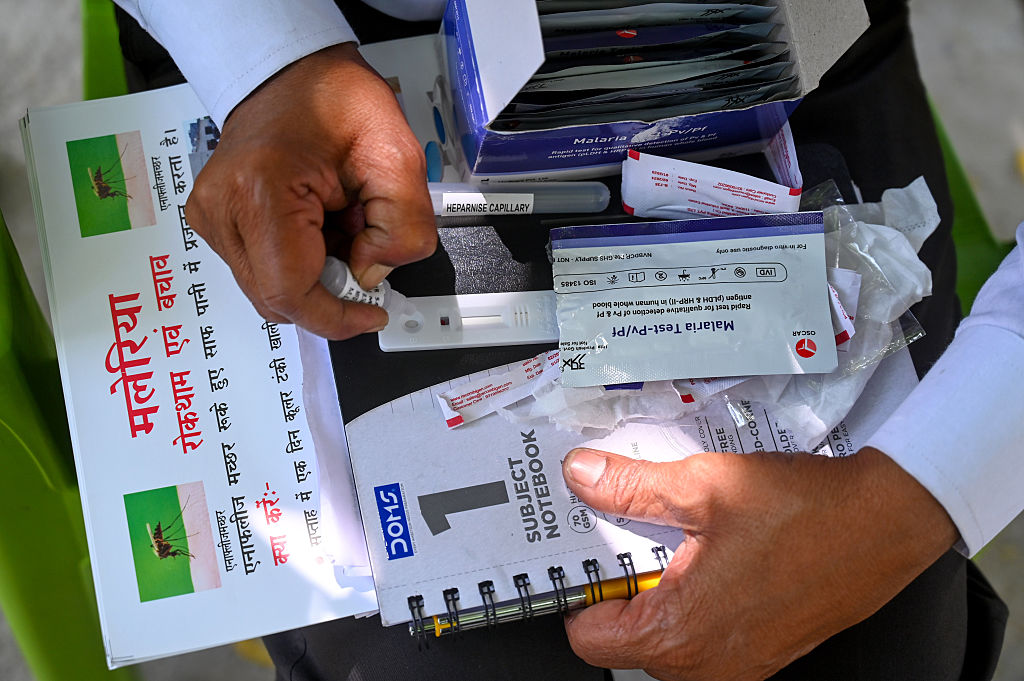
India recorded a nearly 80 per cent decline in malaria cases and deaths between 2015 and 2025, while the number of high-burden districts dropped sharply from 155 to 33, according to the Union Health Ministry.
As many as 160 districts reported zero indigenous malaria cases during 2022-2025, reflecting sustained interruption of local transmission and the impact of targeted malaria-control and elimination measures, the ministry said.
The progress was reviewed at a high-level meeting chaired by Aradhana Patnaik, Additional Secretary and Mission Director, National Health Mission (NHM), and attended by senior ministry officials, representatives of the National Centre for Vector Borne Diseases Control (NCVBDC), Mission Directors of state National Health Missions and district collectors.
The review focused on the 33 high-burden districts spread across nine states and Union Territories, which accounted for 64 per cent of malaria cases and 54 per cent of malaria deaths reported in 2025.
Detailed state-wise reviews were undertaken for Mizoram, Odisha, Tripura, Assam, Andhra Pradesh, Andaman and Nicobar Islands, Chhattisgarh, Jharkhand and Maharashtra.
Reaffirming India’s commitment to achieving the Sustainable Development Goal of eliminating malaria by 2030, Patnaik called for sustained vigilance and area-specific strategies to prevent resurgence and accelerate elimination.
She stressed effective implementation of District Action Plans in all 33 high-burden districts and Village Action Plans in malaria-prone villages, with interventions tailored to local epidemiological and geographical conditions.
The meeting emphasised strengthening the “Test, Treat and Track” strategy, with delays in diagnosis and treatment identified as key factors behind malaria deaths.
States were advised to intensify active surveillance and ensure uninterrupted availability of diagnostic facilities and anti-malarial drugs, particularly in hard-to-reach and vulnerable areas.
The review also highlighted the need to strengthen surveillance systems and improve the quality of malaria data.
States were asked to examine unusually high Annual Blood Examination Rates (ABER) to identify possible duplicate testing, repeated entries and inclusion of asymptomatic screening.
The ministry said asymptomatic cases detected through mass screening should be reported separately and excluded from Annual Parasite Incidence (API) and ABER calculations to ensure a more accurate assessment of the malaria situation and programme performance.
Patnaik also underscored the importance of inter-sectoral coordination, noting that health interventions alone cannot address factors such as water-logging, source reduction and environmental management that contribute to malaria transmission.
States were advised to strengthen coordination with Rural Development and Urban Development departments, as well as Panchayati Raj Institutions, for effective implementation of environmental and vector-control measures.
Greater involvement of self-help groups, community volunteers and Panchayati Raj representatives was also encouraged to improve early reporting of fever cases, identify mosquito-breeding sites and water-logging, and support source-reduction activities.
-PTI