India and Tanzania have reaffirmed their commitment to expanding bilateral trade and economic cooperation, with trade between the two countries crossing the $9 billion mark in 2025–26.
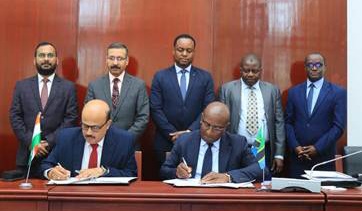
The milestone was highlighted during the 5th session of the India–Tanzania Joint Trade Committee (JTC), held in Dar es Salaam on April 29–30, where officials reviewed progress since the previous meeting in 2017 and explored new avenues for collaboration across key sectors.
The meeting, co-chaired by Commerce Secretary Rajesh Agrawal and Tanzania’s Permanent Secretary Samwel William Shelukindo, noted that bilateral trade rose to $9.02 billion in 2025–26 from $8.64 billion in the previous fiscal. Both sides emphasised strengthening trade mechanisms, including exploring local currency settlements and easing long-term visa processes for businesspersons, while also addressing market access issues such as tariffs and regulatory barriers.
Discussions covered a wide spectrum of sectors, with particular focus on pharmaceuticals, healthcare, mining, agriculture, education, and digital cooperation. India offered support in capacity building, regulatory collaboration, and skill development, while also highlighting opportunities in gemstone value addition and geological exploration. The role of IIT Madras Zanzibar as an emerging hub for science and technology education was also recognised.
Digital collaboration emerged as a key pillar, with both countries reviewing progress under existing agreements and exploring partnerships in digital public infrastructure, including India Stack, real-time payments, and DigiLocker. Cooperation in e-commerce and regulatory alignment was also discussed to boost cross-border trade efficiency.
India’s development partnership with Tanzania, particularly through Lines of Credit exceeding $1.1 billion for water infrastructure projects, was highlighted as a major contribution. These initiatives are expected to benefit over 6 million people across 24 towns. Both sides also explored cooperation in renewable energy, natural gas, and hybrid power solutions, along with shipbuilding, port development, and railway modernisation.
Healthcare collaboration received significant attention, with discussions on expanding telemedicine, oncology partnerships, and joint research on diseases such as malaria, tuberculosis, and HIV/AIDS. In agriculture, the focus remained on technology transfer, agro-processing, micro-irrigation, and trade in pulses, alongside cooperation in dairy and livestock sectors.
The meeting also saw participation from business leaders, with a delegation led by the Confederation of Indian Industry attending a joint business meet on the sidelines. Both Indian and Tanzanian representatives highlighted the growing synergy between the two economies and the importance of boosting private sector engagement.
The session concluded with both sides agreeing to further strengthen institutional mechanisms and accelerate implementation of ongoing initiatives. The next session of the Joint Trade Committee will be held in New Delhi on mutually agreed dates.