







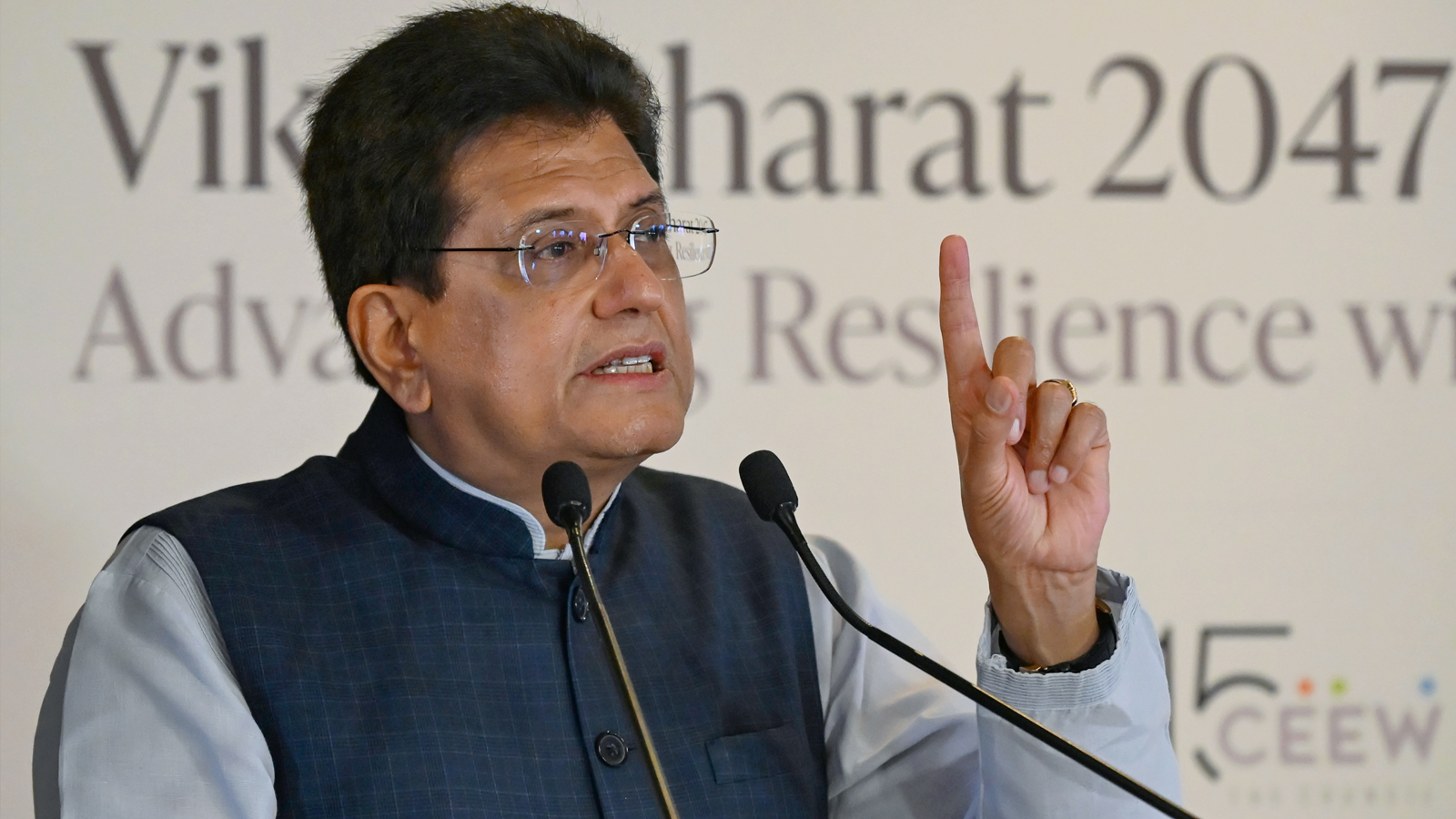
Union Commerce and Industry Minister Piyush Goyal on Wednesday chaired a high-level review meeting to assess progress on India’s ambitious plan to achieve $2 trillion in exports by 2030-31, directing officials to sharpen focus on MSMEs, agricultural exports, logistics, certification, and global branding.
The government has set a target of $1 trillion each in merchandise and services exports by 2030-31. To achieve this, the Department of Commerce has developed a structured Export Monitoring Framework, breaking down the national goal into sector-specific strategies across engineering goods, textiles, electronics, pharmaceuticals, chemicals, and services.
During the review, Goyal emphasised that the success of the export push will depend on clear timelines, measurable outcomes, and strong inter-ministerial coordination. He called for an IT-enabled monitoring system to track progress in real time and ensure timely resolution of issues faced by exporters.
A key focus of the meeting was the implementation of the Export Promotion Mission (EPM), a flagship initiative aimed at supporting exporters—especially MSMEs—through improved access to finance and markets. The mission operates through two sub-schemes: Niryat Protsahan, which focuses on trade finance, and Niryat Disha, which enhances market access.
He noted that ten components under the EPM have already been operationalised. These include interest subvention, export factoring, credit support for e-commerce exporters, collateral assistance, risk-sharing mechanisms, and support for testing, certification, logistics, and warehousing.
The minister stressed that the benefits of these schemes must reach grassroots exporters, including first-time exporters and small businesses. He directed authorities to strengthen outreach through Export Promotion Councils, Commodity Boards, and regional offices of the Directorate General of Foreign Trade (DGFT).
Highlighting key priority areas, Goyal called for a stronger push on agricultural exports and MSMEs, along with improvements in overseas warehousing and certification systems to enhance global competitiveness. He also suggested identifying sectors where import substitution strategies can complement export growth.
To boost global visibility, the minister underscored the need to build a unified “Brand India” identity across international markets. He also proposed developing a rolling three-year calendar of trade fairs, buyer-seller meets, and trade delegations to provide exporters with greater predictability and planning support.
The meeting also reviewed a relief scheme introduced under the EPM to assist exporters affected by the ongoing West Asia crisis.
Concluding the meeting, Goyal said the $2 trillion export target is achievable with disciplined execution, continuous monitoring, and coordinated policy action, adding that all initiatives must translate into tangible support in finance, logistics, compliance, and market access for exporters across the country.